. 2016 Oct 22;5(12):1187-1199.
doi: 10.1016/j.molmet.2016.10.004. eCollection 2016 Dec.

Targeting the endocannabinoid/CB1 receptor system for treating obesity in Prader-Willi syndrome

Affiliations

Targeting the endocannabinoid/CB1 receptor system for treating obesity in Prader-Willi syndrome

Ibrahim Knani et al. Mol Metab. .

Abstract

Objective: Extreme obesity is a core phenotypic feature of Prader-Willi syndrome (PWS). Among numerous metabolic regulators, the endocannabinoid (eCB) system is critically involved in controlling feeding, body weight, and energy metabolism, and a globally acting cannabinoid-1 receptor (CB1R) blockade reverses obesity both in animals and humans. The first-in-class CB1R antagonist rimonabant proved effective in inducing weight loss in adults with PWS. However, it is no longer available for clinical use because of its centrally mediated, neuropsychiatric, adverse effects.

Methods: We studied eCB 'tone' in individuals with PWS and in the Magel2-null mouse model that recapitulates the major metabolic phenotypes of PWS and determined the efficacy of a peripherally restricted CB1R antagonist, JD5037 in treating obesity in these mice.

Results: Individuals with PWS had elevated circulating levels of 2-arachidonoylglycerol and its endogenous precursor and breakdown ligand, arachidonic acid. Increased hypothalamic eCB 'tone', manifested by increased eCBs and upregulated CB1R, was associated with increased fat mass, reduced energy expenditure, and decreased voluntary activity in Magel2-null mice. Daily chronic treatment of obese Magel2-null mice and their littermate wild-type controls with JD5037 (3 mg/kg/d for 28 days) reduced body weight, reversed hyperphagia, and improved metabolic parameters related to their obese phenotype.

Conclusions: Dysregulation of the eCB/CB1R system may contribute to hyperphagia and obesity in Magel2-null mice and in individuals with PWS. Our results demonstrate that treatment with peripherally restricted CB1R antagonists may be an effective strategy for the management of severe obesity in PWS.

Keywords: Endocannabinoids; Magel2; Metabolic syndrome; PWS; Peripheral CB1 blockade.


Figures
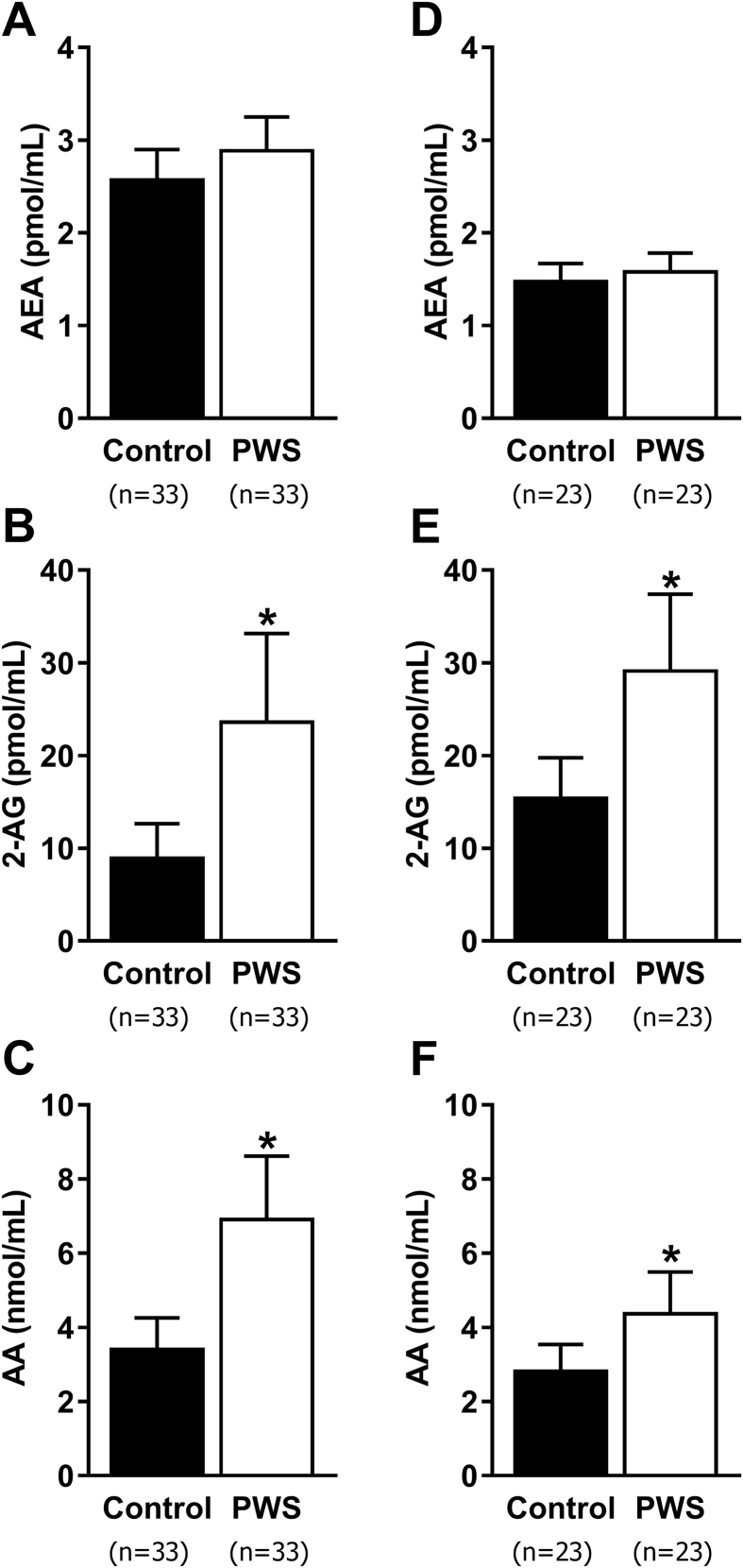
Figure 1
Figure 1
Circulating eCB levels in patients with PWS compared with healthy controls, in two different cohorts. Plasma levels of AEA (A, D), 2-AG (B, E), and AA (C, F), adjusted for age, sex, BMI (Israeli; AC), or BMI-Z (North American; DF), and race (North American; DF) are shown as back-transformed adjusted mean ± 95% confidence interval in two different cohorts. *P < 0.05 relative to healthy controls of the same cohort.
Figure 2
Figure 2
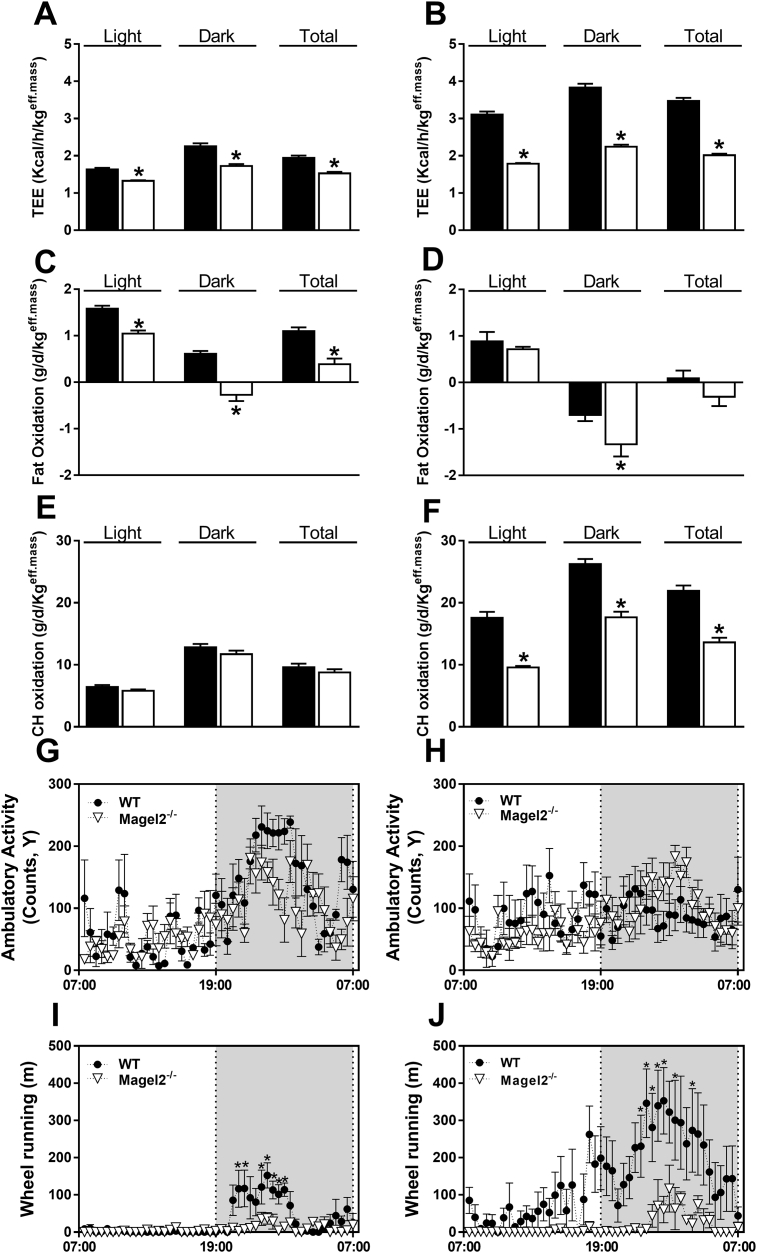
Disrupted energy balance in Magel2-null mice. As measured by indirect calorimetry over a 24 h period at 21 weeks of age, STD-fed Magel2-null mice exhibited abnormalities in TEE (A, B), FO (C, D), and CHO (E, F). These changes were not related to their ambulatory activity (G, H), but to their ability to run on a wheel, a corresponding measurement of voluntary activity (I, J). Similar patterns of results were obtained both in male (left panels) and female (right panels) mice. Legend: black bars, wild-type; white bars, Magel2-null mice. Data represent the mean ± SEM from 5 to 15 mice per group. *P < 0.05 relative to wild-type controls of the same sex.
Figure 3
Figure 3
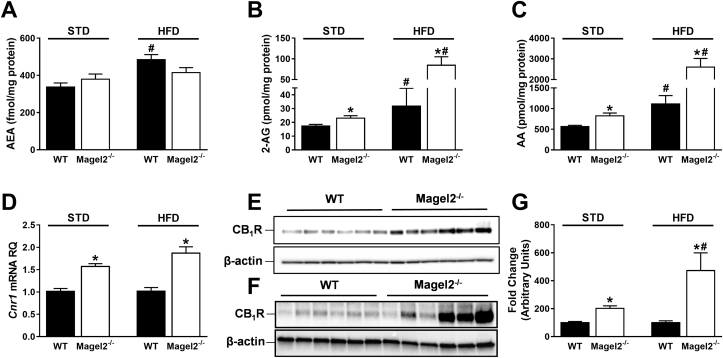
Increased hypothalamic eCB ‘tone’ in Magel2-null mice. Hypothalamic AEA (A), 2-AG (B), and AA (C), levels in Magel2-null mice and littermate controls fed either STD (left) or HFD (right). A significant upregulation in the mRNA (D), and protein (EG) expression levels of CB1R were measured in Magel2-null mice under both diets (STD, D, E, G; HFD, D, F, G), suggesting an increased eCB ‘tone’ in the hypothalamus. Data represent the mean ± SEM from 12 to 21 mice per group. *P < 0.05 relative to wild-type controls of the same diet. #P < 0.05 relative to the same genotype on STD.
Figure 4
Figure 4
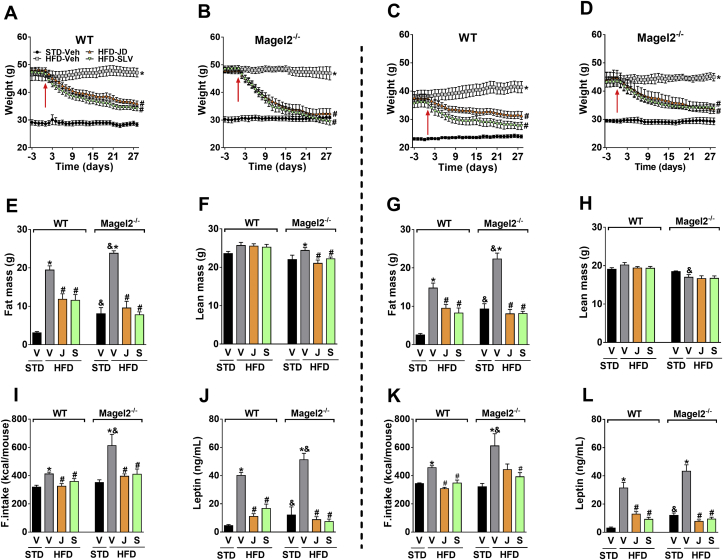
Peripherally restricted CB1R antagonism reduces body weight, hyperphagia, and adiposity in Magel2-null mice. Both JD5037 and SLV319 (3 mg/kg/day for 28 d) reduced body weight (AD), and fat mass (E, G), without affecting lean body mass (F, H). These effects were associated with normalizing food intake (I, K), and serum leptin levels (J, L) in HFD-induced obese Magel2-null mice. Similar patterns of results were obtained both in male (left panels) and female (right panels) mice. Legend: Vehicle, V; JD5037, J; SLV319, S.; red arrow represents 1st day of treatment. Data represent the mean ± SEM from 5 to 10 mice per group. *P < 0.05 relative to STD-V of the same genotype; #P < 0.05 relative to HFD-V of the same genotype; &P < 0.05 relative to the same treatment group of the other genotype.
Figure 5
Figure 5
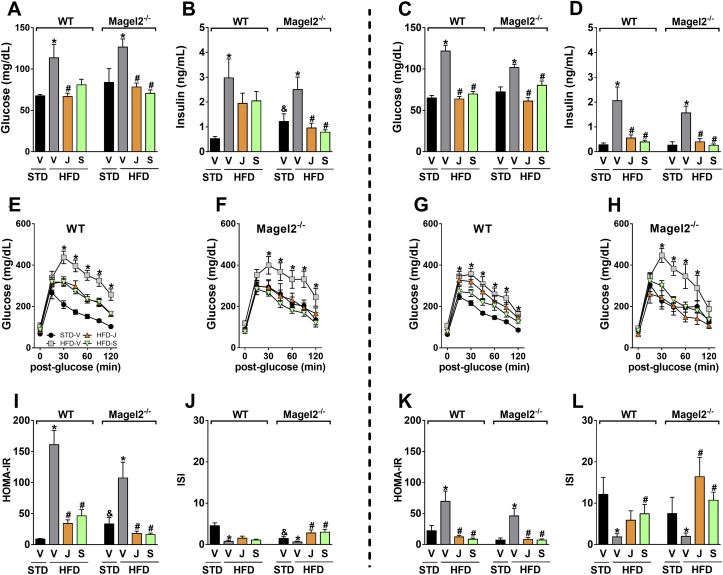
Peripherally restricted CB1R antagonism improves glucose homeostasis in obese Magel2-null mice. JD5037 and SLV319 (3 mg/kg/day for 28 d) attenuated the HFD-induced hyperglycemia (A, C), hyperinsulinemia (B, D), glucose intolerance (EH), HOMA-IR (I, K), and insulin sensitivity index (J, L) in both obese male (left panels) and female (right panels) Magel2-null mice. Legend: Vehicle, V; JD5037, J; SLV319, S. Data represent the mean ± SEM from 5 to 10 mice per group. *P < 0.05 relative to STD-V of the same genotype; #P < 0.05 relative to HFD-V of the same genotype; &P < 0.05 relative to the same treatment group of the other genotype.
Figure 6
Figure 6
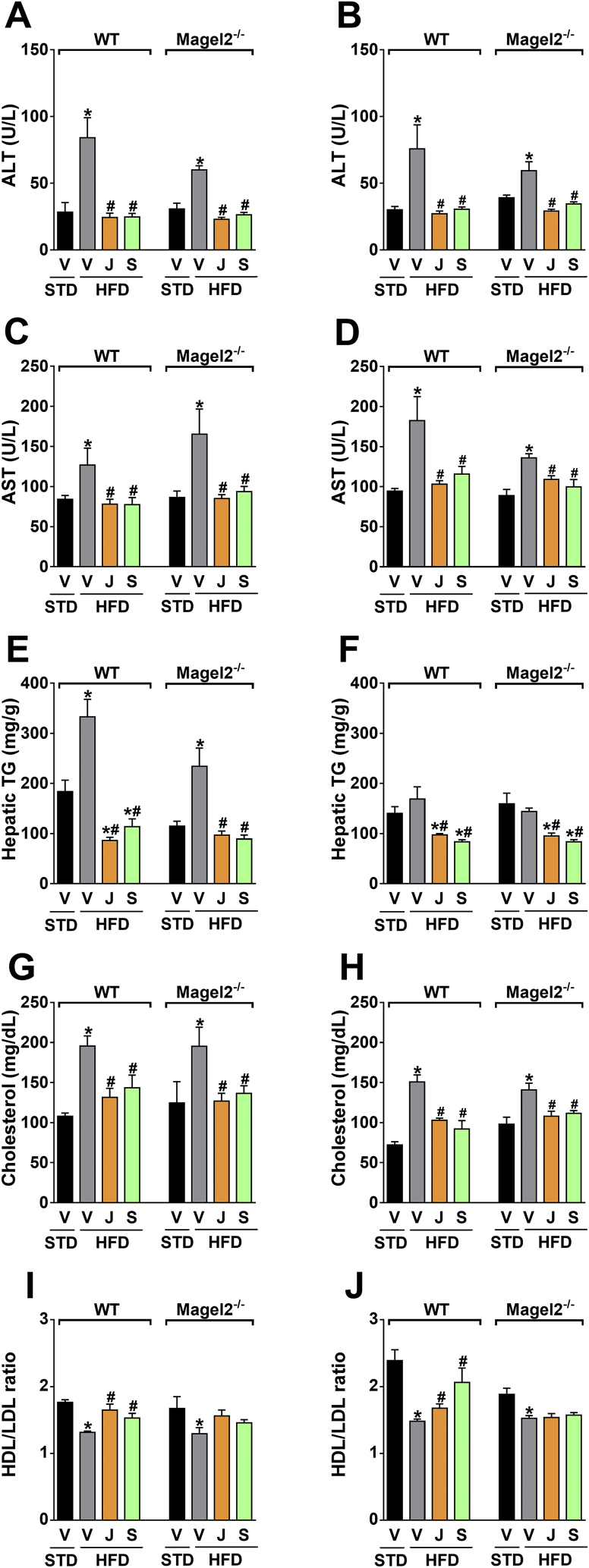
Peripherally restricted CB1R antagonism restores liver function and cholesterol homeostasis in obese Magel2-null mice. Both JD5037 and SLV319 (3 mg/kg/day for 28 d) treatment reduced the HFD-induced hepatic injury and steatosis in obese Magel2-null mice, as manifested by the reduced serum levels of ALT (A, B), AST (C, D), and TG content in the liver (E, F). Both compounds were equally potent in normalizing serum cholesterol levels (G, H), but not in restoring the HDL/LDL cholesterol ratio in Magel2-null mice (I, J). Similar patterns of results were obtained both in obese male (left panels) and female (right panels) mice. Legend: Vehicle, V; JD5037, J; SLV319, S. Data represent the mean ± SEM from 5 to 10 mice per group. *P < 0.05 relative to STD-V of the same genotype; #P < 0.05 relative to HFD-V of the same genotype.
Figure 7
Figure 7
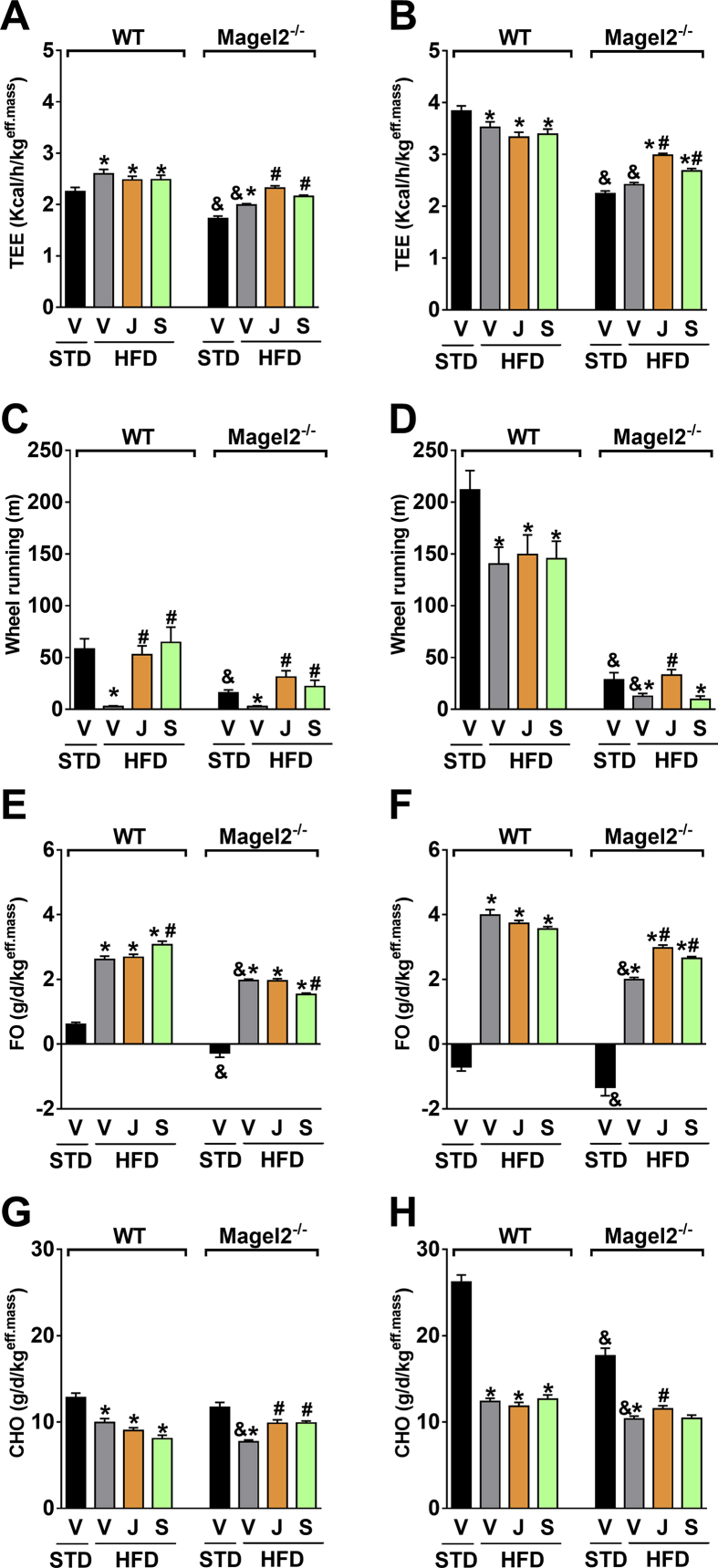
Peripherally restricted CB1R antagonism restores the energy profile in obese Magel2-null mice. Daily chronic treatment of HFD-induced obese Magel2-null mice and their littermate wild-type controls with JD5037 and SLV319 (3 mg/kg/day for 28 d) increases TEE (A, B), voluntary activity (C, D), FO (E, F), and CHO (G, H), as measured by indirect calorimetry. Almost similar patterns of results were obtained both in obese male (left panels) and female (right panels) mice. Legend: Vehicle, V; JD5037, J; SLV319, S. Data represent the mean ± SEM from 8 to 10 mice per group. *P < 0.05 relative to STD-V of the same genotype; #P < 0.05 relative to HFD-V of the same genotype; &P < 0.05 relative to the same treatment group of the other genotype.

References

    1. Driscoll D.J., Miller J.L., Schwartz S., Cassidy S.B. Prader–Willi syndrome. In: Pagon R.A., Adam M.P., Ardinger H.H., Wallace S.E., Amemiya A., Bean L.J.H., editors. GeneReviews(R) 1993. [Seattle (WA)]
    1. Pacher P., Batkai S., Kunos G. The endocannabinoid system as an emerging target of pharmacotherapy. Pharmacological Reviews. 2006;58:389–462. - PMC - PubMed
    1. Di Marzo V., Goparaju S.K., Wang L., Liu J., Batkai S., Jarai Z. Leptin-regulated endocannabinoids are involved in maintaining food intake. Nature. 2001;410:822–825. - PubMed
    1. Colombo G., Agabio R., Diaz G., Lobina C., Reali R., Gessa G.L. Appetite suppression and weight loss after the cannabinoid antagonist SR 141716. Life Sciences. 1998;63:PL113–117. - PubMed
    1. Simiand J., Keane M., Keane P.E., Soubrie P. SR 141716, a CB1 cannabinoid receptor antagonist, selectively reduces sweet food intake in marmoset. Behavioural Pharmacology. 1998;9:179–181. - PubMed

Publication types

MeSH terms

Grants and funding