


Upregulated TNF Expression 1 Year After Bariatric Surgery Reflects a Cachexia-Like State in Subcutaneous Adipose Tissue
- PMID: 27900559
- PMCID: PMC5423994
- DOI: 10.1007/s11695-016-2477-5
Upregulated TNF Expression 1 Year After Bariatric Surgery Reflects a Cachexia-Like State in Subcutaneous Adipose Tissue
Abstract
Background: Adipose tissue dysfunction contributes to obesity-associated chronic diseases. In the first year after bariatric surgery, obese patients significantly improve their metabolic status upon losing weight. We aimed to investigate whether changes in subcutaneous adipose tissue gene expression reflect a restoration of a healthy lean phenotype after bariatric surgery.
Methods: Thirty-one severely obese patients (BMI ≥ 40 kg/m2) were examined before and after surgery. subcutaneous adipose tissue (SAT) was collected during and 1 year after bariatric surgery. SAT from 20 matched lean and overweight patients (BMI < 30 kg/m2) was collected during elective abdominal surgery. Baseline characteristics and SAT gene expression relevant to glucose and lipid metabolism, inflammation, and apoptosis were analyzed.
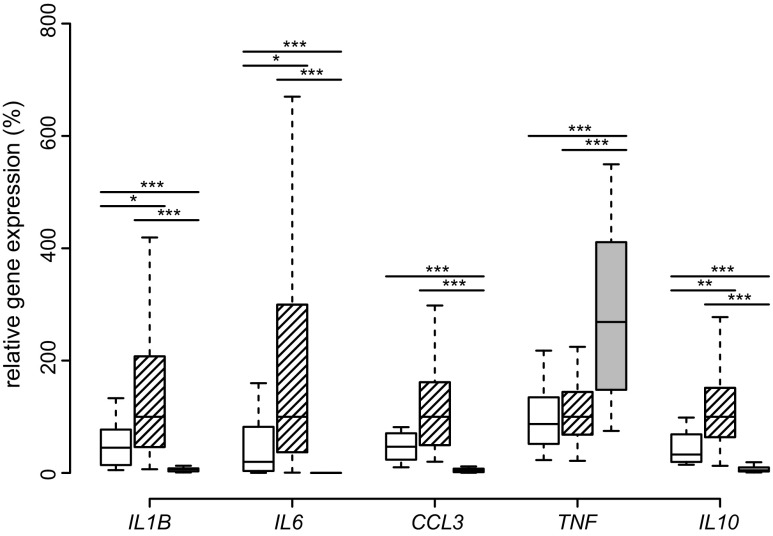
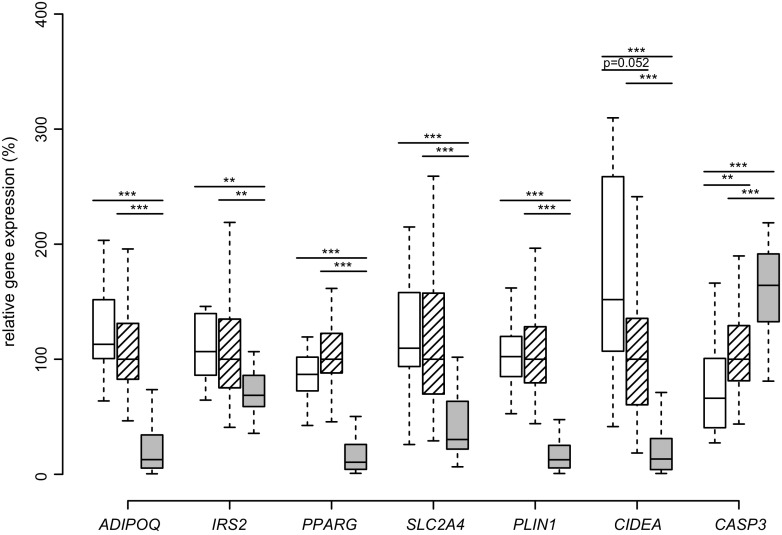
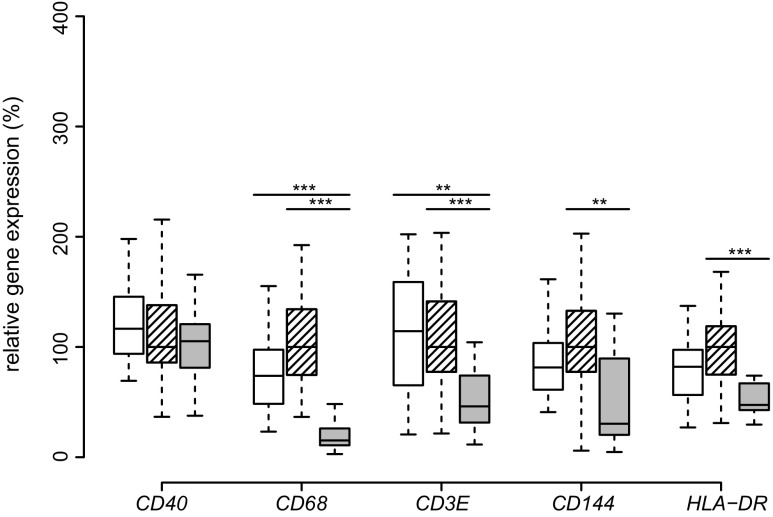
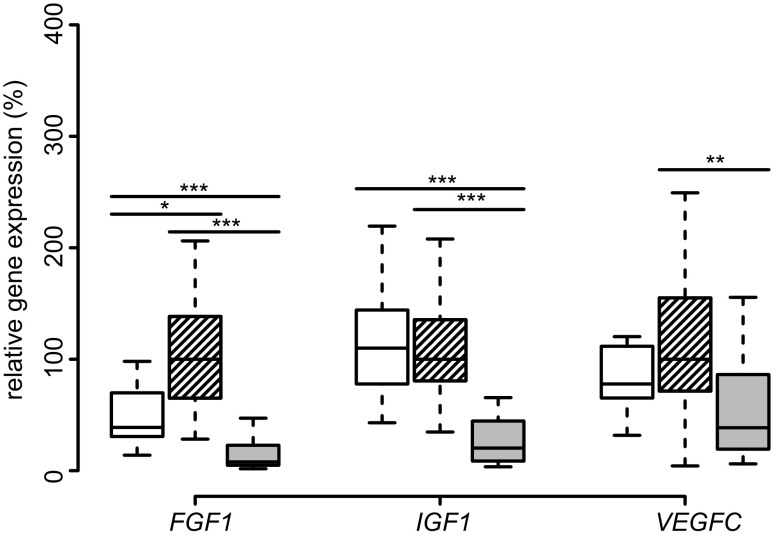
Results: After surgery, mean BMI decreased from 46.1 ± 6.3 to 31.1 ± 5.7 kg/m2 and homeostasis model assessment of insulin resistance from 5.4 ± 5.3 to 0.8 ± 0.8. SAT expression of most analyzed inflammatory cytokines, growth factors, and metabolic and cell surface markers was greatly downregulated even compared to the lean cohort. In contrast, gene expression of TNF and CASP3 was significantly upregulated. Elastic net regression analysis showed that fasting glucose levels and CASP3 predicted increased TNF expression in the post-obese group.
Conclusions: Gene expression patterns in SAT 1 year after bariatric surgery point to a reduced inflammation. The unexpected high TNF expression in SAT of post-obese subjects is most likely not an indicator for inflammation, but rather an indicator for increased lipolysis and adipose tissue catabolism. Notably, after bariatric surgery SAT gene expression reflects a cachexia-like phenotype and differs from the lean state.
Keywords: Bariatric surgery; Gene expression; Subcutaneous adipose tissue; Tumor necrosis factor; Weight loss.
Conflict of interest statement
Conflict of Interest
All authors declare that they have no conflict of interest.
Ethical Approval/Human Rights
All procedures performed in studies involving human participants were in accordance with the ethical standards of the institutional and/or national research committee and with the 1964 Helsinki declaration and its later amendments or comparable ethical standards.
Informed Consent
All participants provided informed written consent prior to their inclusion in the study. The trial had been approved by the Ethics Committee of the Medical University of Vienna (EK-Nr. 488/2006, EK 275/2006 and EK-Nr. 963/2009) and by the Ethics Committee of the Göttlicher Heiland Hospital (EK-Nr. E10-N01–01) and was conducted at the Clinical Research Unit of the Division of Endocrinology and Metabolism, Department of Medicine III, Medical University of Vienna.
Disclosure Statement
The authors declare that they have no conflict of interest.
Figures
References
MeSH terms
Substances
LinkOut - more resources
Full Text Sources
Other Literature Sources
Medical
Research Materials
