. 2016 Nov 30:7:13493.
doi: 10.1038/ncomms13493.

Confirmation of the topology of the Wendelstein 7-X magnetic field to better than 1:100,000

Collaborators, Affiliations

Confirmation of the topology of the Wendelstein 7-X magnetic field to better than 1:100,000

T Sunn Pedersen et al. Nat Commun. .

Erratum in

Abstract

Fusion energy research has in the past 40 years focused primarily on the tokamak concept, but recent advances in plasma theory and computational power have led to renewed interest in stellarators. The largest and most sophisticated stellarator in the world, Wendelstein 7-X (W7-X), has just started operation, with the aim to show that the earlier weaknesses of this concept have been addressed successfully, and that the intrinsic advantages of the concept persist, also at plasma parameters approaching those of a future fusion power plant. Here we show the first physics results, obtained before plasma operation: that the carefully tailored topology of nested magnetic surfaces needed for good confinement is realized, and that the measured deviations are smaller than one part in 100,000. This is a significant step forward in stellarator research, since it shows that the complicated and delicate magnetic topology can be created and verified with the required accuracy.


Conflict of interest statement

The authors declare no competing financial interests.

Figures
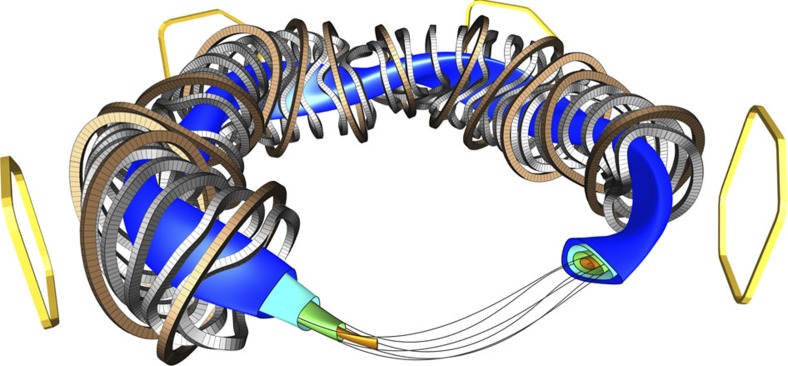
Figure 1
Figure 1. Layout of W7-X.
Some representative nested magnetic surfaces are shown in different colours in this computer-aided design (CAD) rendering, together with a magnetic field line that lies on the green surface. The coil sets that create the magnetic surfaces are also shown, planar coils in brown, non-planar coils in grey. Some coils are left out of the rendering, allowing for a view of the nested surfaces (left) and a Poincaré section of the shown surfaces (right). Four out of the five external trim coils are shown in yellow. The fifth coil, which is not shown, would appear at the front of the rendering.
Figure 2
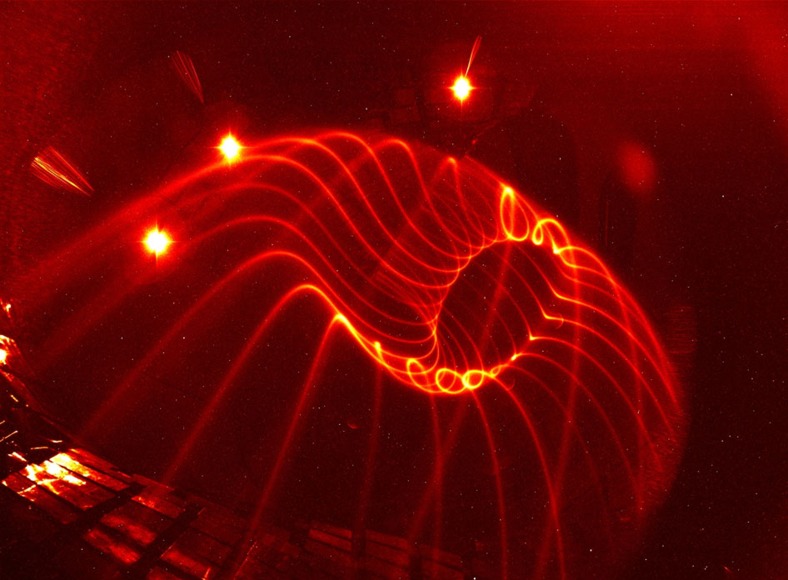
Figure 2. Experimental visualization of the field line on a magnetic surface.
The field lines making up a magnetic surface are visualized in a dilute neutral gas, in this case primarily water vapour and nitrogen (pn≈10−6 mbar). The three bright light spots are overexposed point-like light sources used to calibrate the camera viewing geometry.
Figure 3
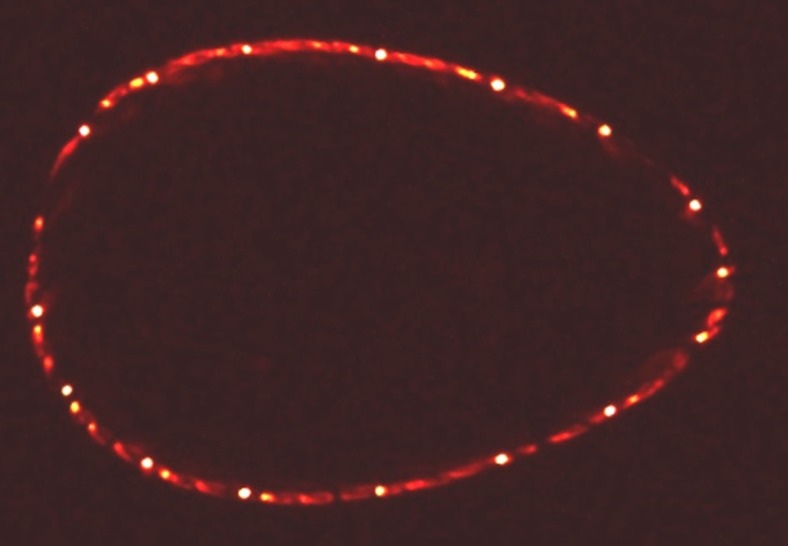
Figure 3. Poincaré section of a magnetic surface.
The Poincaré section of a closed magnetic surface is measured using the fluorescent rod technique. The electron beam circulates more than 40 times, that is, over 1 km along the field line.
Figure 4
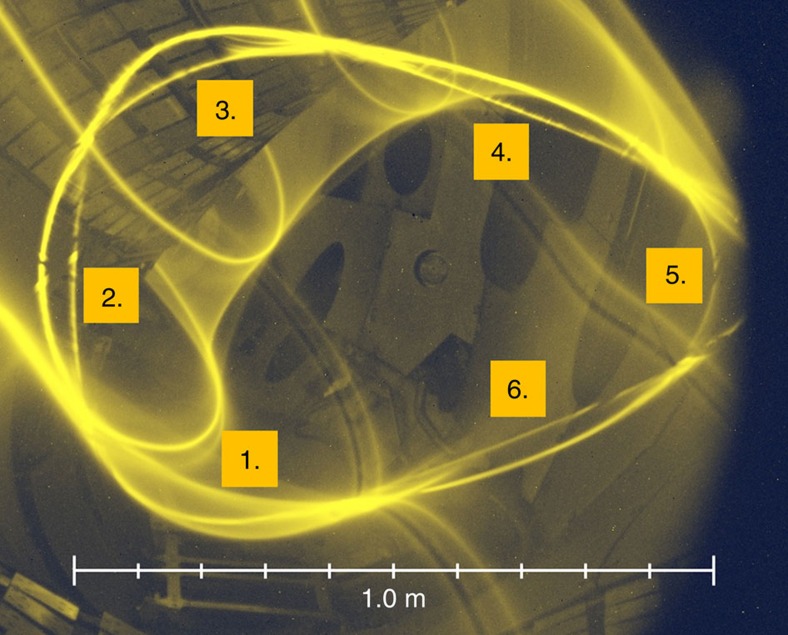
Figure 4. The natural 5/6 island chain.
The 5/6 island chain is visible in a poloidal-radial Poincaré plot created by an electron gun and a sweep rod, as a set of six ‘bubbles', reflecting the m=6 poloidal mode number. A thin background gas in the chamber creates a visualization of the field lines that create the x-points of the island chain.
Figure 5
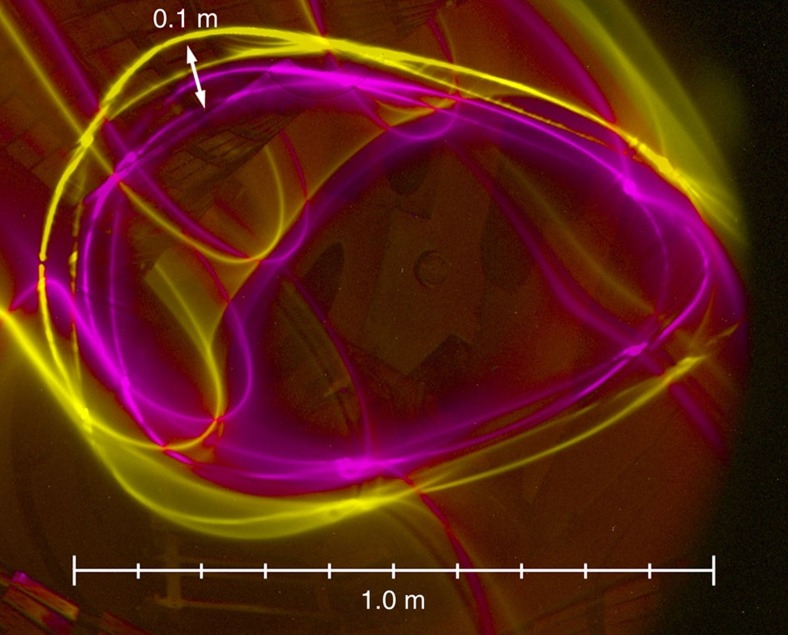
Figure 5. Island chain shifts at higher field.
The 5/6 island chain is shown in cyan for B=0.4 T, and in yellow for B=2.5 T. Although nominally one might expect them to be identical, the 5/6 island chain is about 10 cm further out at high field strength, due to small deformations of the magnet coils under electromagnetic forces.
Figure 6
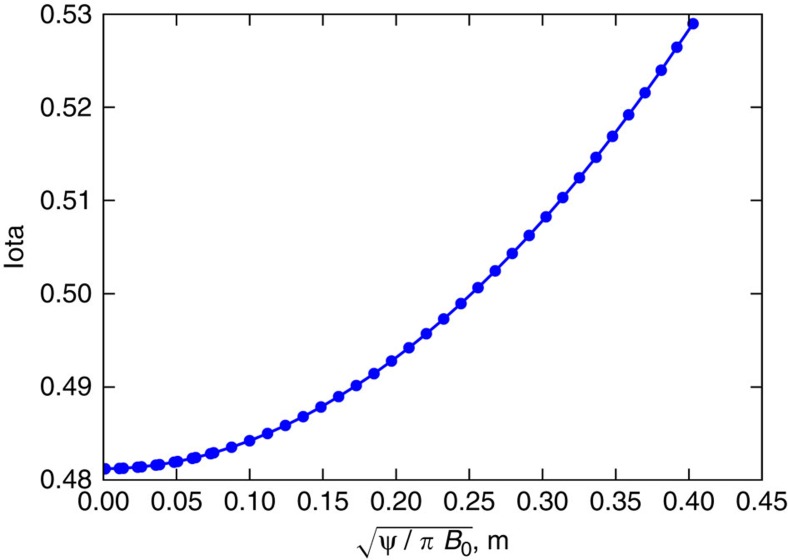
Figure 6. Profile of ɩ for error field studies.
The ɩ profile is shown for the special configuration developed for field error detection. The ɩ varies only minimally around the resonant value of 1/2. The x axis is a measure of the minor radial size (in meters) of the magnetic flux surface, that is, a pseudo-radial coordinate.
Figure 7
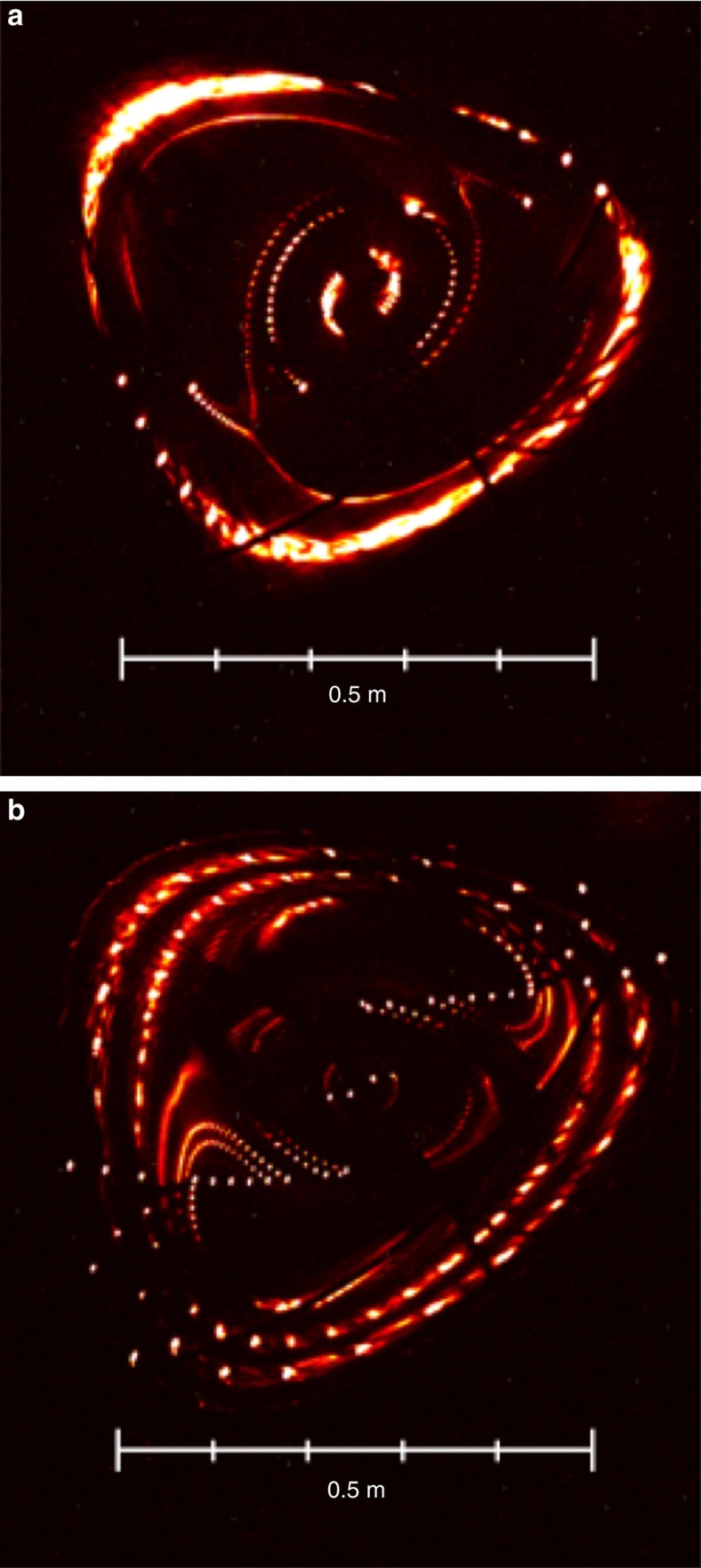
Figure 7. Measured island chains for different coil current settings.
For the special ɩ≈1/2 configuration, the n=1, m=2 island size and phase can be measured by the Poincaré section method. Here two conglomerate images a and b with several nested surfaces are shown for two different phases of a purposely added n=1 field structure with the same amplitude. Although the shadowing problem leads to gaps, the trained eye can still detect the changes in size and phase of the m=2 island.
Figure 8
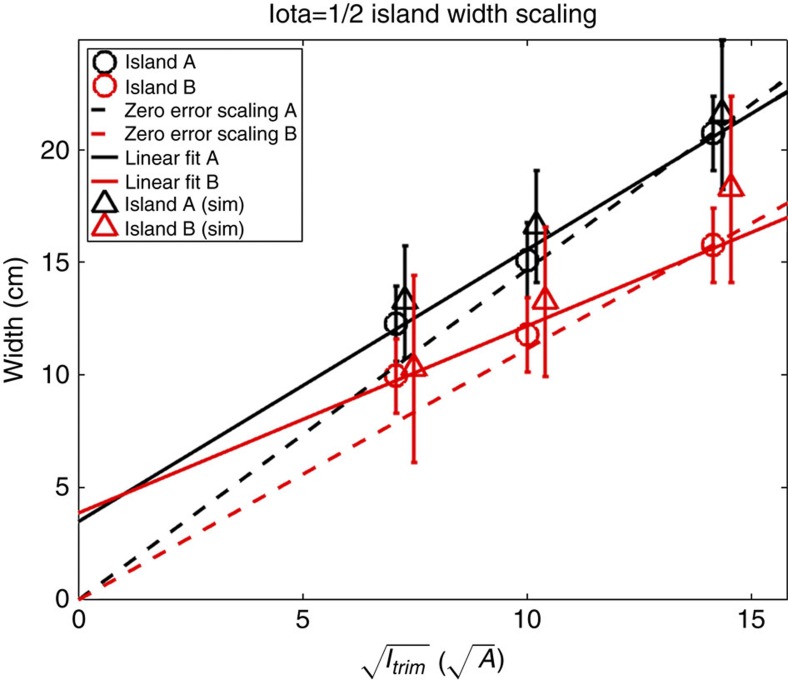
Figure 8. Comparison with metrology-generated numerical model.
The measured island widths are compared directly with those predicted from numerical calculations that take the as-built as-installed geometry of the W7-X coil set into account. Excellent agreement is seen. The offset from zero in the linear fits indicate the intrinsic 4 cm island width. If no intrinsic error field were present, the points would have lined up with the dotted lines. The island widths are determined from the real or synthetic images by use of an image processing software programme developed for these purposes. Since it was not always possible to image the edge of the island chain exactly, and even when so, the electron beam gives a certain width to an island chain or a magnetic surface, the island width has some uncertainty. The error bars indicate the largest and smallest possible island size consistent with the data.

References

    1. Lawson J. D. Some criteria for a power producing thermonuclear reactor. Proc. Phys. Soc. B 70, 6–10 (1957).
    1. Lorenzini R. et al.. Self-organized helical equilibria as a new paradigm for ohmically heated fusion plasmas. Nat. Phys. 5, 570–574 (2009).
    1. Spitzer L. The stellarator concept. Phys. Fluids 1, 253–264 (1958).
    1. Nührenberg J. & Zille R. Quasi-helically symmetric toroidal stellarators. Phys. Lett. A 129, 113–117 (1988).
    1. Boozer A. H. Plasma equilibrium with rational magnetic surfaces. Phys. Fluids 24, 1999–2003 (1981).

Publication types

LinkOut - more resources