Methanosarcina acetivorans utilizes a single NADPH-dependent thioredoxin system and contains additional thioredoxin homologues with distinct functions
- PMID: 27902413
- PMCID: PMC5903248
- DOI: 10.1099/mic.0.000406
Methanosarcina acetivorans utilizes a single NADPH-dependent thioredoxin system and contains additional thioredoxin homologues with distinct functions
Abstract
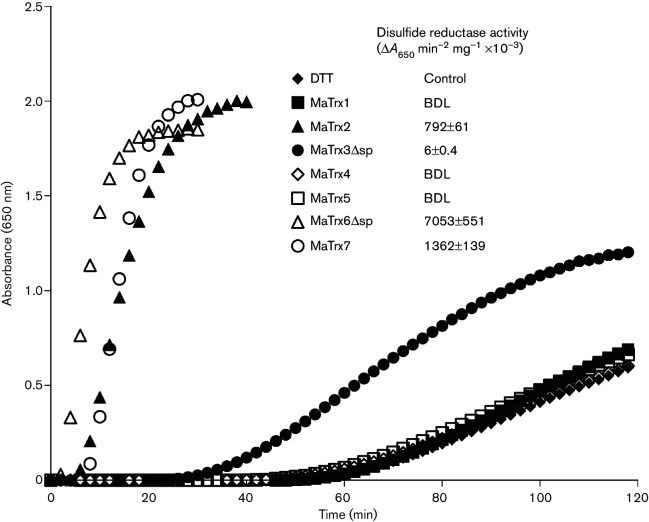
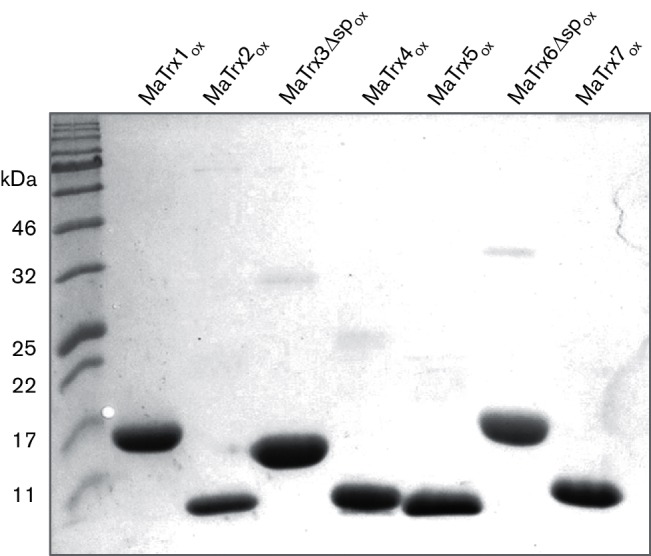
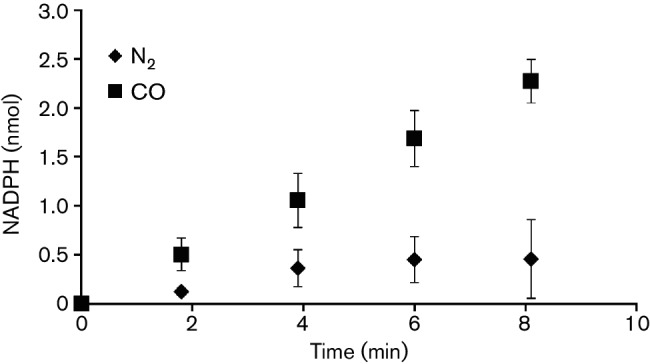
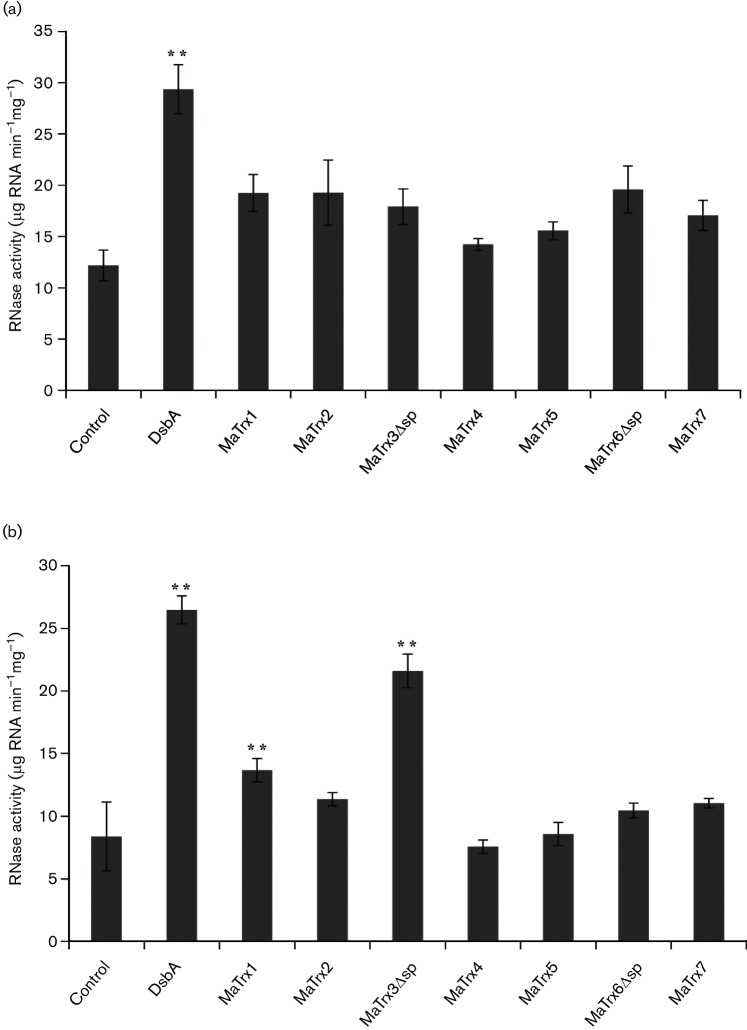
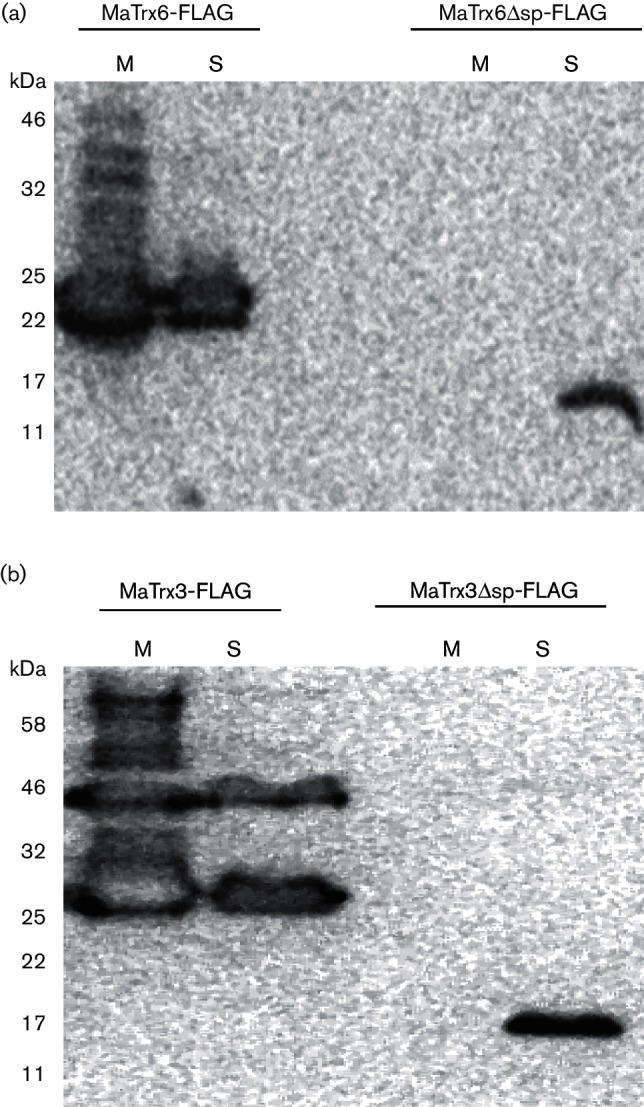
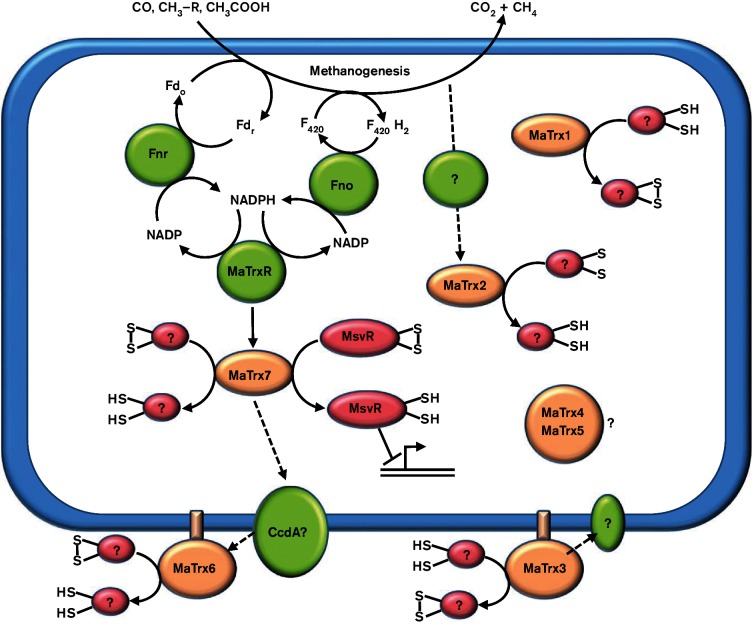
The thioredoxin system plays a central role in the intracellular redox maintenance in the majority of cells. The canonical system consists of an NADPH-dependent thioredoxin reductase (TrxR) and thioredoxin (Trx), a disulfide reductase. Although Trx is encoded in almost all sequenced genomes of methanogens, its incorporation into their unique physiology is not well understood. Methanosarcina acetivorans contains a single TrxR (MaTrxR) and seven Trx (MaTrx1-MaTrx7) homologues. We previously showed that MaTrxR and at least MaTrx7 compose a functional NADPH-dependent thioredoxin system. Here, we report the characterization of all seven recombinant MaTrxs. MaTrx1, MaTrx3, MaTrx4 and MaTrx5 lack appreciable disulfide reductase activity, unlike previously characterized MaTrx2, MaTrx6 and MaTrx7. Enzyme assays demonstrated that, of the MaTrxs, only the reduction of disulfide-containing MaTrx7 is linked to the oxidation of reduced coenzymes. NADPH is shown to be supplied to the MaTrxR-MaTrx7 system through the oxidation of the primary methanogen electron carriers F420H2 and ferredoxin, indicating that it serves as a primary intracellular reducing system in M. acetivorans. Bioinformatic analyses also indicate that the majority of methanogens likely utilize an NADPH-dependent thioredoxin system. The remaining MaTrxs may have specialized functions. MaTrx1 and MaTrx3 exhibited thiol oxidase activity. MaTrx3 and MaTrx6 are targeted to the membrane of M. acetivorans and likely function in the formation and the reduction of disulfides in membrane and/or extracellular proteins, respectively. This work provides insight into the incorporation of Trx into the metabolism of methanogens, and this reveals that methanogens contain Trx homologues with alternative properties and activities.
Conflict of interest statement
The authors declare that there are no conflicts of interest.
Figures
References
-
- Ferry JG. One-carbon metabolism in methanogenic anaerobes. In: Ljungdahl LL, Adams MW, Barton LL, Ferry JG, Johnson MK, editors. Biochemistry and Physiology of Anaerobic Bacteria. New York: Springer-Verlag; 2003. pp. 143–156. (editors)
-
- Zinder S. Physiological ecology of methanogens. In: Jerry JG, editor. Methanogenesis. New York, NY: Chapman and Hall; 1993. pp. 128–206. (editor)
-
- Ferry JG. Enzymology of one-carbon metabolism in methanogenic pathways. FEMS Microbiol Rev. 1999;23:13–38. - PubMed
-
- Deppenmeier U. The membrane-bound electron transport system of Methanosarcina species. J Bioenerg Biomembr. 2004;36:55–64. - PubMed
Publication types
MeSH terms
Substances
Grants and funding
LinkOut - more resources
Full Text Sources
Other Literature Sources