


The Bruton Tyrosine Kinase (BTK) Inhibitor Acalabrutinib Demonstrates Potent On-Target Effects and Efficacy in Two Mouse Models of Chronic Lymphocytic Leukemia
- PMID: 27903679
- PMCID: PMC5548968
- DOI: 10.1158/1078-0432.CCR-16-0463
The Bruton Tyrosine Kinase (BTK) Inhibitor Acalabrutinib Demonstrates Potent On-Target Effects and Efficacy in Two Mouse Models of Chronic Lymphocytic Leukemia
Abstract
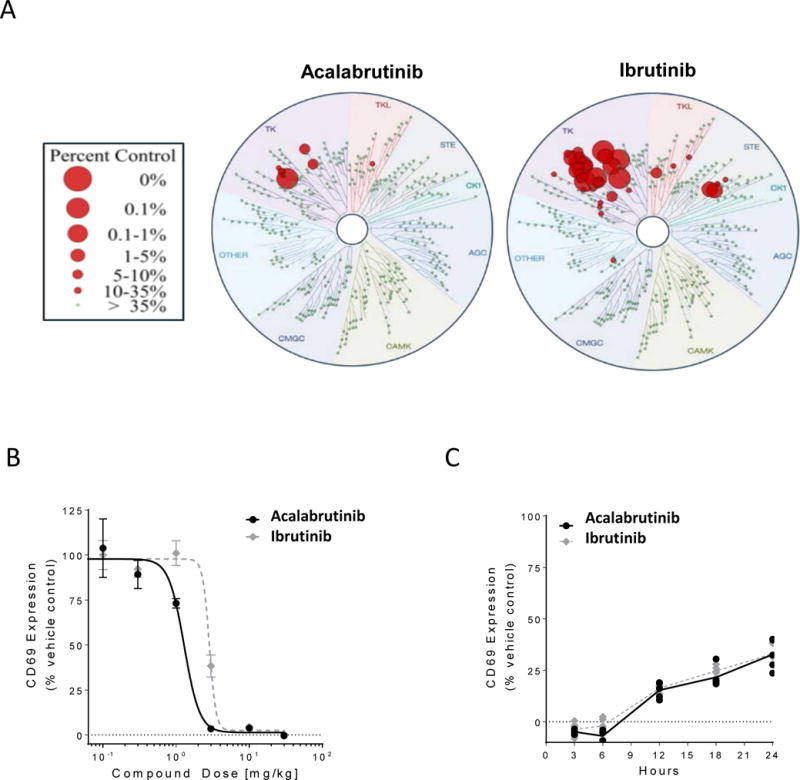
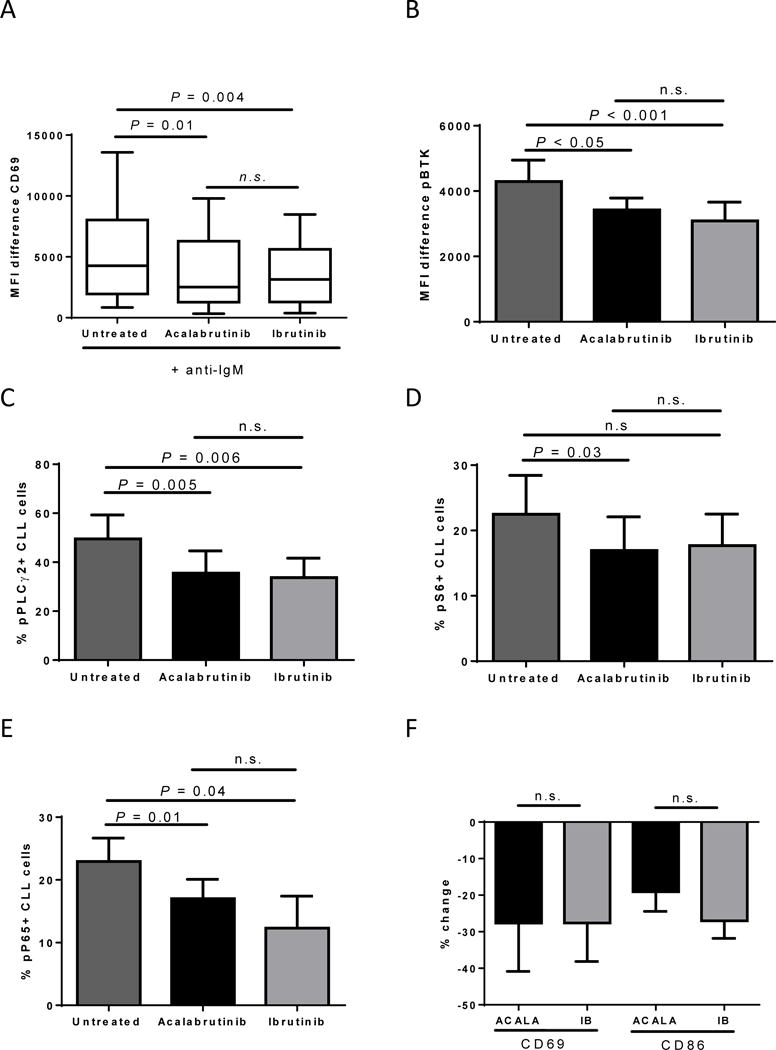
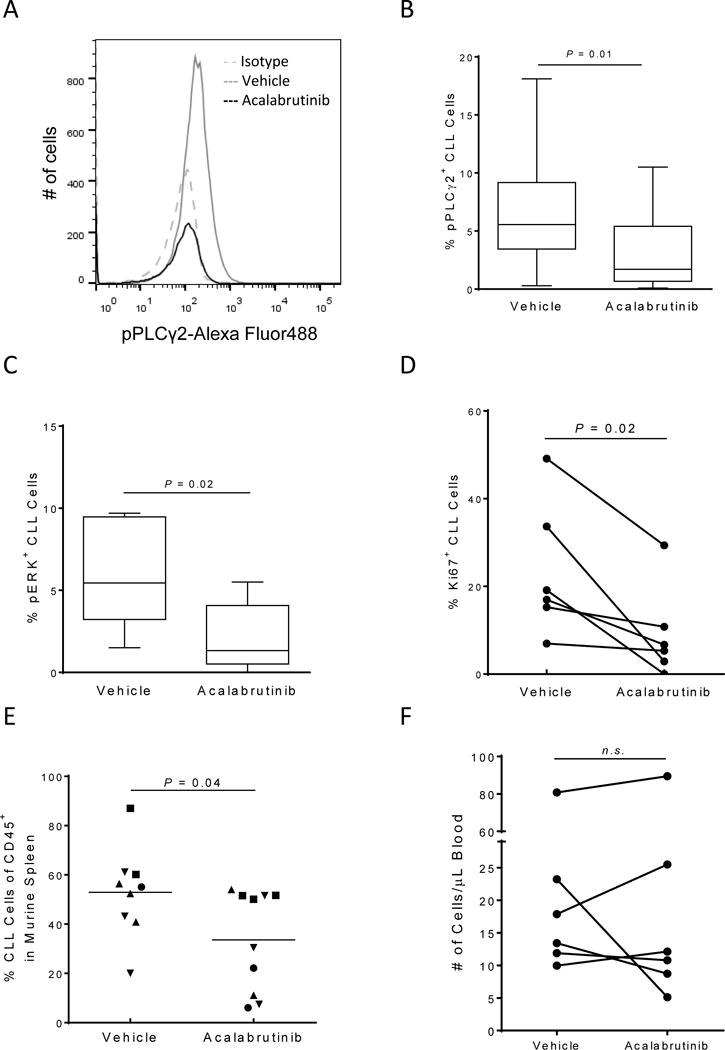
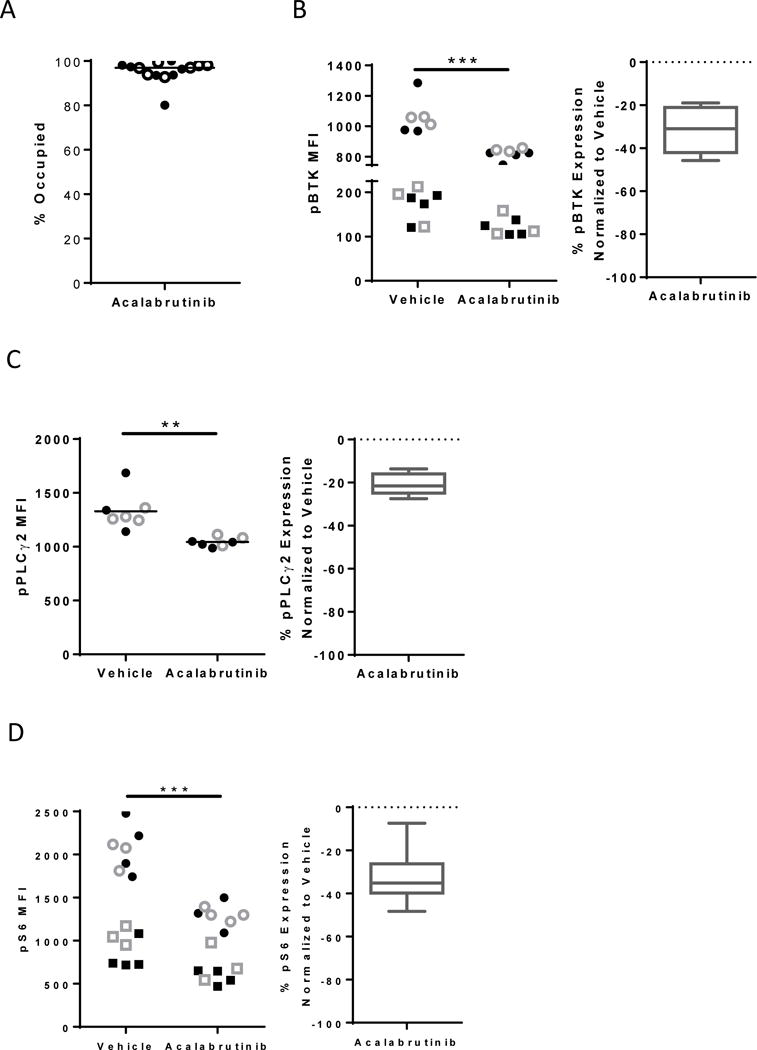
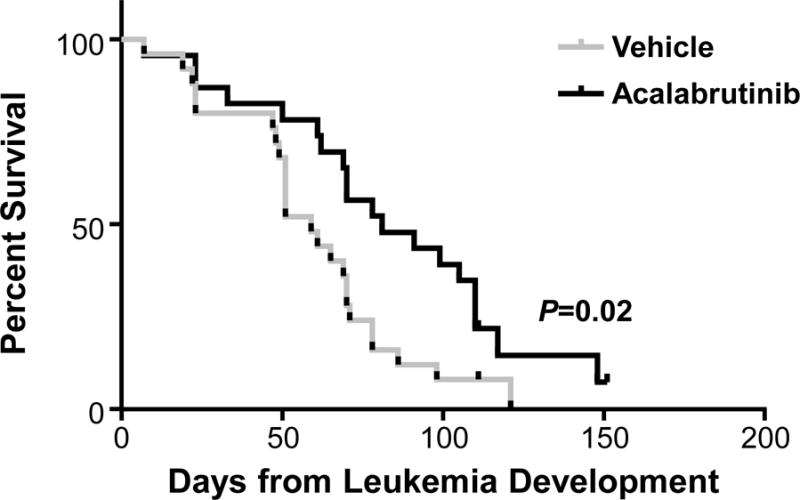
Purpose: Acalabrutinib (ACP-196) is a novel, potent, and highly selective Bruton tyrosine kinase (BTK) inhibitor, which binds covalently to Cys481 in the ATP-binding pocket of BTK. We sought to evaluate the antitumor effects of acalabrutinib treatment in two established mouse models of chronic lymphocytic leukemia (CLL).Experimental Design: Two distinct mouse models were used, the TCL1 adoptive transfer model where leukemic cells from Eμ-TCL1 transgenic mice are transplanted into C57BL/6 mice, and the human NSG primary CLL xenograft model. Mice received either vehicle or acalabrutinib formulated into the drinking water.Results: Utilizing biochemical assays, we demonstrate that acalabrutinib is a highly selective BTK inhibitor as compared with ibrutinib. In the human CLL NSG xenograft model, treatment with acalabrutinib demonstrated on-target effects, including decreased phosphorylation of PLCγ2, ERK, and significant inhibition of CLL cell proliferation. Furthermore, tumor burden in the spleen of the mice treated with acalabrutinib was significantly decreased compared with vehicle-treated mice. Similarly, in the TCL1 adoptive transfer model, decreased phosphorylation of BTK, PLCγ2, and S6 was observed. Most notably, treatment with acalabrutinib resulted in a significant increase in survival compared with mice receiving vehicle.Conclusions: Treatment with acalabrutinib potently inhibits BTK in vivo, leading to on-target decreases in the activation of key signaling molecules (including BTK, PLCγ2, S6, and ERK). In two complementary mouse models of CLL, acalabrutinib significantly reduced tumor burden and increased survival compared with vehicle treatment. Overall, acalabrutinib showed increased BTK selectivity compared with ibrutinib while demonstrating significant antitumor efficacy in vivo on par with ibrutinib. Clin Cancer Res; 23(11); 2831-41. ©2016 AACR.
©2016 American Association for Cancer Research.
Conflict of interest statement
Figures
References
-
- Buggy JJ, Elias L. Bruton Tyrosine Kinase (BTK) and Its Role in B-cell Malignancy. Int Rev Immunol. 2012;31:119–32. - PubMed
-
- Hendriks RW, Bredius RG, Pike-Overzet K, Staal FJ. Biology and novel treatment options for XLA, the most common monogenetic immunodeficiency in man. Expert Opin Ther Targets. 2011;15:1003–21. - PubMed
-
- Hendriks RW, Yuvaraj S, Kil LP. Targeting Bruton’s tyrosine kinase in B cell malignancies. Nat Rev Cancer. 2014;14:219–32. - PubMed
-
- Wiestner A. Targeting B-Cell receptor signaling for anticancer therapy: the Bruton’s tyrosine kinase inhibitor ibrutinib induces impressive responses in B-cell malignancies. J Clin Oncol. 2013;31:128–30. - PubMed
MeSH terms
Substances
Grants and funding
LinkOut - more resources
Full Text Sources
Other Literature Sources
Miscellaneous
