. 2017 Feb 28;45(4):1793-1804.
doi: 10.1093/nar/gkw1162.

Identification of a novel K311 ubiquitination site critical for androgen receptor transcriptional activity

Affiliations

Identification of a novel K311 ubiquitination site critical for androgen receptor transcriptional activity

Urszula L McClurg et al. Nucleic Acids Res. .

Abstract

The androgen receptor (AR) is the main driver of prostate cancer (PC) development and progression, and the primary therapeutic target in PC. To date, two functional ubiquitination sites have been identified on AR, both located in its C-terminal ligand binding domain (LBD). Recent reports highlight the emergence of AR splice variants lacking the LBD that can arise during disease progression and contribute to castrate resistance. Here, we report a novel N-terminal ubiquitination site at lysine 311. Ubiquitination of this site plays a role in AR stability and is critical for its transcriptional activity. Inactivation of this site causes AR to accumulate on chromatin and inactivates its transcriptional function as a consequence of inability to bind to p300. Additionally, mutation at lysine 311 affects cellular transcriptome altering the expression of genes involved in chromatin organization, signaling, adhesion, motility, development and metabolism. Even though this site is present in clinically relevant AR-variants it can only be ubiquitinated in cells when AR retains LBD suggesting a role for AR C-terminus in E2/E3 substrate recognition. We report that as a consequence AR variants lacking the LBD cannot be ubiquitinated in the cellular environment and their protein turnover must be regulated via an alternate pathway.


Figures

Figure 1.
Figure 1.
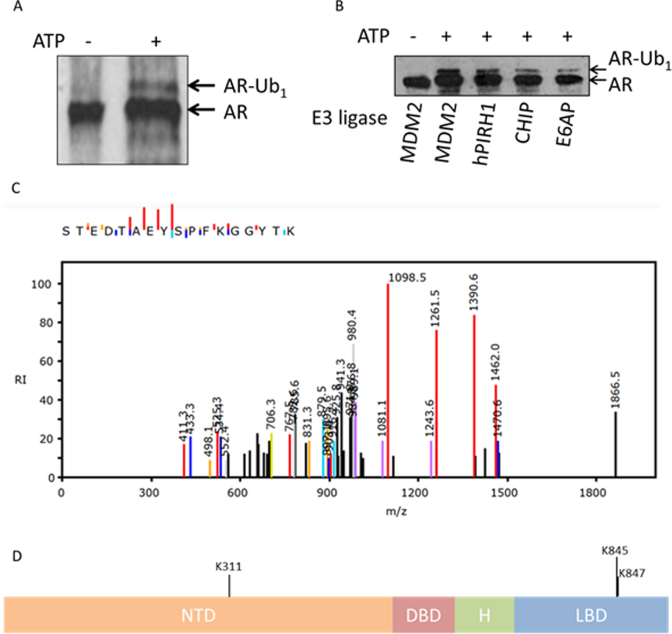
In vitro identification of K311 as a site of AR ubiquitination. (A) In vitro monoubiquitination of AR by MDM2 upon addition of ATP. Monoubiquitinated AR (AR-Ub1) was excised from the colloidal-coomassie stained gel for MSMS analysis. (B) Monoubiquitination of AR-NTD protein (AR-Ub1) can be detected by Western blotting following in vitro ubiquitination reactions in the presence of ATP, UBE1, UBCH5α and UbK0 using four different E3 ligases; MDM2, hPIRH2, CHIP and E6AP. (C) MSMS spectrum of the tryptic peptide, <302>STEDTAEYSPFK*GGYTK<318>, observed following in gel tryptic digest. Analysis of the spectrum locates unequivocally a diglycine modification to K311. (D) AR domain structure highlighting the novel site of AR ubiquitination, K311, within the N-terminal domain (NTD). Previously identified RNF6 target lysines within the ligand binding domain (LBD) are also indicated, K845 and K847. DBD—DNA binding domain, H—hinge.
Figure 2.
Figure 2.
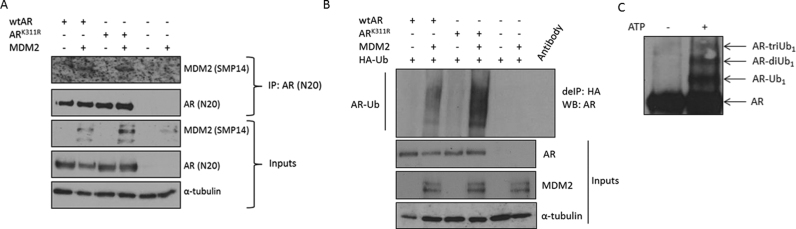
AR K311 is not the sole target of MDM2-mediated ubiquitination. (A) HEK293T cells were transfected as indicated and AR with interacting partners were immunoprecipitated followed by immunoblotting. (B) HEK293T cells were transfected as indicated followed by denaturing immunoprecipitation and immunoblotting. (C) Western blotting of AR DBD/H/LBD with annotated monoubiquitination (AR-Ub1) and di-monoubiquitination (AR-diUb1) by MDM2 following in vitro ubiquitination assay. Reactions contained UBE1, UBE2D3, and UbK0 in the absence or presence of ATP to activate the ubiquitination reaction.
Figure 3.
Figure 3.
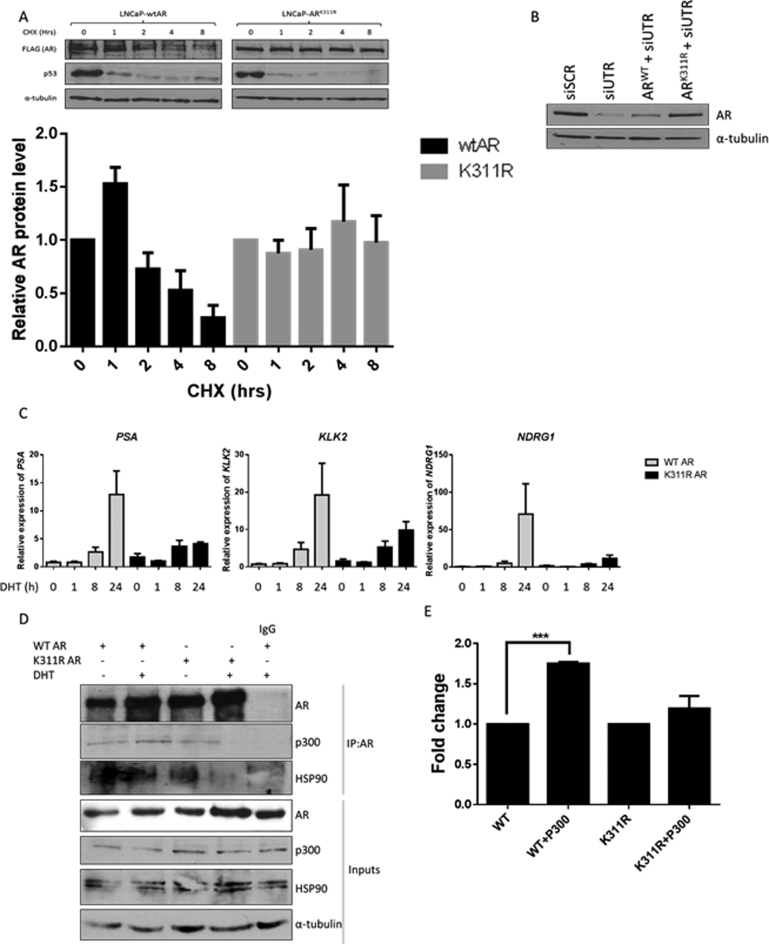
K311 is important for AR protein stability and plays a critical role for its transcriptional activity. (A) LNCaP cells stably expressing either FLAG-WT AR or FLAG-AR K311R were subjected to treatment with 10 μg/ml cycloheximide (CHX) as indicated, followed by Western blotting with an anti-FLAG antibody. Band intensity was quantified and graph represents three independent experiments ± SEM. (B) Silencing of endogenous AR using siRNA targeting the 3΄ UTR (siUTR) sequence absent in exogenous AR carrying vectors causes reduction in AR protein in non-transduced LNCaP cells compared to scrambled control siRNA (siScr). Cells overexpressing lentiviral WT AR or AR K311R show increased levels of exogenous AR compared to non-transduced LNCaP cells after silencing their endogenous AR with siUTR treatment. (C) qRT-PCR analysis of AR target gene expression in LNCaP cells stably overexpressing WT or K311R AR after silencing endogenous AR. Cells were cultured in steroid depleted media for 72 h followed by 24h treatment with 10 nM DHT. Data is a mean of three independent experiments normalized to HPRT1 ± SEM. (D) AR was immunoprecipitated from the LNCaP cells stably overexpressing WT or K311R AR cultured in the presence or absence of 10 nM DHT followed by immunoblotting. (E) HEK293T cells were transfected with WT or AR K311R alongside a luciferase reporter plasmid under the control of an androgen response sequence (ARE3) of the PSA promoter with and without p300 overexpression. Cells were cultured in steroid depleted media for 48 hours before 24 h treatment ± 10 nM DHT. Data represent a mean of three independent experiments ± SEM. Luciferase activity was normalized to each AR alone.
Figure 4.
Figure 4.
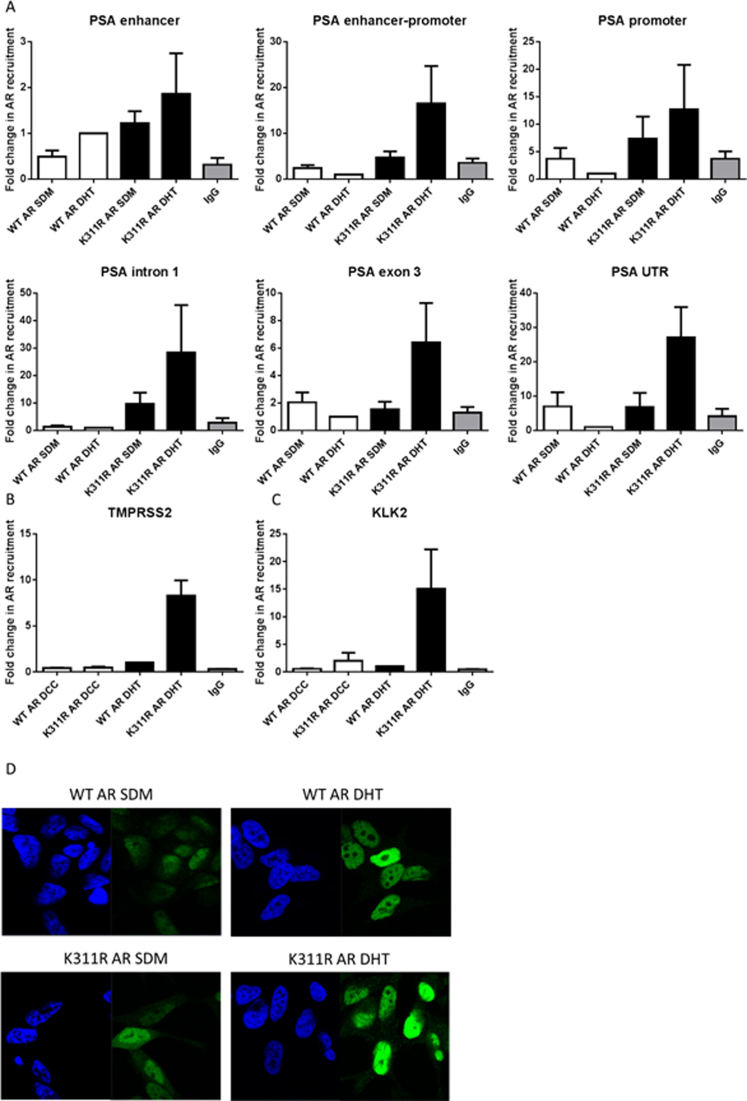
K311R AR is retained on chromatin resulting in decreased transcriptional activity. (A) ChIP analysis of AR recruitment to the different regions of the PSA gene, (B) promoter of TMPRSS2 and (C) promoter of KLK2 after androgen stimulation in LNCaP cells stably overexpressing WT or K311R AR after silencing endogenous AR following 120 min 10 nM DHT stimulation. Data is a mean of three independent experiments ± SEM. (D) LNCaP cells expressing WT or K311R AR were cultured in steroid depleted media for 70 h followed by 2 h treatment with 10 nM DHT and AR cellular localization was visualized by immunofluorescence.
Figure 5.
Figure 5.
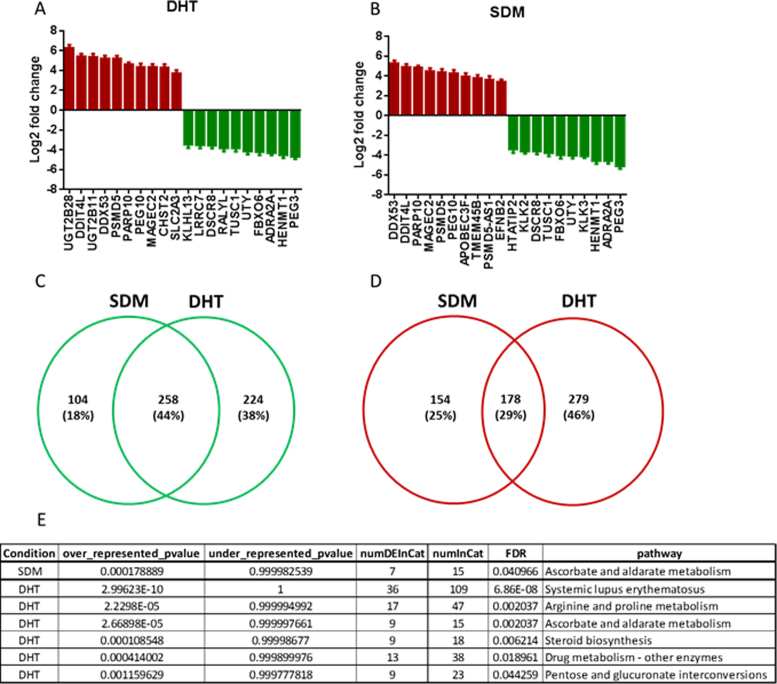
Mutation of Lysine 311 causes global changes to the LNCaP transcriptome. (A) RNA was sequenced in triplicate from LNCaP cells expressing WT or K311R AR and genes most significantly deregulated in the presence of DHT were plotted. (B) RNA was sequenced in triplicate from LNCaP cells expressing WT or K311R AR and genes most significantly deregulated in the absence of DHT were plotted. (C-D) Venn diagram of genes up- (C) and down- (D) regulated in K311R expressing LNCaP cells compared to WT AR expressing cells. (E) Table of metabolic pathways most significantly affected by mutation in K311 of the androgen receptor.
Figure 6.
Figure 6.
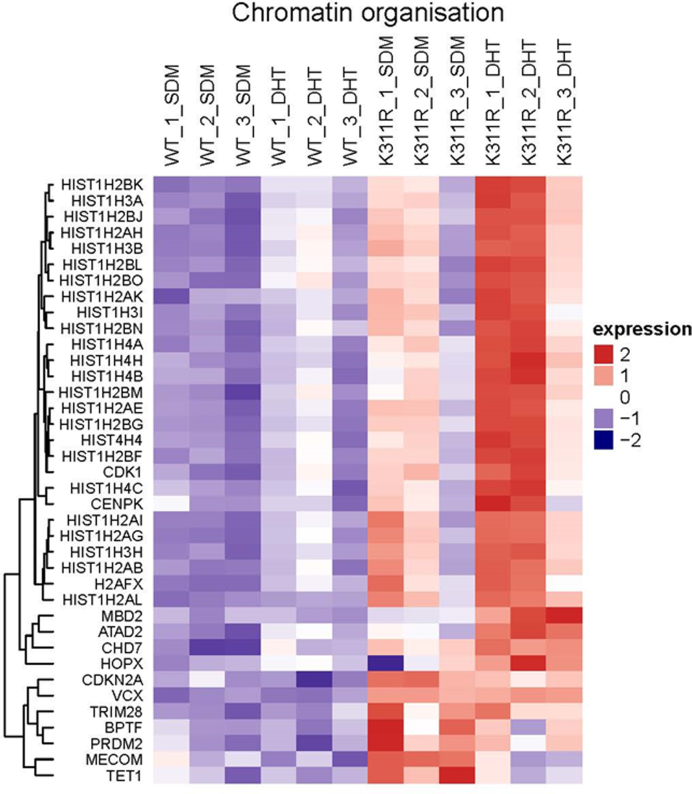
Mutation of K311 significantly upregulated the expression of genes responsible for chromatin organization. Genes significantly deregulated by K311 mutation in AR were clustered into the respective biological processes using Go term and a clustered heat map of genes involved in chromatin organization was generated.
Figure 7.
Figure 7.
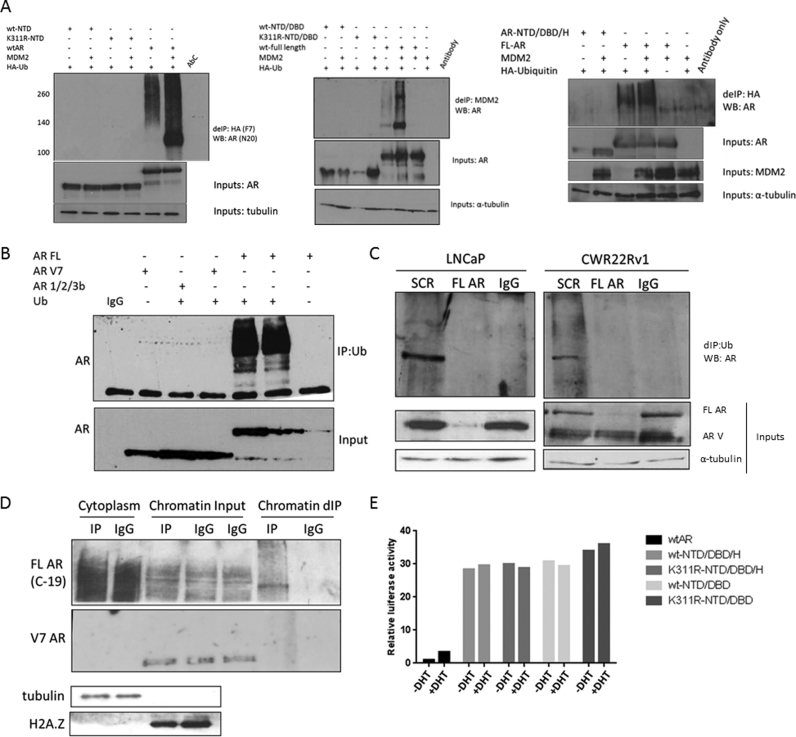
Truncated AR variants are not ubiquitinated. (A-B) Cells were transfected with plasmids as indicated followed by denaturing immunoprecipitation and western blotting. (C) LNCaP and CWR22Rv1 cells were treated with siRNAs as indicated for 96 h followed by denaturing immunoprecipitation and immunoblotting. (D) Chromatin and cytoplasm fractions were isolated from the CWR22Rv1 cells and denaturing immunoprecipitation was performed on each cellular fraction followed by immunoblotting. (E) HEK293T cells were transfected with WT AR or AR K311R along with a luciferase reporter plasmid under the control of ARE3 of the PSA promoter. Cells were cultured in steroid depleted media for 48 h before 24 h treatment ± 10 nM DHT. Data represent a mean of three independent experiments ± SEM. Luciferase activity was normalized to WT AR + DHT.

References

    1. Lorente D., De Bono J.S.. Molecular alterations and emerging targets in castration resistant prostate cancer. Eur. J. Cancer. 2014; 50:753–764. - PubMed
    1. Attard G., Richards J., de Bono J.S.. New strategies in metastatic prostate cancer: targeting the androgen receptor signaling pathway. Clin. Cancer Res. 2011; 17:1649–1657. - PMC - PubMed
    1. Feldman B.J., Feldman D.. The development of androgen-independent prostate cancer. Nat. Rev. Cancer. 2001; 1:34–45. - PubMed
    1. Coffey K., Robson C.N.. Regulation of the androgen receptor by post-translational modifications. J. Endocrinol. 2012; 215:221–237. - PubMed
    1. Komander D. The emerging complexity of protein ubiquitination. Biochem. Soc. Trans. 2009; 37:937–953. - PubMed

Publication types

MeSH terms