


A indicator of visceral adipose dysfunction to evaluate metabolic health in adult Chinese
- PMID: 27905531
- PMCID: PMC5131270
- DOI: 10.1038/srep38214
A indicator of visceral adipose dysfunction to evaluate metabolic health in adult Chinese
Abstract
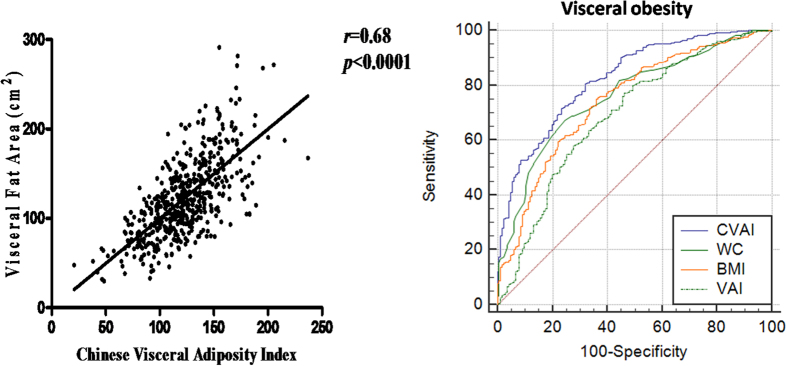
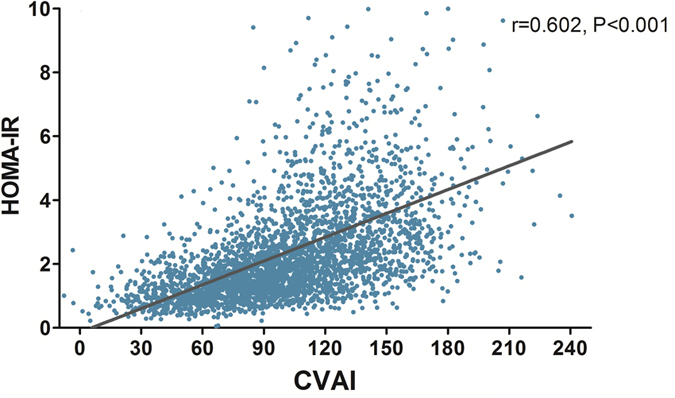
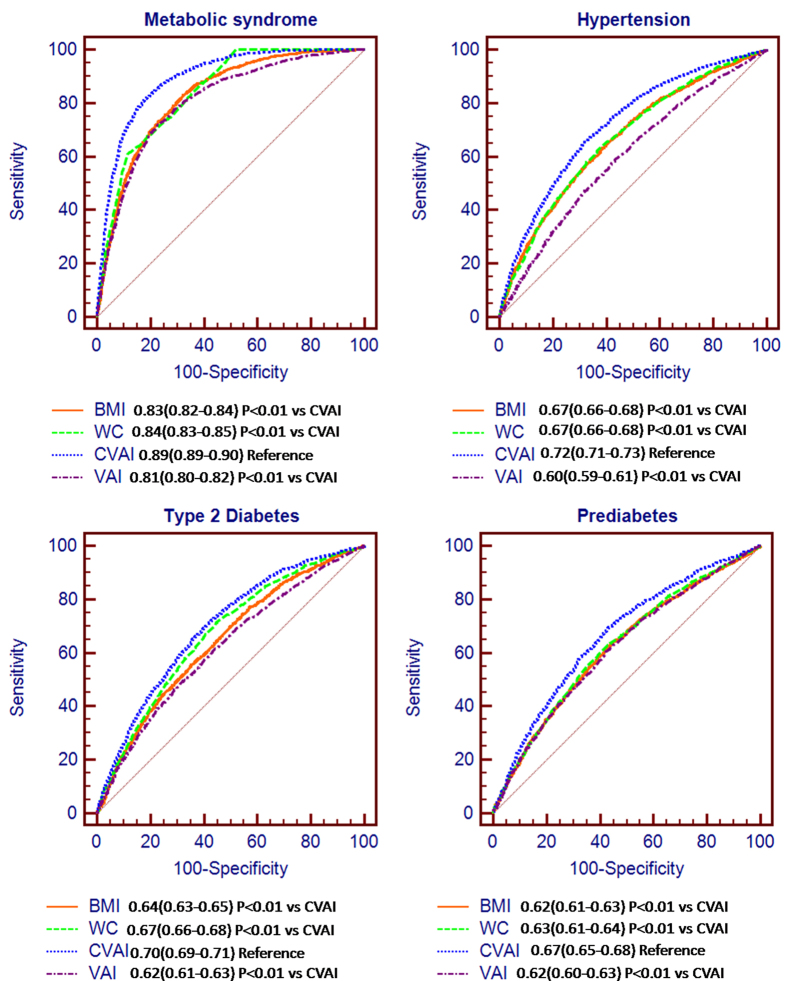
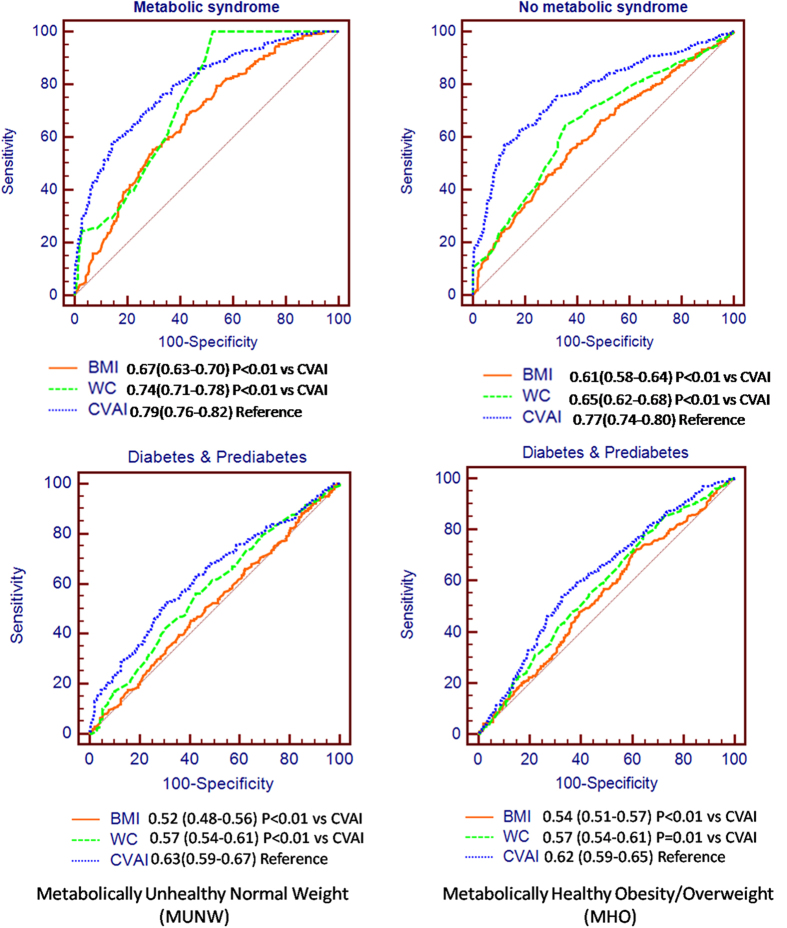
Visceral adipose dysfunction is a major cause of metabolic disorders. However, there is lack of a clinical index for prediction of visceral fat dysfunction in Asians. The present study aims to establish a visceral adiposity index for evaluation of metabolic health status in Chinese, the largest Asian ethnic group. 485 subjects were recruited from Lianqian Community, Xiamen and received abdominal computed tomography(CT) for visceral fat area. A Chinese visceral adiposity index (CVAI) was created using multivariate linear regression analyses, and was further validated in 6495 subjects recruited from Changfeng Community, Shanghai. CVAI was well associated with visceral obesity (r = 0.68, P < 0.001) and HOMA-IR (r = 0.60, P < 0.001). The AUROCs were 0.89(0.88-0.90), 0.72(0.71-0.73), 0.69(0.68-0.71) and 0.67(0.65-0.68) for determination of metabolic syndrome, hypertension, diabetes and prediabetes, respectively. CVAI was more valuable compared to BMI and waist circumference in evaluation of metabolic risks (all P < 0.001), even in subjects with metabolically unhealthy normal weight (MUNW) and metabolically healthy obese/overweight (MHO). This study demonstrates that CVAI is a reliable and applicable index for evaluation of visceral fat dysfunction in Chinese. It might be used to evaluate metabolic health status in Asians.
Figures
References
-
- Ogden C. L. et al.. Prevalence of overweight and obesity in the United States, 1999–2004 JAMA. 295, 1549–1555 (2006). - PubMed
-
- Haslam D. W. & James W. P. Obesity. Lancet 366, 1197–1209 (2005). - PubMed
-
- Global Burden of Metabolic Risk Factors for Chronic Diseases Collaboration (BMI Mediated Effects), et al.. Metabolic mediators of the effects of body-mass index, overweight, and obesity on coronary heart disease and stroke: a pooled analysis of 97 prospective cohorts with 1.8 million participants. Lancet 383, 970–983 (2014). - PMC - PubMed
-
- Huang C., Yu H. & Koplan J. P. Can China diminish its burden of non-communicable diseases and injuries by promoting health in its policies, practices, and incentives? Lancet 384, 783–792 (2014). - PubMed
-
- Keys A., Fidanza F., Karvonen M. J., Kimura N. & Taylor H. L. Indices of relative weight and obesity. J Chronic Dis 25, 329–343 (1972). - PubMed
Publication types
MeSH terms
LinkOut - more resources
Full Text Sources
Other Literature Sources
Medical
