Stomach Cancer Disparity among Korean Americans by Tumor Characteristics: Comparison with Non-Hispanic Whites, Japanese Americans, South Koreans, and Japanese
- PMID: 27908922
- PMCID: PMC7842112
- DOI: 10.1158/1055-9965.EPI-16-0573
Stomach Cancer Disparity among Korean Americans by Tumor Characteristics: Comparison with Non-Hispanic Whites, Japanese Americans, South Koreans, and Japanese
Abstract
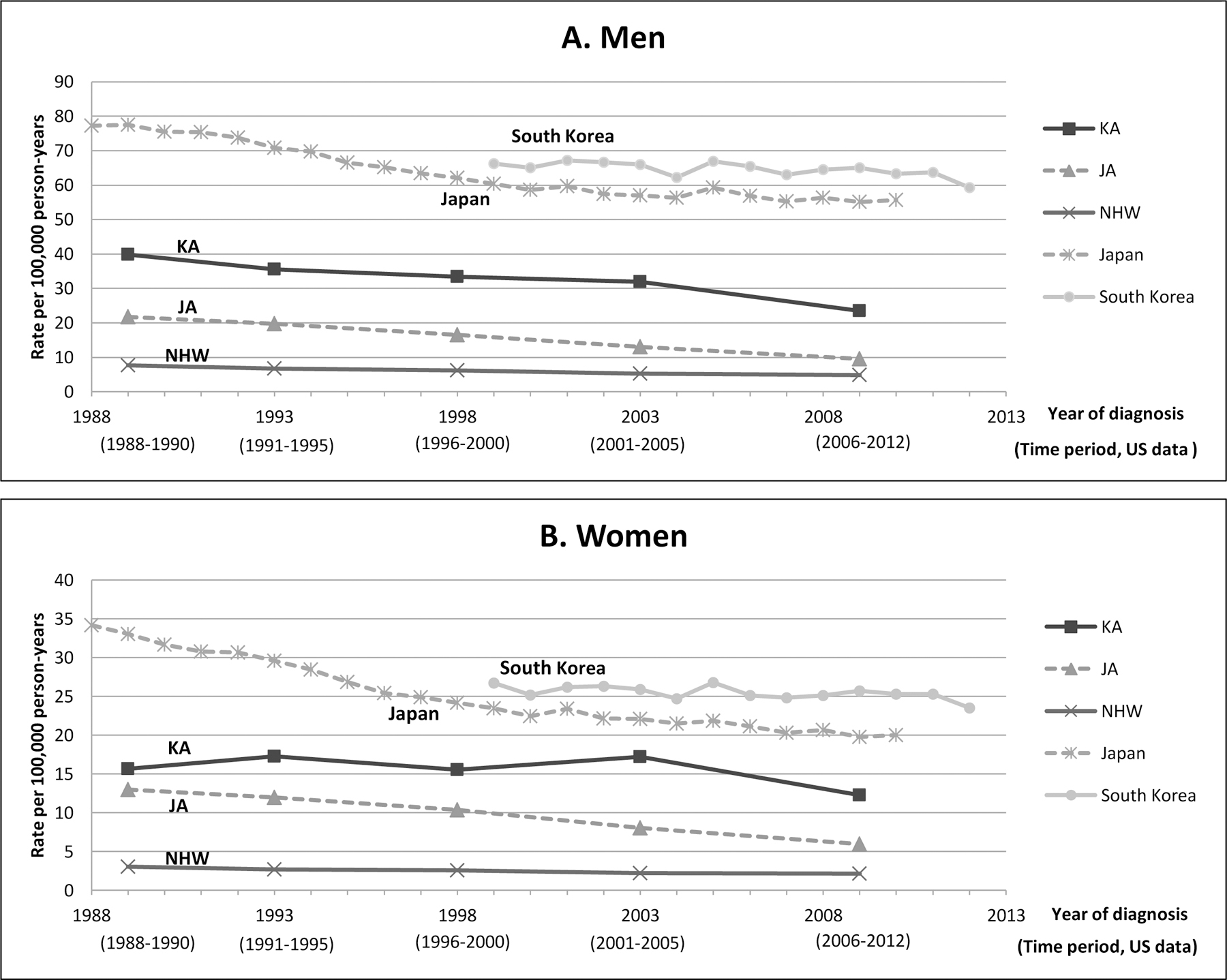
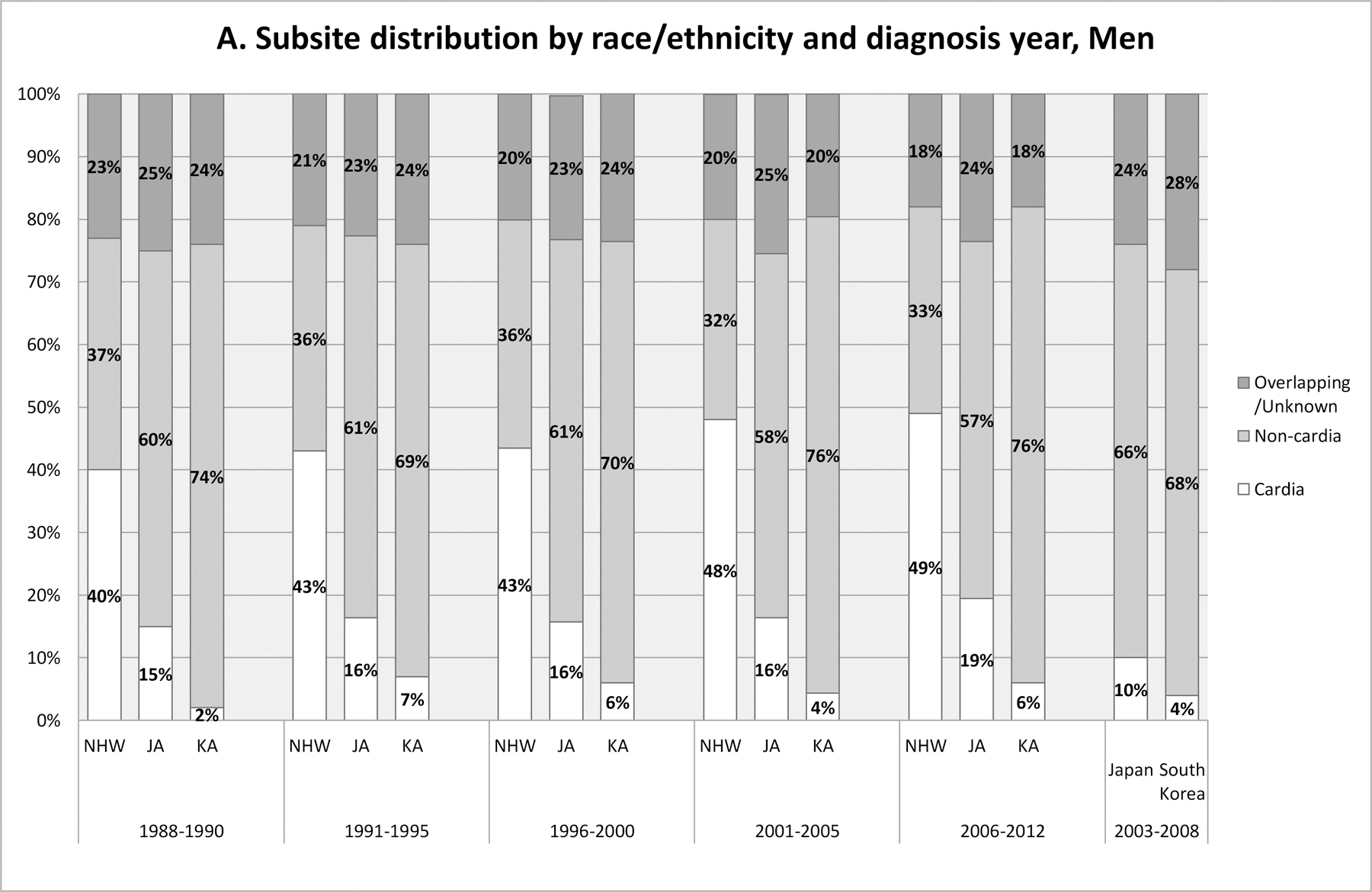
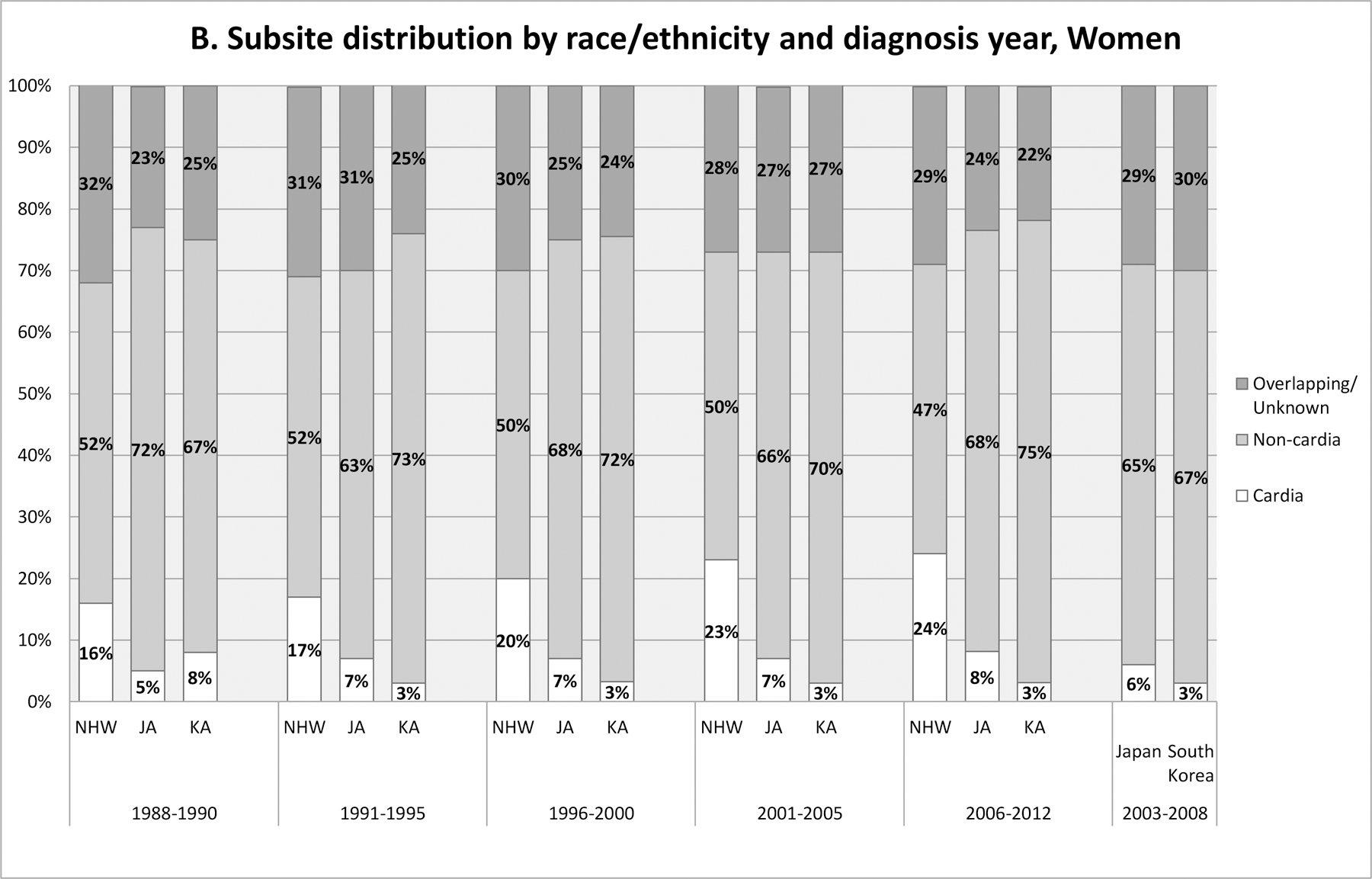
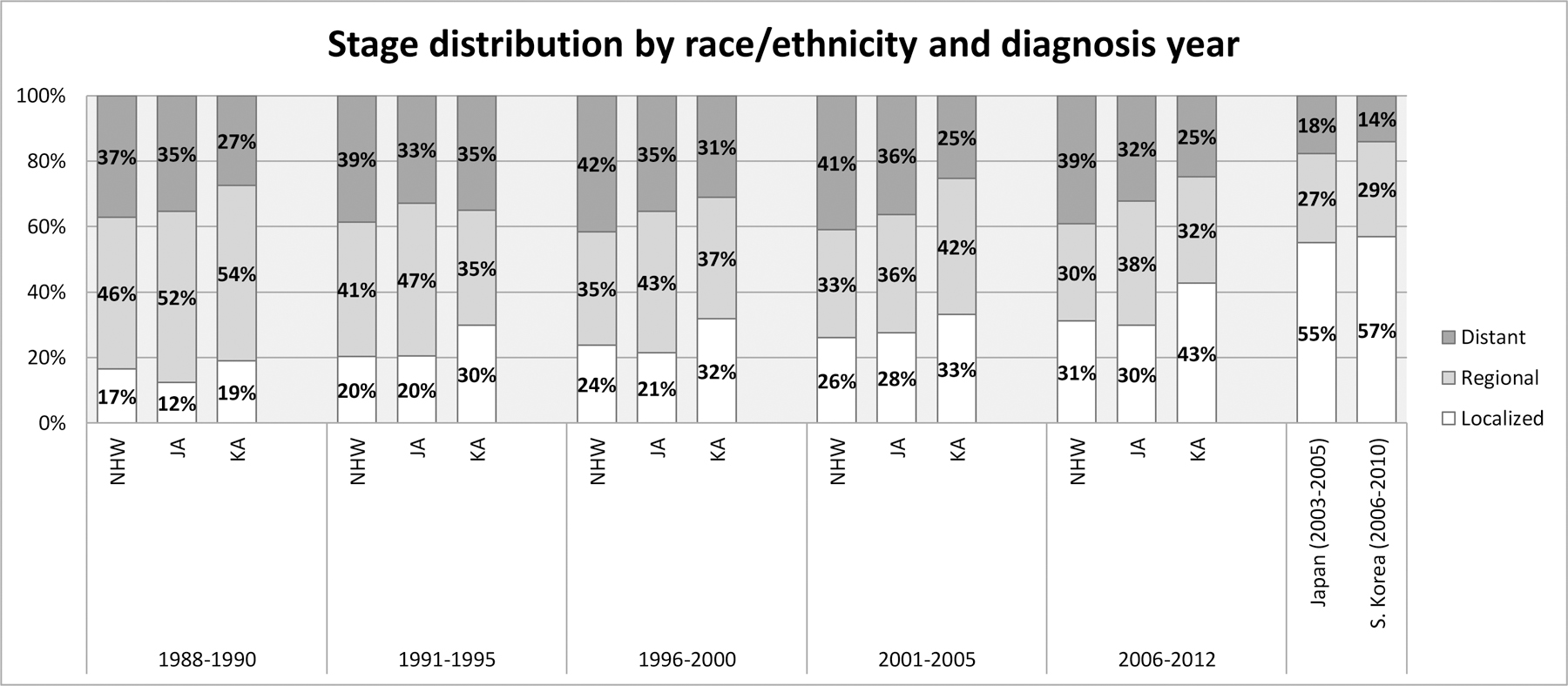
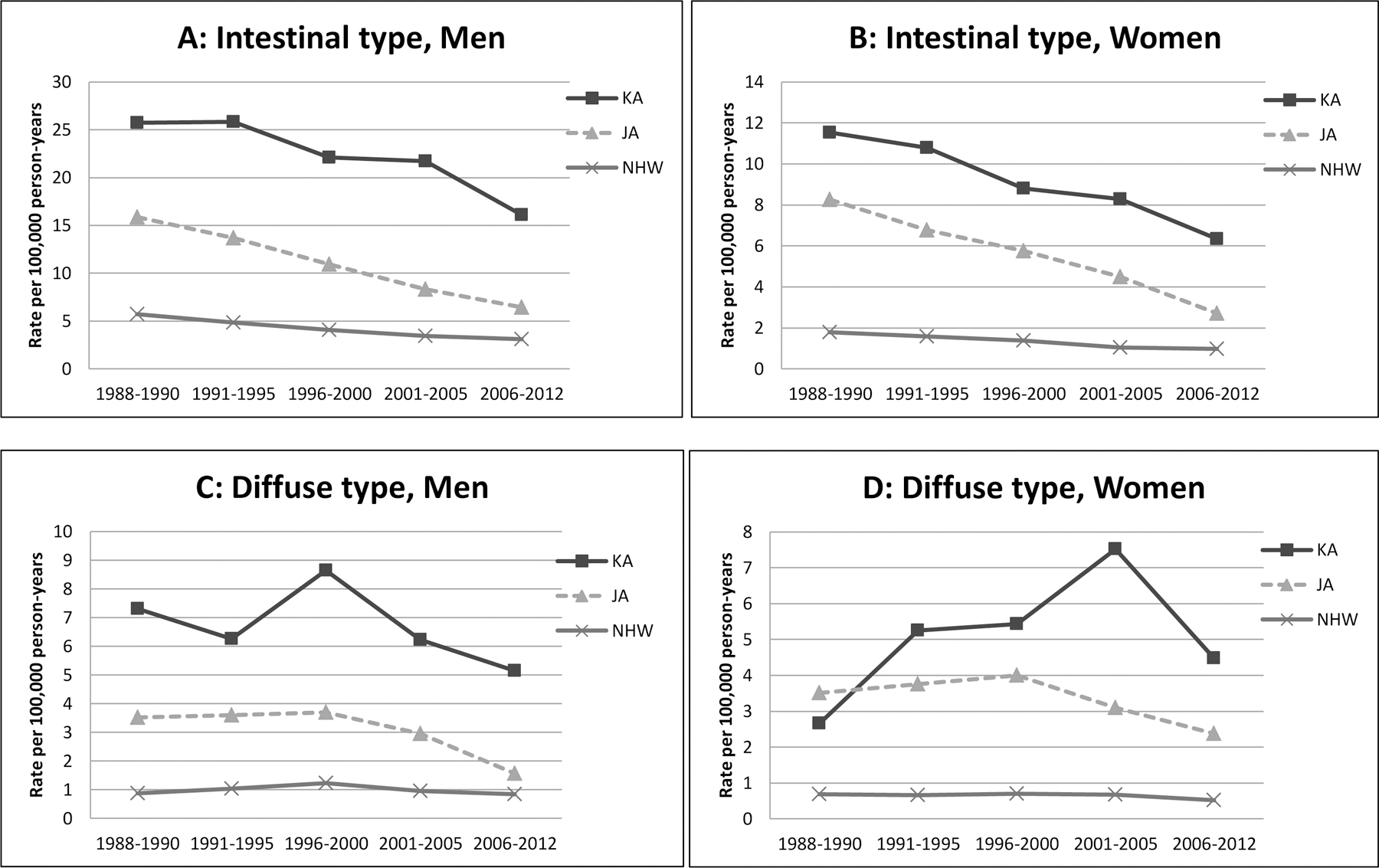
Background: Stomach cancer incidence shows substantial racial-ethnic disparity in the United States, with Korean Americans experiencing by far the highest incidence. We examined stomach cancer incidence trends in Korean Americans by tumor subsite, histology, and stage and compared them with incidence rates in racial-ethnic groups with the second highest rate (Japanese Americans) and the lowest rate (non-Hispanic whites; NHWs) as well as populations in South Korea and Japan.Methods: We calculated age-adjusted incidence rates by racial-ethnic groups, sex, and tumor characteristics, using the 1988-2012 California Cancer Registry data. Data on South Korea and Japan were obtained from the literature and other resources.Results: Between 1988 and 2012 in California, Korean Americans had about five times greater incidence than NHWs and twice that of Japanese Americans. Tumor characteristics differed by ethnic group and gender. The incidence in Korean Americans has declined during recent years, for both cardia and noncardia sites and for both intestinal- and diffuse-type histology. Although Korean Americans were diagnosed at an earlier stage than other Californians, the proportion with localized disease (43%) was much smaller than in South Korea (57%), where population-based screening is available.Conclusions: Stomach cancer incidence declined in the highest risk ethnic groups. However, the persistent disparity between Korean Americans and other racial-ethnic groups warrants additional strategies for prevention and earlier diagnosis.Impact: Analysis of California Cancer Registry data identified a racial-ethnic subgroup with stomach cancer disparity that may benefit from targeted prevention and screening efforts. Cancer Epidemiol Biomarkers Prev; 26(4); 587-96. ©2016 AACR.
©2016 American Association for Cancer Research.
Conflict of interest statement
Conflicts of Interest: None
Figures
References
-
- Howlader N, Noone AM, Krapcho M, Garshell J, Miller D, Altekruse SF, et al. SEER Cancer Statistics Review, 1975–2012, National Cancer Institute; Bethesda, MD, http://seer.cancer.gov/csr/1975_2012/, based on November 2014 SEER data submission, posted to the SEER web site, April 2015. 2015 [cited 2016 3/1/2016].
-
- McCracken M, Olsen M, Chen MS Jr., Jemal A, Thun M, Cokkinides V, et al. Cancer incidence, mortality, and associated risk factors among Asian Americans of Chinese, Filipino, Vietnamese, Korean, and Japanese ethnicities. CA Cancer J Clin. 2007;57(4):190–205. - PubMed
-
- Forman D, Bray F, Brewster DH, Gombe Mbalawa C, Kohler B, Piñeros M, et al. Cancer Incidence in Five Continents, Vol. X IARC Scientific Publication No. 164. . Lyon: International Agency for Research on Cancer; 2014.
Publication types
MeSH terms
Grants and funding
LinkOut - more resources
Full Text Sources
Other Literature Sources
Medical