


Brownification increases winter mortality in fish
- PMID: 27915414
- PMCID: PMC5306166
- DOI: 10.1007/s00442-016-3779-y
Brownification increases winter mortality in fish
Abstract
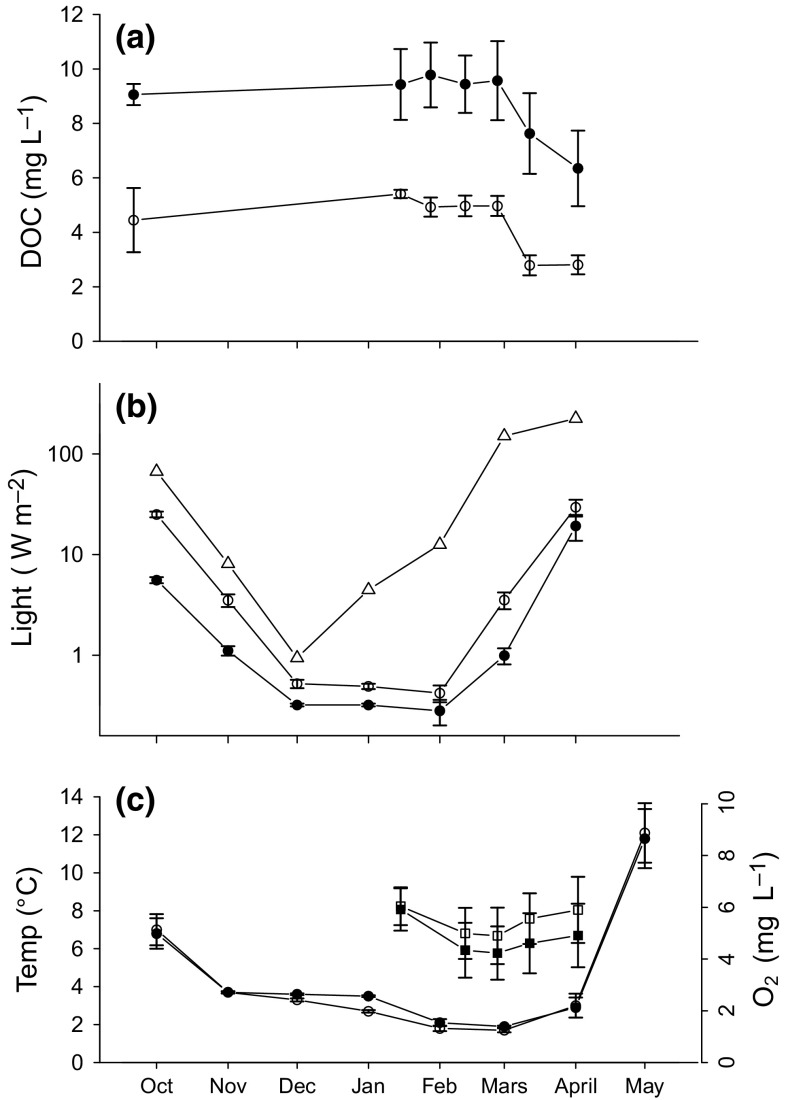
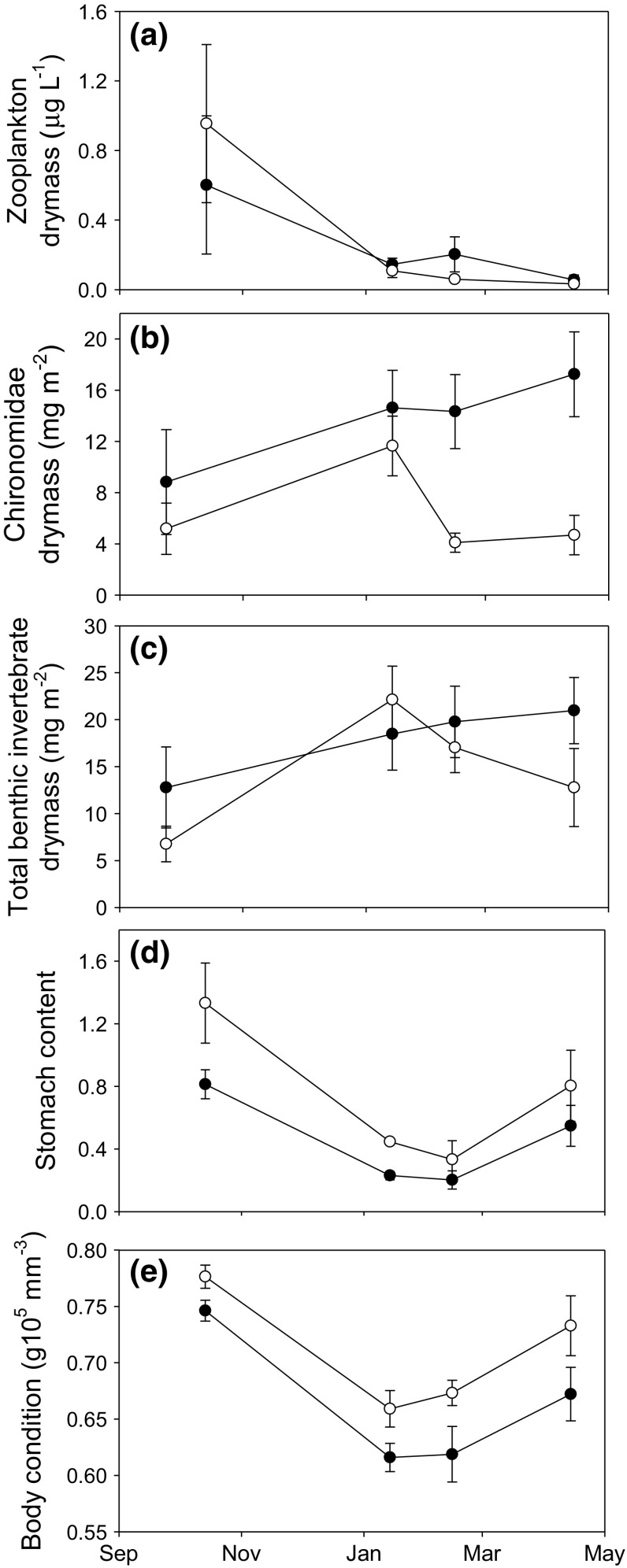
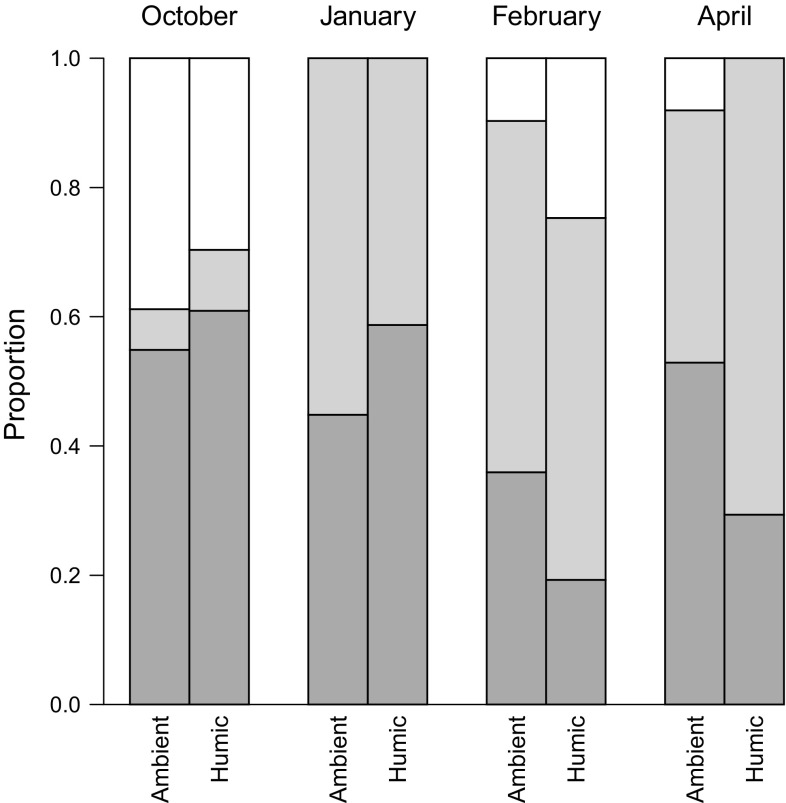
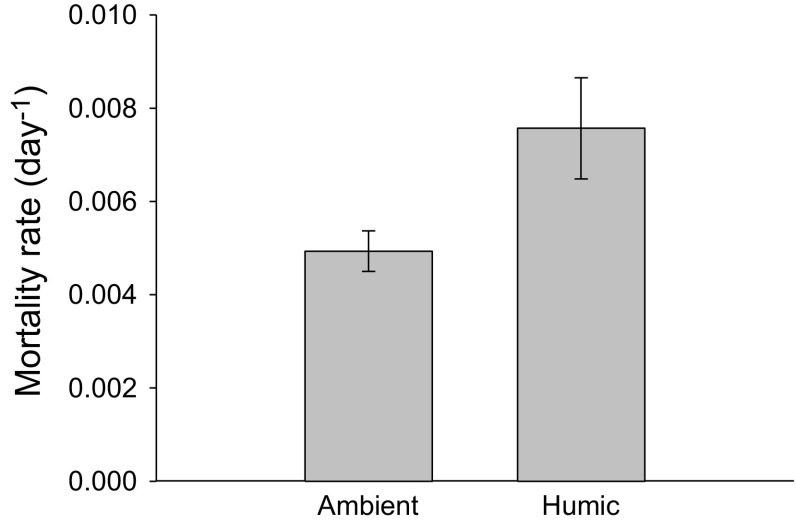
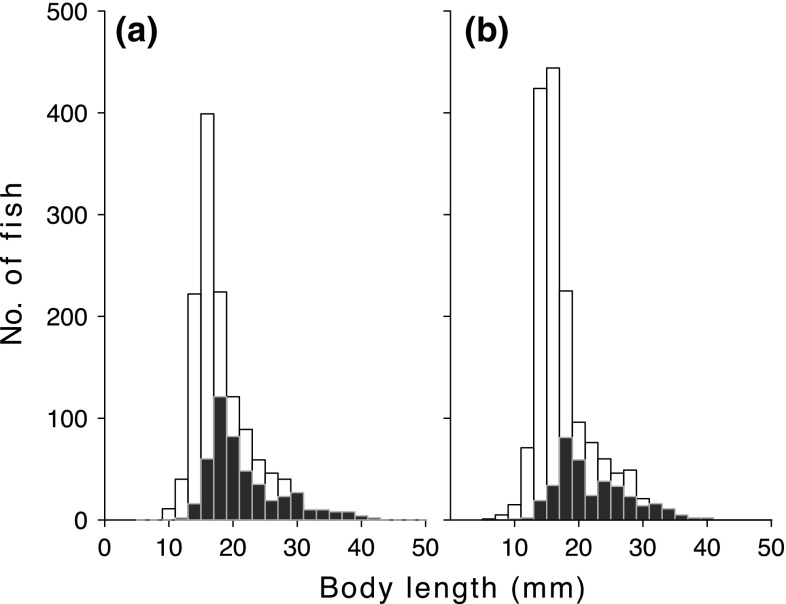
In northern climates, winter is a bottleneck for many organisms. Low light and resource availability constrains individual foraging rates, potentially leading to starvation and increased mortality. Increasing input of humic substances to aquatic ecosystems causes brownification of water and hence a further decrease of light availability, which may lead to further decreased foraging rates and starvation mortality during winter. To test this hypothesis, we measured the effects of experimentally increased humic water input on consumption and survival of young-of-the-year three-spined stickleback (Gasterosteus aculeatus) over winter in large outdoor enclosures. Population densities were estimated in autumn, and the following spring and food availability and consumption were monitored over winter. As hypothesized, mortality was higher under humic (76%) as compared to ambient conditions (64%). In addition, body condition and ingested prey biomass were lower under humic conditions, even though resource availability was not lower under humic conditions. Light conditions were significantly poorer under humic conditions. This suggests that increased mortality and decreased body condition and ingested prey biomass were not due to decreased resource availability but due to decreased search efficiency in this visual feeding consumer. Increased future brownification of aquatic systems may, therefore, negatively affect both recruitment and densities of fish.
Keywords: Brownification; Feeding efficiency; Light limitation; Metabolism; Winter mortality.
Conflict of interest statement
Compliance with ethical standardsEthical approvalSampling methods, collection of experimental fish, method of sacrifices and design of experiment in this study comply with the current laws of Sweden and were approved by the local ethics committee of the Swedish National Board for Laboratory Animals in Umeå. (CFN, license no. A-20-14 to Pär Byström).
Figures
References
-
- Alabaster JS, Lloyd R. Water quality criteria for freshwater fish. UK: Elsevier; 1982.
-
- Biro PA, Morton AE, Post JR, Parkinson EA. Over-winter lipid depletion and mortality of age-0 rainbow trout (Oncorhynchus mykiss) Can J Fish Aquat Sci. 2004;61:1513–1519. doi: 10.1139/f04-083. - DOI
-
- Botrell H, Duncan A, Gliwicz Z, et al. A review of some problems in zooplankton production studies. Nor J Zool. 1976;24:419–456.
-
- Byström P, Andersson J, Kiessling A, Eriksson L. Size and temperature dependent foraging capacities and metabolism: consequences for winter starvation mortality in fish. Oikos. 2006;115:43–52. doi: 10.1111/j.2006.0030-1299.15014.x. - DOI
Publication types
MeSH terms
LinkOut - more resources
Full Text Sources
Other Literature Sources
Research Materials
