. 2016 Dec 5:6:37871.
doi: 10.1038/srep37871.

Exploring experimental cerebral malaria pathogenesis through the characterisation of host-derived plasma microparticle protein content

Affiliations

Exploring experimental cerebral malaria pathogenesis through the characterisation of host-derived plasma microparticle protein content

Natalia Tiberti et al. Sci Rep. .

Abstract

Cerebral malaria (CM) is a severe complication of Plasmodium falciparum infection responsible for thousands of deaths in children in sub-Saharan Africa. CM pathogenesis remains incompletely understood but a number of effectors have been proposed, including plasma microparticles (MP). MP numbers are increased in CM patients' circulation and, in the mouse model, they can be localised within inflamed vessels, suggesting their involvement in vascular damage. In the present work we define, for the first time, the protein cargo of MP during experimental cerebral malaria (ECM) with the overarching hypothesis that this characterisation could help understand CM pathogenesis. Using qualitative and quantitative high-throughput proteomics we compared MP proteins from non-infected and P. berghei ANKA-infected mice. More than 360 proteins were identified, 60 of which were differentially abundant, as determined by quantitative comparison using TMTTM isobaric labelling. Network analyses showed that ECM MP carry proteins implicated in molecular mechanisms relevant to CM pathogenesis, including endothelial activation. Among these proteins, the strict association of carbonic anhydrase I and S100A8 with ECM was verified by western blot on MP from DBA/1 and C57BL/6 mice. These results demonstrate that MP protein cargo represents a novel ECM pathogenic trait to consider in the understanding of CM pathogenesis.


Figures
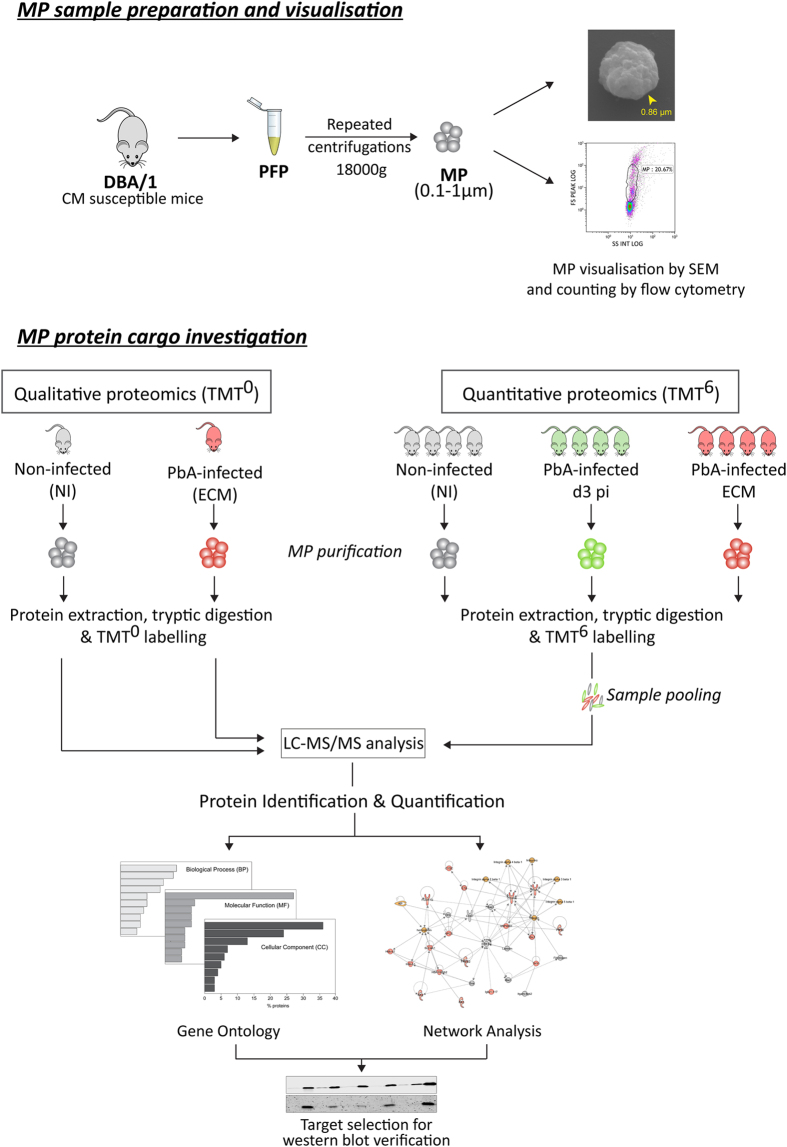
Figure 1
Figure 1. Experimental design. Graphical summary of the experimental design applied in the present study.
PFP = platelet free plasma; MP = microparticle; SEM = scanning electron microscopy; NI = non-infected; d3 pi = day 3 post-infection; ECM = experimental cerebral malaria (d8 post-infection). The mouse image was obtained at Pixabay.com.
Figure 2
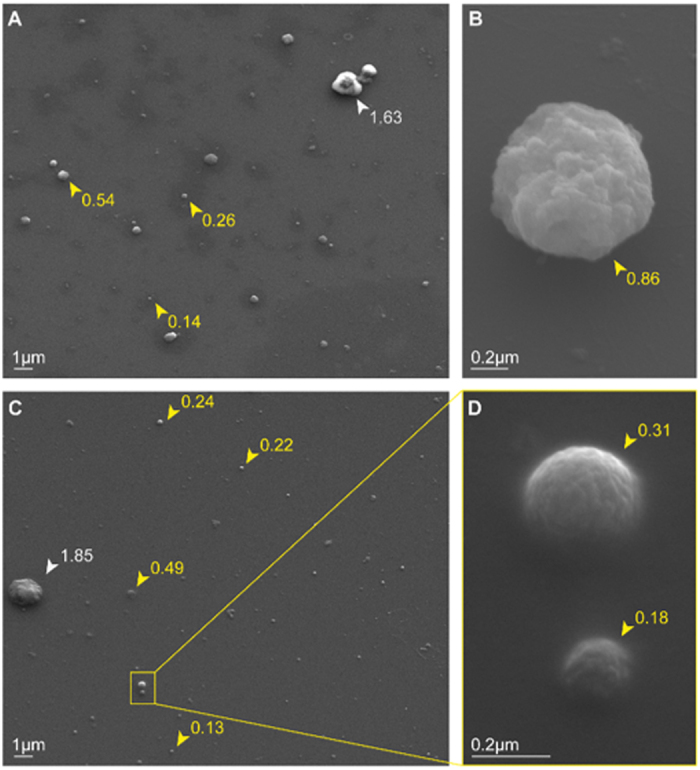
Figure 2. Murine plasma MP visualized by Scanning Electron Microscopy.
Plasma MP purified from a non-infected DBA/1 mouse have been imaged with a Zeiss Ultra FESEM. (A,C) Magnification x4000. The majority of the visualized vesicles have size corresponding to MP (0.1–1 μm - yellow arrowheads), while only one bigger element (white arrowheads) was visualised on each image probably corresponding to small aggregates of MP or microplatelets. (B,D) Visualisation of plasma MP at a higher magnification, ×23920 and 52160, respectively. Numbers beside arrowheads indicate the measured vesicle diameter expressed in μm.
Figure 3
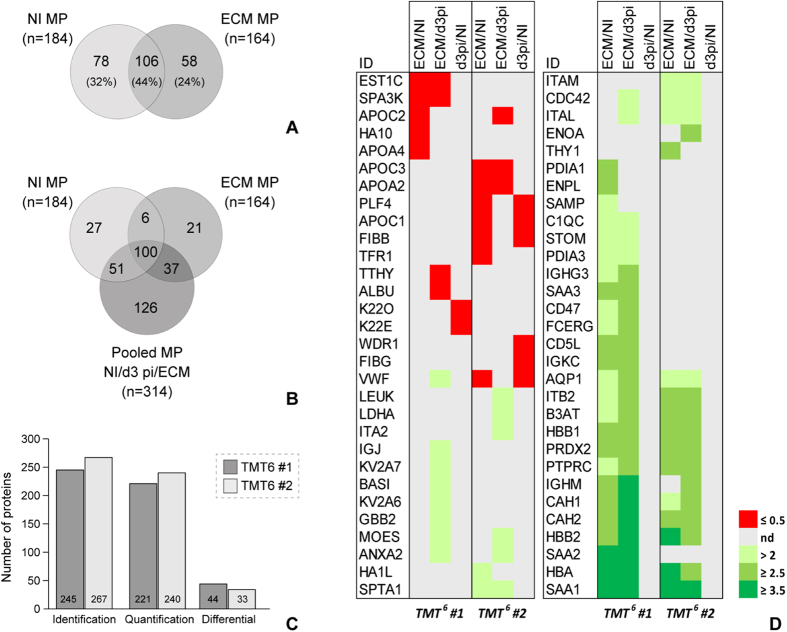
Figure 3. Identification and quantification results.
(A) Proteins identified in the plasma MP from a non-infected mouse (NI) and a PbA-infected mouse at the stage of experimental cerebral malaria (ECM) (TMT0 experiment). The two samples shared 44% of the identifications. Only proteins identified with minimum 2 peptides and FDR ≤1% have been considered. (B) Comparison of the proteins identified in the pooled NI – d3 pi – ECM samples (TMT6#1 and TMT6#2 experiments) and those identified in the individual NI and ECM samples (TMT0 experiment). Globally, 368 murine plasma microparticle proteins have been identified. (C) Quantitative results obtained from the two TMT6 experiments. Proteins differentially abundant in MP were defined as having a p-value < 0.001 and a ratio ≥2.1 or ≤0.5. (D) Heat map showing the level of expression of the proteins found to be significantly differentially abundant for the three computed ratios, i.e. ECM/d3 pi, ECM/NI and d3 pi/NI, in the two quantitative experiments. nd = non differential proteins.
Figure 4
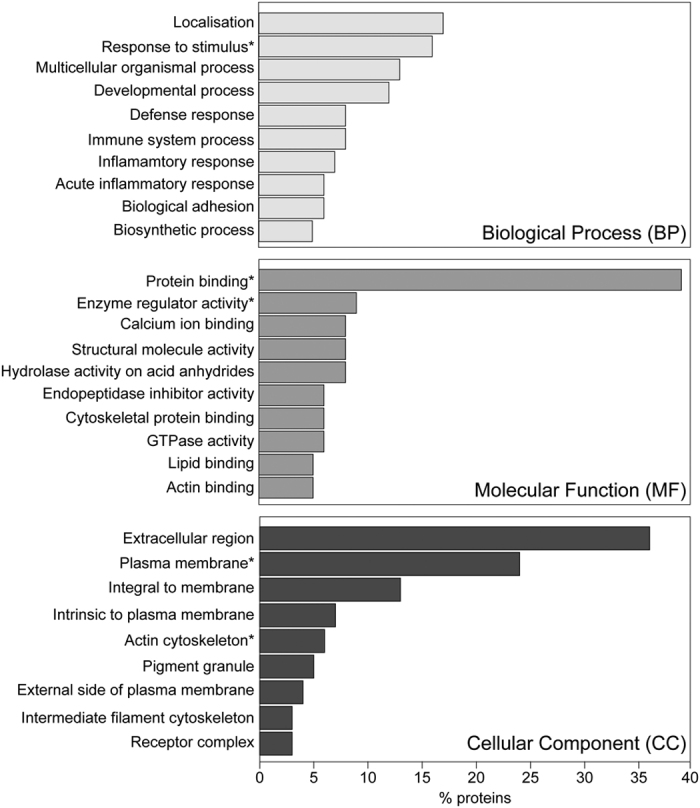
Figure 4. Gene Ontology analysis.
Top-10 GO terms represented across all 368 identified murine plasma MP proteins. (A) Biological Process GO terms; (B) Molecular Function GO terms; (C) Cellular Component GO terms. For each category only significantly represented GO terms have been considered (adjusted p-value < 0.0001) and the % of proteins belonging to each term is reported. *Indicates potentially relevant GO terms in the context of MP and ECM.
Figure 5
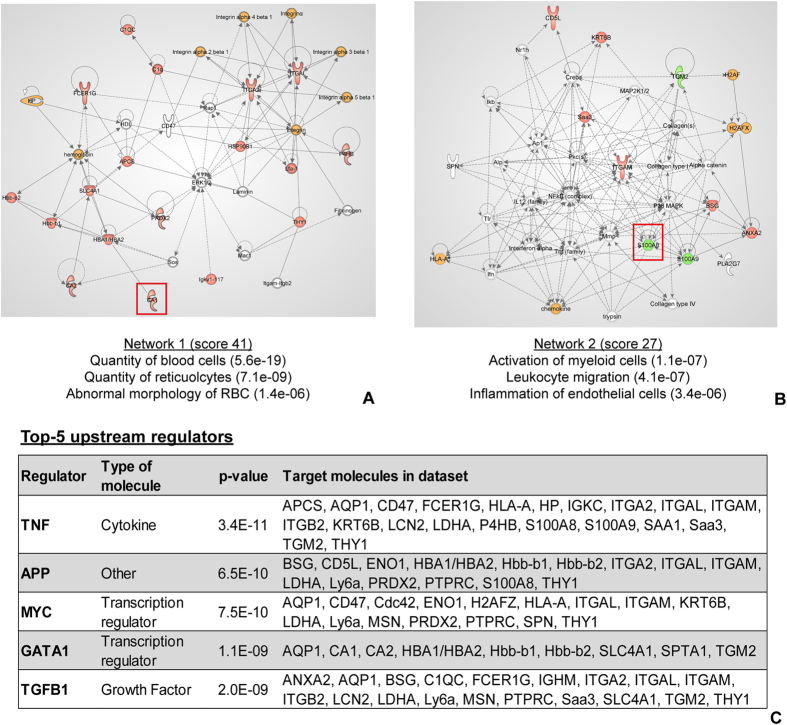
Figure 5. Network and upstream analyses of ECM-associated proteins.
(A,B) Most relevant networks showing the connectivity between MP proteins experimentally identified as ECM-associated (n = 63). Red: proteins identified as significantly over-expressed in ECM; Green: proteins uniquely identified in the ECM sample; Orange: multimeric proteins for which one or more chains have been identified as over-expressed in ECM. The most important biological functions, associated with each network, in the context of ECM, are reported at the bottom of the network. Protein targets selected for verification, CA-I and S100A8, are highlighted by a red square. (C) Top-5 molecules that are highly significantly likely to regulate the proteins experimentally found to be ECM-associated. For each regulator the list of target proteins in the experimental dataset is given. p-value: Fisher’s exact test, indication of the overlap between the proteins in the dataset and the genes known to be affected by the regulator.
Figure 6
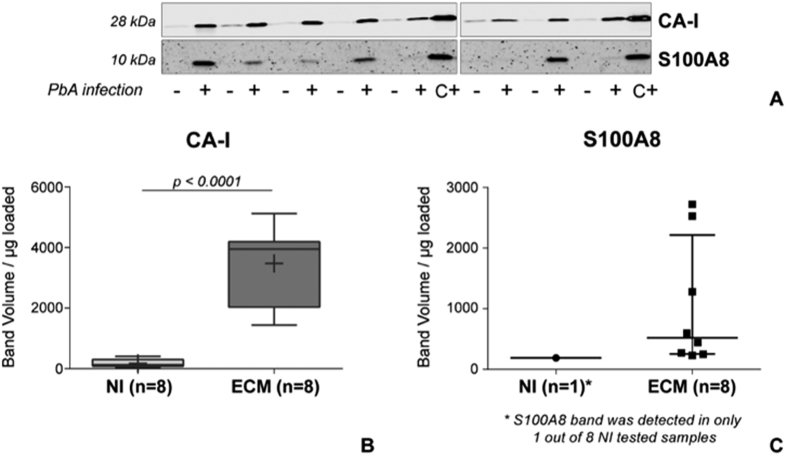
Figure 6. Western blot results for CA-I and S100A8 detection in murine MP.
(A) Detection of CA-I and S100A8 in MP samples (2.5 μg/lane left blot image, 1.8 μg/lane right blot image) from non-infected (−, NI, n = 8) and PbA-infected (+, ECM, n = 8) DBA/1 mice. A positive control (C+) consisting of murine spleen extract was included in each experiment. (B) Quantification of CA-I expression in murine plasma MP, showing its significantly higher expression in ECM samples (t-test). In each boxplot mean is reported as +. (C) S100A8 was detectable in only 1 out of 8 NI samples, while it was expressed in all ECM samples. The quantification of the detected bands is reported in the graph, where the horizontal line represents the median band volume and the error bars the interquartile range.

References

    1. WHO. World malaria report (2014).
    1. Idro R., Marsh K., John C. C. & Newton C. R. Cerebral malaria: mechanisms of brain injury and strategies for improved neurocognitive outcome. Pediatr Res 68, 267–274, doi: 10.1203/00006450-201011001-00524 (2010). - DOI - PMC - PubMed
    1. Birbeck G. L. et al. Blantyre Malaria Project Epilepsy Study (BMPES) of neurological outcomes in retinopathy-positive paediatric cerebral malaria survivors: a prospective cohort study. Lancet Neurol 9, 1173–1181, doi: 10.1016/S1474-4422(10)70270-2 (2010). - DOI - PMC - PubMed
    1. Storm J. & Craig A. G. Pathogenesis of cerebral malaria–inflammation and cytoadherence. Front Cell Infect Microbiol 4, 100, doi: 10.3389/fcimb.2014.00100 (2014). - DOI - PMC - PubMed
    1. Distler J. H. et al. Microparticles as regulators of inflammation: novel players of cellular crosstalk in the rheumatic diseases. Arthritis Rheum 52, 3337–3348, doi: 10.1002/art.21350 (2005). - DOI - PubMed

Publication types

MeSH terms

LinkOut - more resources