


Secondary prevention lifestyle interventions initiated within 90 days after TIA or 'minor' stroke: a systematic review and meta-analysis of rehabilitation programmes
- PMID: 27919935
- PMCID: PMC5198618
- DOI: 10.3399/bjgp16X688369
Secondary prevention lifestyle interventions initiated within 90 days after TIA or 'minor' stroke: a systematic review and meta-analysis of rehabilitation programmes
Abstract
Background: Strokes are often preceded by a transient ischaemic attack (TIA) or 'minor' stroke. The immediate period after a TIA/minor stroke is a crucial time to initiate secondary prevention. However, the optimal approach to prevention, including non-pharmacological measures, after TIA is not clear.
Aim: To systematically review evidence about the effectiveness of delivering secondary prevention, with lifestyle interventions, in comprehensive rehabilitation programmes, initiated within 90 days of a TIA/minor stroke. Also, to categorise the specific behaviour change techniques used.
Design and setting: The review identified randomised controlled trials by searching the Cochrane Library, Ovid MEDLINE, Ovid EMBASE, Web of Science, EBSCO CINAHL and Ovid PsycINFO.
Method: Two review authors independently screened titles and abstracts for eligibility (programmes initiated within 90 days of event; outcomes reported for TIA/minor stroke) and extracted relevant data from appraised studies; a meta-analysis was used to synthesise the results.
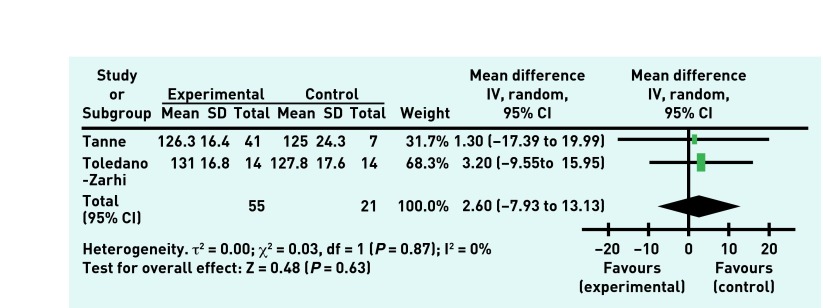
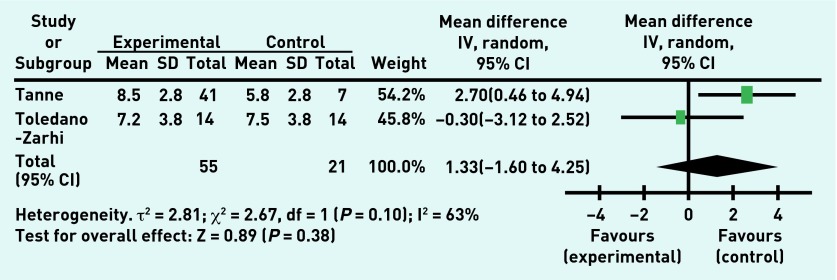
Results: A total of 31 potentially eligible papers were identified and four studies, comprising 774 patients post-TIA or minor stroke, met the inclusion criteria; two had poor methodological quality. Individual studies reported increased aerobic capacity but meta-analysis found no significant change in resting and peak systolic blood pressure, resting heart rate, aerobic capacity, falls, or mortality. The main behaviour change techniques were goal setting and instructions about how to perform given behaviours.
Conclusion: There is limited evidence of the effectiveness of early post-TIA rehabilitation programmes with preventive lifestyle interventions. Further robust randomised controlled trials of comprehensive rehabilitation programmes that promote secondary prevention and lifestyle modification immediately after a TIA are needed.
Keywords: behaviour change techniques; early rehabilitation; lifestyle interventions; secondary prevention; transient ischaemic attack; ‘minor’ stroke.
© British Journal of General Practice 2017.
Figures


References
-
- Strong K, Mathers C, Bonita R. Preventing stroke: saving lives around the world. Lancet Neurol. 2007;6(2):182–187. - PubMed
-
- Horgan NF, O’Regan M, Cunningham CJ, Finn AM. Recovery after stroke: a 1-year profile. Disabil Rehabil. 2009;31(10):831–839. - PubMed
-
- Johnston SC, Rothwell PM, Nguyen-Huynh MN, et al. Validation and refinement of scores to predict very early stroke risk after transient ischaemic attack. Lancet. 2007;369(9558):283–292. - PubMed
-
- Selvarajah JR, Smith CJ, Hulme S, et al. Prognosis in patients with transient ischaemic attack (TIA) and minor stroke attending TIA services in the North West of England: the NORTHSTAR Study. J Neurol Neurosurg Psychiatry. 2008;79(1):38–43. - PubMed
-
- Easton JD, Saver JL, Albers GW, et al. Definition and evaluation of transient ischemic attack: a scientific statement for healthcare professionals from the American Heart Association/American Stroke Association Stroke Council; Council on Cardiovascular Surgery and Anesthesia; Council on Cardiovascular Radiology and Intervention; Council on Cardiovascular Nursing; and the Interdisciplinary Council on Peripheral Vascular Disease. Stroke. 2009;40(6):2276–2293. - PubMed
Publication types
MeSH terms
Grants and funding
LinkOut - more resources
Full Text Sources
Other Literature Sources
Medical
Molecular Biology Databases
Miscellaneous
