


Men, Work, and Mental Health: A Systematic Review of Depression in Male-dominated Industries and Occupations
- PMID: 27924229
- PMCID: PMC5127922
- DOI: 10.1016/j.shaw.2016.04.005
Men, Work, and Mental Health: A Systematic Review of Depression in Male-dominated Industries and Occupations
Abstract
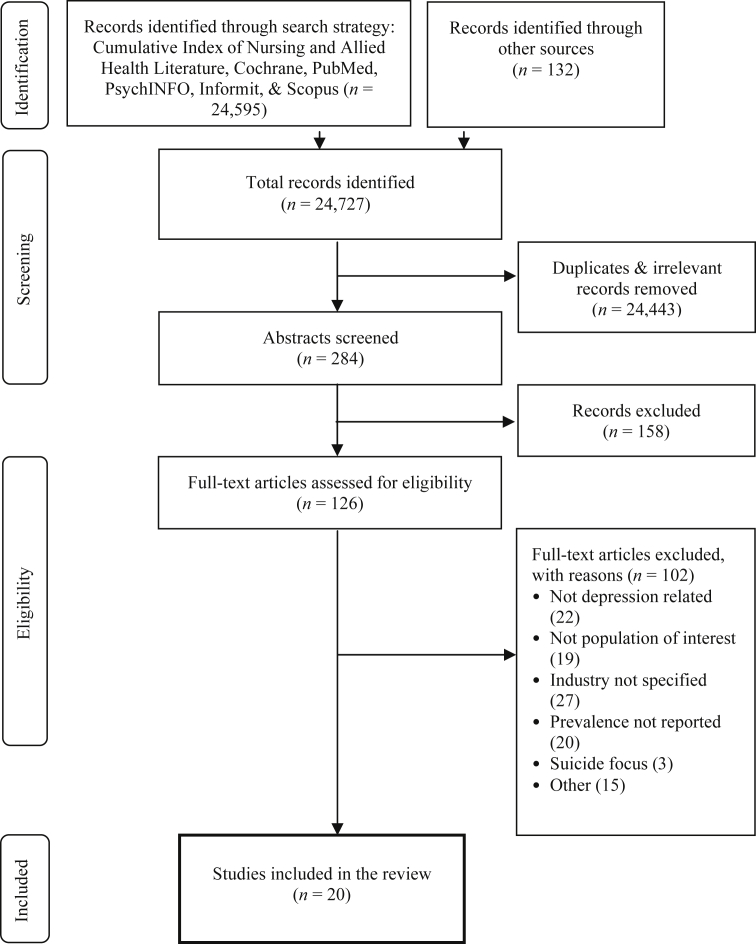
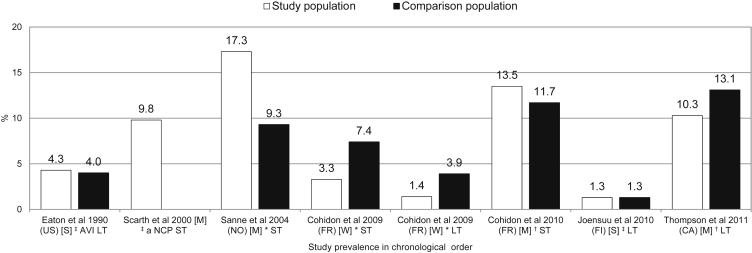
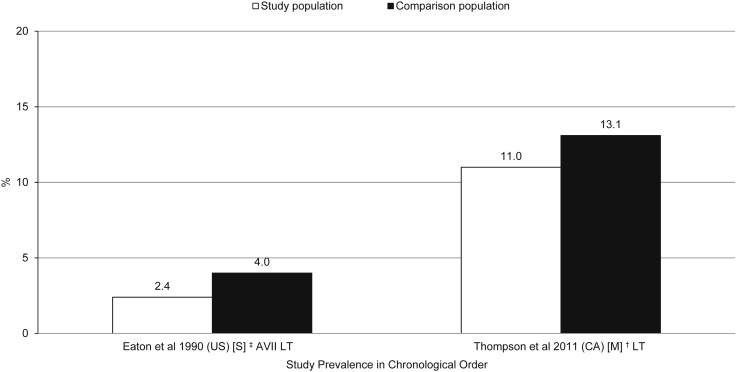
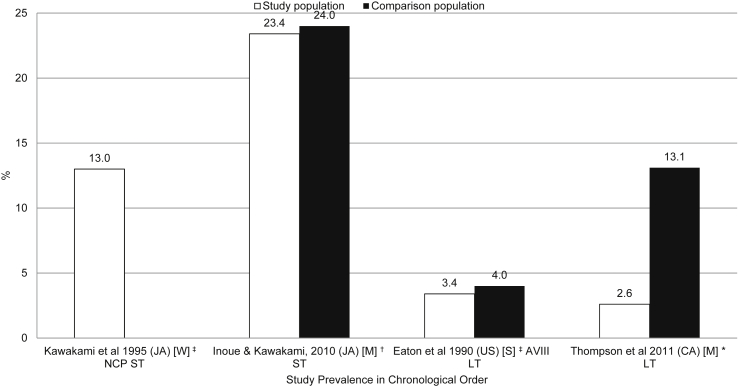
Among men, depression is often unrecognised and untreated. Men employed in male-dominated industries and occupations may be particularly vulnerable. However, efforts to develop tailored workplace interventions are hampered by lack of prevalence data. A systematic review of studies reporting prevalence rates for depression in male dominated workforce groups was undertaken. Studies were included if they were published between 1990 - June 2012 in English, examined adult workers in male-dominated industries or occupations (> 70% male workforce), and used clinically relevant indicators of depression. Twenty studies met these criteria. Prevalence of depression ranged from 0.0% to 28.0%. Five studies reported significantly lower prevalence rates for mental disorders among male-dominated workforce groups than comparison populations, while six reported significantly higher rates. Eight studies additionally found significantly higher levels of depression in male-dominated groups than comparable national data. Overall, the majority of studies found higher levels of depression among workers in male-dominated workforce groups. There is a need to address the mental health of workers in male-dominated groups. The workplace provides an important but often overlooked setting to develop tailored strategies for vulnerable groups.
Keywords: depression; male-dominated industries; males; prevalence; systematic review.
Figures
References
-
- Oliffe J.L., Robertson S., Frank B., McCreary D.R., Tremblay G., Goldenberg S.L. Men's health in Canada: a 2010 update. J Men's Health. 2010;7:189–192.
-
- Rice S.M., Aucote H.M., Parker A.G., Alvarez-Jimenez M., Filia K.M., Amminger G.P. Men's perceived barriers to help seeking for depression: longitudinal findings relative to symptom onset and duration. J Health Psychol [Internet]. 2015 [cited 7 Dec 2015]. Available from: http://dx.doi.org/10.1177/1359105315605655. - DOI - PubMed
-
- White A., de Sousa B., de Visser R, Hogston R, Madsen SA, Makara P, McKee M, Raine G, Richardson N, Clarke N, Zatoński W. Men's health in Europe. J Mens Health. 2011;8:192–201.
-
- Australian Bureau of Statistics . Australian Bureau of Statistics; Canberra (Australia): 2008. 4326.0 National Survey of Mental Health and Wellbeing: Summary of Results, 2007.
-
- Cochran S.V., Rabinowitz F.E. Gender-sensitive recommendations for assessment and treatment of depression in men. Prof Psychol Res Pr. 2003;34:132–140.
Publication types
LinkOut - more resources
Full Text Sources
Other Literature Sources
Miscellaneous
