


The "Fluad Case" in Italy: Could it have been dealt differently?
- PMID: 27924687
- PMCID: PMC5328213
- DOI: 10.1080/21645515.2017.1264738
The "Fluad Case" in Italy: Could it have been dealt differently?
Abstract
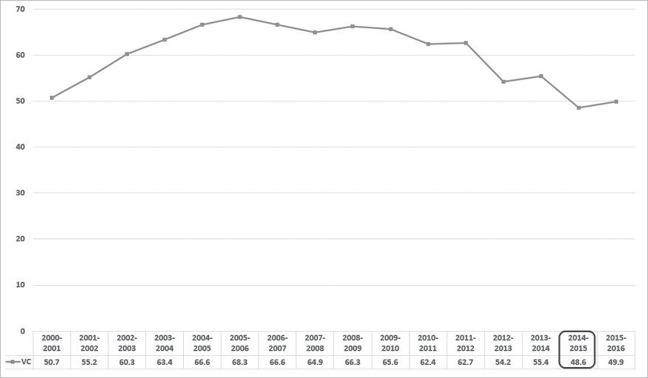
During the influenza vaccination campaign 2014-2015, the reporting of 3 deaths within 48 hours of vaccination with Fluad brought the Italian Medicines Agency (AIFA) to pronounce the withdrawal of 2 batches of vaccine, based on the precautionary principle. Investigations by the Italian National Institute of Health, and by the Pharmacovigilance Risk Assessment Committee (PRAC), the committee at the European Medicines Agency (EMA) responsible for monitoring and assessing the safety profiles of human drugs, concluded that there was a lack of causality between the reported deaths and the vaccines administered. However, the media impact of the decision taken by AIFA, resulted in a lower influenza vaccination coverage compared with the previous years. The aim of our study was to identify possible critical points that may have led to a non-perfect management of the event. A review of the regulatory framework in place was performed, with a particular focus on the Guidelines on Good Pharmacovigilance Practices developed by the EMA to facilitate the signal management process. The management of reports involves the following steps: signal detection, its validation and confirmation, analysis and prioritization, assessment, recommendations for action and the exchange of information. In our opinion, both the signal detection phase and the phase of validation have been critical: the withdrawal of vaccine batches is possible even in case of a single suspected serious adverse reaction. However, aspects such as the biological plausibility, the presence of potential alternative causes and previous awareness should also be considered. Furthermore, the number of reported deaths was consistent with the expected background mortality rate in the vaccinated cohort. The disproportionate media coverage given to the AIFA decision resulted in a reduced vaccine confidence in the general population and in a decreased immunization coverage. Improving the communication on vaccine safety issues is crucial at this stage to restore a climate of trust in this powerful tool for primary prevention.
Keywords: FLUAD; adverse event following immunization; influenza; pharmacovigilance; signal management; vaccine hesitancy.
Figures
References
-
- Italian Medicines Agency Comunicato stampa 401. AIFA dispone il divieto di utilizzo per due lotti del vaccino antinfluenzale FLUAD. 2014. Available from: http://www.agenziafarmaco.gov.it/it/content/aifa-dispone-il-divieto-di-u....
-
- Italian Ministry of Health, Istituto Superiore di Sanità Vaccinazione antinfluenzale in Italia: coperture vaccinali negli anziani (età >= 65 anni) (per 100 abitanti) Stagioni 2000-2001/2015-2016. 2016. Available from: http://www.salute.gov.it/imgs/C_17_tavole_19_allegati_iitemAllegati_0_fi....
-
- Signorelli C, Odone A, Conversano M, Bonanni P. Deaths after Fluad flu vaccine and the epidemic of panic in Italy. Br Med J 2015; 350:116; http://dx.doi.org/10.1136/bmj.h116 - DOI - PubMed
-
- CIOMS. Definition and application of terms for vaccine pharmacovigilance Report of CIOMS/WHO working group on vaccine pharmacovigilance. Geneva; 2012. Available from: http://www.who.int/vaccine_safety/initiative/tools/CIOMS_report_WG_vacci....
-
- World Health Organization Causality assessment of adverse event following immunization (AEFI): user manual for the revised WHO classification. Geneva, Switzerland: WHO Library Cataloguing-in-Publication Data; 2013. Available from: http://www.who.int/vaccine_safety/publications/aefi_manual.pdf?ua=1.
MeSH terms
Substances
LinkOut - more resources
Full Text Sources
Other Literature Sources
Medical
Research Materials
