


A controlled trial of implementing a complex mental health intervention for carers of vulnerable young people living in out-of-home care: the ripple project
- PMID: 27927174
- PMCID: PMC5142401
- DOI: 10.1186/s12888-016-1145-6
A controlled trial of implementing a complex mental health intervention for carers of vulnerable young people living in out-of-home care: the ripple project
Abstract
Background: Out-of-home care (OoHC) refers to young people removed from their families by the state because of abuse, neglect or other adversities. Many of the young people experience poor mental health and social function before, during and after leaving care. Rigorously evaluated interventions are urgently required. This publication describes the protocol for the Ripple project and notes early findings from a controlled trial demonstrating the feasibility of the work. The Ripple project is implementing and evaluating a complex mental health intervention that aims to strengthen the therapeutic capacities of carers and case managers of young people (12-17 years) in OoHC.
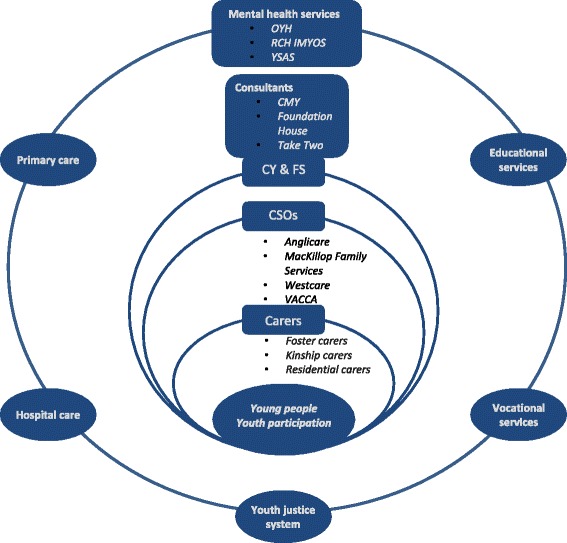
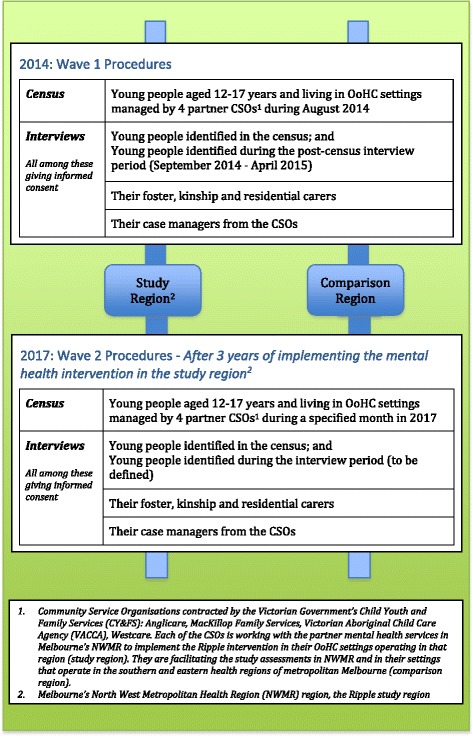
Methods: The study is conducted in partnership with mental health, substance abuse and social services in Melbourne, with young people as participants. It has three parts: 1. Needs assessment and implementation of a complex mental health intervention; 2. A 3-year controlled trial of the mental health, social and economic outcomes; and 3. Nested process evaluation of the intervention.
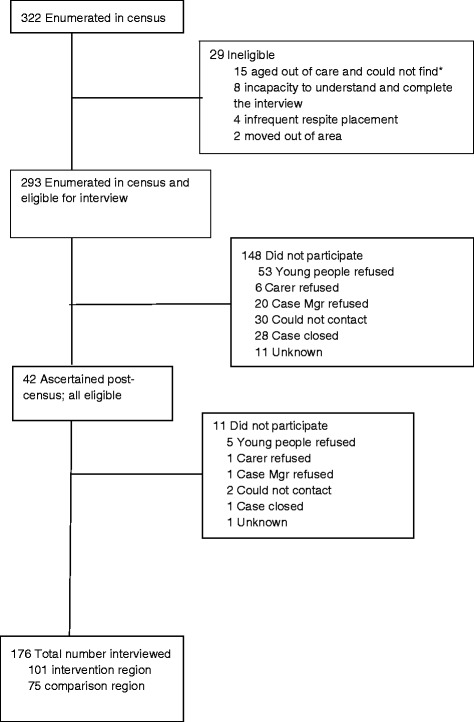
Results: Early findings characterising the young people, their carers and case managers and implementing the intervention are available. The trial Wave 1 includes interviews with 176 young people, 52% of those eligible in the study population, 104 carers and 79 case managers.
Conclusions: Implementing and researching an affordable service system intervention appears feasible and likely to be applicable in other places and countries. Success of the intervention will potentially contribute to reducing mental ill-health among these young people, including suicide attempts, self-harm and substance abuse, as well as reducing homelessness, social isolation and contact with the criminal justice system.
Trial registration: Australian New Zealand Clinical Trials Registry ACTRN12615000501549 . Retrospectively registered 19 May 2015.
Keywords: Complex intervention; Implementation; Looked after children; Out-of-home care; Prevention; Youth mental health.
Figures
References
-
- Cummins P, Scott D, Scales B. Report of the Protecting Victoria’s Vulnerable Children Inquiry. Melbourne: Department of Premier and Cabinet; 2012.
-
- Mendes P, Johnson G, Moslehuddin B. Young People Leaving State Out-of-Home Care: Australian Policy and Practice. North Melbourne: Australian Scholarly Publishing; 2011.
-
- AIHW . Child protection Australia 2013–14. Canberra: AIHW; 2015.
-
- Bromfield L, Holzer P, Lamont A. The economic costs of child abuse and neglect. Canberra: Australian Government, Australian Institute of Family Studies; 2011.
Publication types
MeSH terms
LinkOut - more resources
Full Text Sources
Other Literature Sources
Medical
