


Genetic architecture distinguishes systemic juvenile idiopathic arthritis from other forms of juvenile idiopathic arthritis: clinical and therapeutic implications
- PMID: 27927641
- PMCID: PMC5530341
- DOI: 10.1136/annrheumdis-2016-210324
Genetic architecture distinguishes systemic juvenile idiopathic arthritis from other forms of juvenile idiopathic arthritis: clinical and therapeutic implications
Abstract
Objectives: Juvenile idiopathic arthritis (JIA) is a heterogeneous group of conditions unified by the presence of chronic childhood arthritis without an identifiable cause. Systemic JIA (sJIA) is a rare form of JIA characterised by systemic inflammation. sJIA is distinguished from other forms of JIA by unique clinical features and treatment responses that are similar to autoinflammatory diseases. However, approximately half of children with sJIA develop destructive, long-standing arthritis that appears similar to other forms of JIA. Using genomic approaches, we sought to gain novel insights into the pathophysiology of sJIA and its relationship with other forms of JIA.
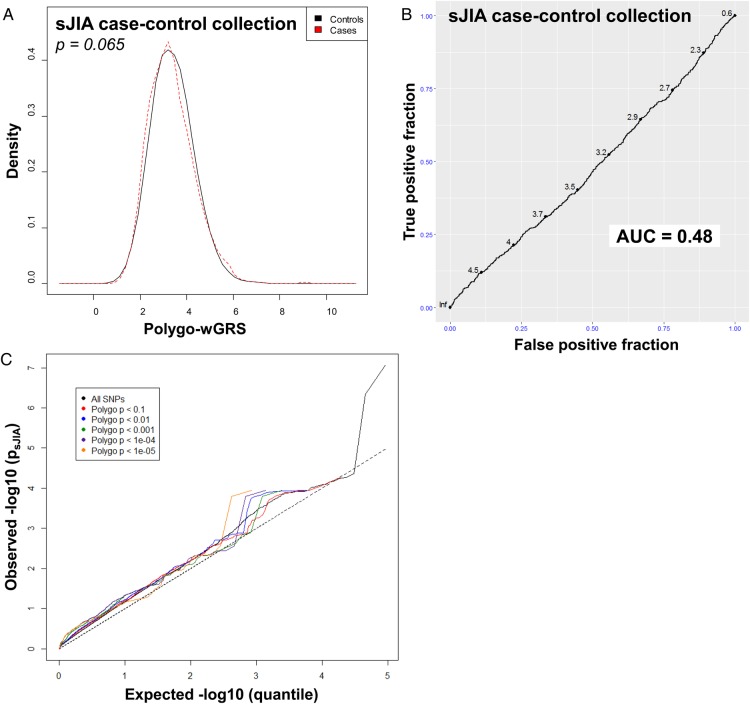
Methods: We performed a genome-wide association study of 770 children with sJIA collected in nine countries by the International Childhood Arthritis Genetics Consortium. Single nucleotide polymorphisms were tested for association with sJIA. Weighted genetic risk scores were used to compare the genetic architecture of sJIA with other JIA subtypes.
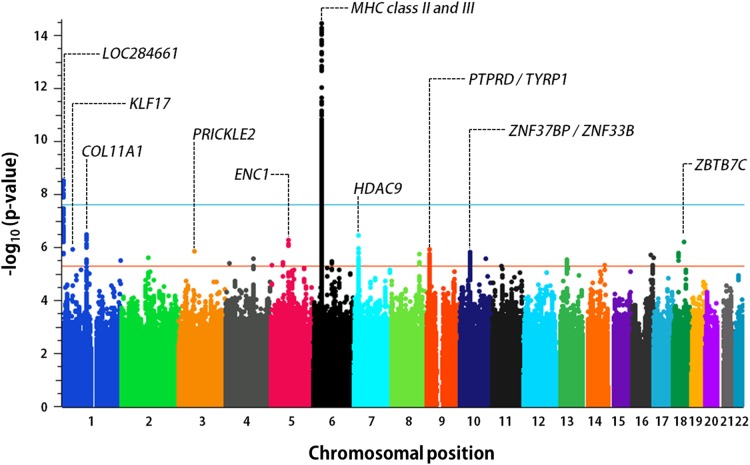
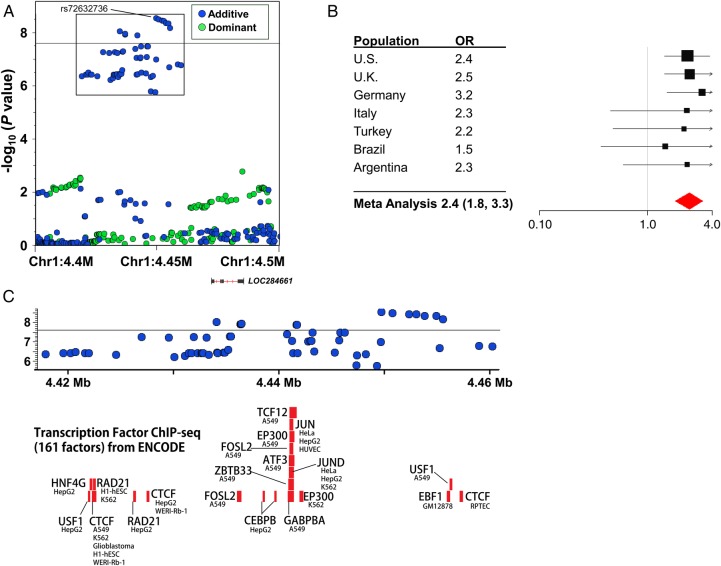
Results: The major histocompatibility complex locus and a locus on chromosome 1 each showed association with sJIA exceeding the threshold for genome-wide significance, while 23 other novel loci were suggestive of association with sJIA. Using a combination of genetic and statistical approaches, we found no evidence of shared genetic architecture between sJIA and other common JIA subtypes.
Conclusions: The lack of shared genetic risk factors between sJIA and other JIA subtypes supports the hypothesis that sJIA is a unique disease process and argues for a different classification framework. Research to improve sJIA therapy should target its unique genetics and specific pathophysiological pathways.
Keywords: Adult Onset Still's Disease; Gene Polymorphism; Juvenile Idiopathic Arthritis.
Published by the BMJ Publishing Group Limited. For permission to use (where not already granted under a licence) please go to http://www.bmj.com/company/products-services/rights-and-licensing/.
Conflict of interest statement
Figures
Comment in
-
Paediatric rheumatic disease: Systemic JIA genetically distinct.Nat Rev Rheumatol. 2017 Feb;13(2):65. doi: 10.1038/nrrheum.2016.215. Epub 2017 Jan 12. Nat Rev Rheumatol. 2017. PMID: 28077866 No abstract available.
References
-
- Petty RE, Southwood TR, Manners P, et al. . International League of Associations for Rheumatology classification of juvenile idiopathic arthritis: second revision, Edmonton, 2001. J Rheumatol 2004;31:390–2. - PubMed
-
- Bannatyne GA, Wohlmann AS. Rheumatoid arthritis: It's clinical history, etiology, and pathology. Lancet 1896;147:1120–5. 10.1016/S0140-6736(01)61263-7 - DOI
MeSH terms
Grants and funding
- 20542/VAC_/Versus Arthritis/United Kingdom
- R01 AR061297/AR/NIAMS NIH HHS/United States
- R01 AR060893/AR/NIAMS NIH HHS/United States
- Z99 AR999999/ImNIH/Intramural NIH HHS/United States
- R01 AR059049/AR/NIAMS NIH HHS/United States
- R01 DK076025/DK/NIDDK NIH HHS/United States
- P30 AR070549/AR/NIAMS NIH HHS/United States
- R01 AG030653/AG/NIA NIH HHS/United States
- WT_/Wellcome Trust/United Kingdom
- R01 AG041718/AG/NIA NIH HHS/United States
- P30 AR047363/AR/NIAMS NIH HHS/United States
- U01 DK062420/DK/NIDDK NIH HHS/United States
- P01 AR048929/AR/NIAMS NIH HHS/United States
- P50 AG005133/AG/NIA NIH HHS/United States
LinkOut - more resources
Full Text Sources
Other Literature Sources
Medical
