


Insidious Risk of Severe Mycobacterium chimaera Infection in Cardiac Surgery Patients
- PMID: 27927870
- PMCID: PMC5881635
- DOI: 10.1093/cid/ciw754
Insidious Risk of Severe Mycobacterium chimaera Infection in Cardiac Surgery Patients
Erratum in
-
Erratum.Clin Infect Dis. 2017 Sep 1;65(5):875. doi: 10.1093/cid/cix235. Clin Infect Dis. 2017. PMID: 29017281 Free PMC article. No abstract available.
Abstract
Background: An urgent UK investigation was launched to assess risk of invasive Mycobacterium chimaera infection in cardiothoracic surgery and a possible association with cardiopulmonary bypass heater-cooler units following alerts in Switzerland and The Netherlands.
Methods: Parallel investigations were pursued: (1) identification of cardiopulmonary bypass-associated M. chimaera infection through national laboratory and hospital admissions data linkage; (2) cohort study to assess patient risk; (3) microbiological and aerobiological investigations of heater-coolers in situ and under controlled laboratory conditions; and (4) whole-genome sequencing of clinical and environmental isolates.
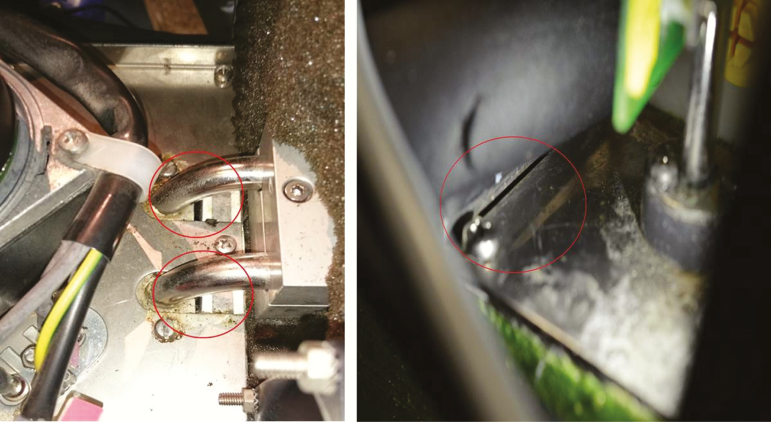
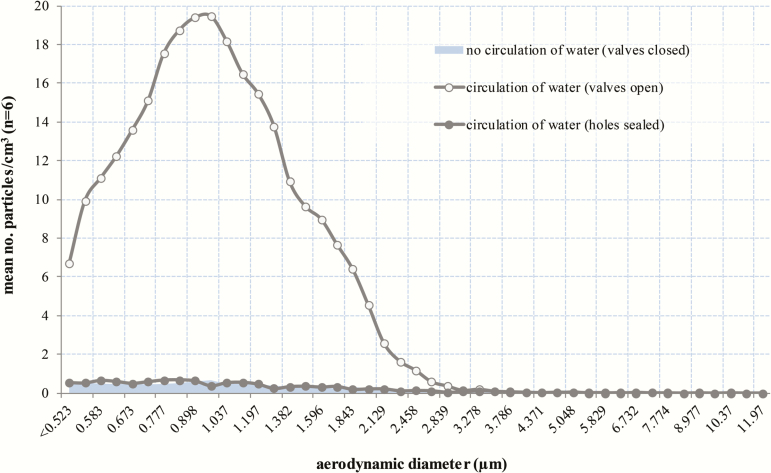
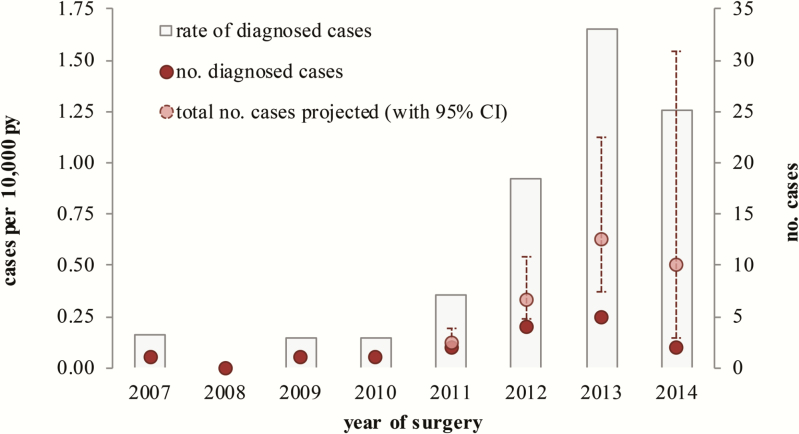
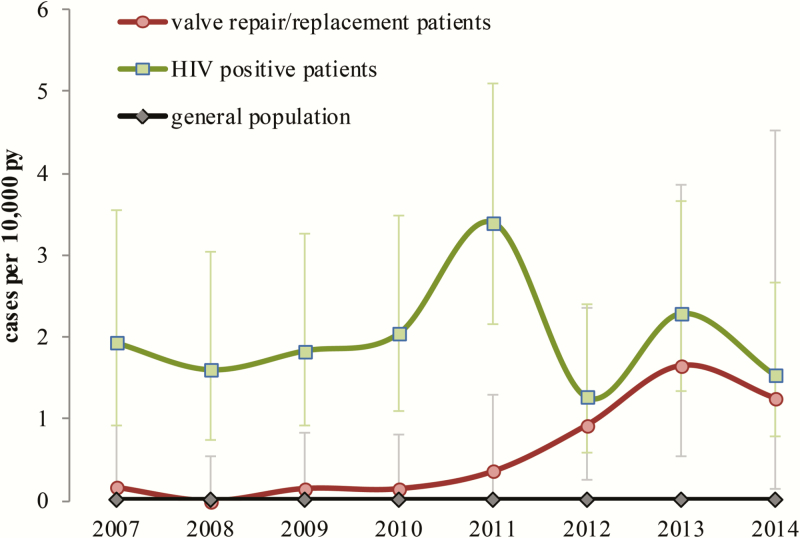
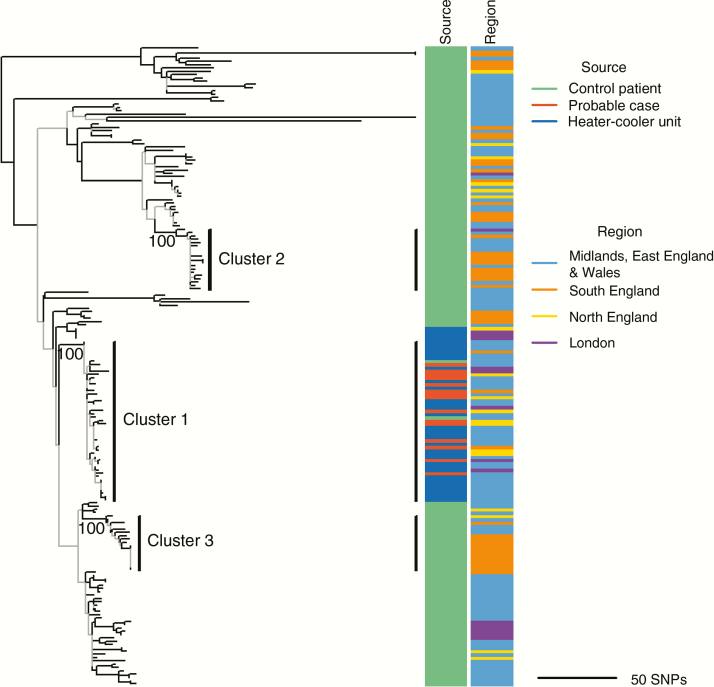
Results: Eighteen probable cases of cardiopulmonary bypass-associated M. chimaera infection were identified; all except one occurred in adults. Patients had undergone valve replacement in 11 hospitals between 2007 and 2015, a median of 19 months prior to onset (range, 3 months to 5 years). Risk to patients increased after 2010 from <0.2 to 1.65 per 10000 person-years in 2013, a 9-fold rise for infections within 2 years of surgery (rate ratio, 9.08 [95% CI, 1.81-87.76]). Endocarditis was the most common presentation (n = 11). To date, 9 patients have died. Investigations identified aerosol release through breaches in heater-cooler tanks. Mycobacterium chimaera and other pathogens were recovered from water and air samples. Phylogenetic analysis found close clustering of strains from probable cases.
Conclusions: We identified low but escalating risk of severe M. chimaera infection associated with heater-coolers with cases in a quarter of cardiothoracic centers. Our investigations strengthen etiological evidence for the role of heater-coolers in transmission and raise the possibility of an ongoing, international point-source outbreak. Active management of heater-coolers and heightened clinical awareness are imperative given the consequences of infection.
Keywords: aerosol release; cardiac surgical procedures.; disease outbreaks; equipment contamination; nontuberculous mycobacteria.
© Crown copyright 2016.
Figures
Comment in
-
Healthcare-Associated Mycobacterium chimaera Transmission and Infection Prevention Challenges: Role of Heater-Cooler Units as a Water Source in Cardiac Surgery.Clin Infect Dis. 2017 Feb 1;64(3):343-346. doi: 10.1093/cid/ciw755. Epub 2016 Dec 7. Clin Infect Dis. 2017. PMID: 27927869 No abstract available.
-
Invasive Mycobacterium chimaera Infections and Heater-Cooler Devices in Cardiac Surgery.Emerg Infect Dis. 2020 Mar;26(3):632. doi: 10.3201/eid2603.180452. Emerg Infect Dis. 2020. PMID: 32096464 Free PMC article. No abstract available.
References
-
- Wallace RJ, Jr, Brown BA, Griffith DE. Nosocomial outbreaks/pseudo-outbreaks caused by nontuberculous mycobacteria. Annu Rev Microbiol 1998; 52:453–90. - PubMed
-
- Iroh Tam PY, Kline S, Wagner JE, et al. Rapidly growing mycobacteria among pediatric hematopoietic cell transplant patients traced to the hospital water supply. Pediatr Infect Dis J 2014; 33:1043–6. - PubMed
-
- Tagashira Y, Kozai Y, Yamasa H, Sakurada M, Kashiyama T, Honda H. A cluster of central line-associated bloodstream infections due to rapidly growing nontuberculous mycobacteria in patients with hematologic disorders at a Japanese tertiary care center: an outbreak investigation and review of the literature. Infect Control Hosp Epidemiol 2015; 36:76–80. - PubMed
-
- Lowry PW, Beck-Sague CM, Bland LA, et al. Mycobacterium chelonae infection among patients receiving high-flux dialysis in a hemodialysis clinic in California. J Infect Dis 1990; 161:85–90. - PubMed
-
- Meyers H, Brown-Elliott BA, Moore D, et al. An outbreak of Mycobacterium chelonae infection following liposuction. Clin Infect Dis 2002; 34:1500–7. - PubMed
MeSH terms
Grants and funding
LinkOut - more resources
Full Text Sources
Other Literature Sources
Medical
Molecular Biology Databases
