


Macro- and micronutrient intakes in picky eaters: a cause for concern?
- PMID: 27935522
- PMCID: PMC5118732
- DOI: 10.3945/ajcn.116.137356
Macro- and micronutrient intakes in picky eaters: a cause for concern?
Abstract
Background: Picky eating (PE) is characterized by an unwillingness to eat certain foods and by strong food preferences. PE may result in lower intakes of energy and nutrients, which may compromise health.
Objectives: We quantified nutrient and food group intakes in children identified as picky eaters or nonpicky eaters and compared intakes between groups and with United Kingdom reference nutrient intakes.
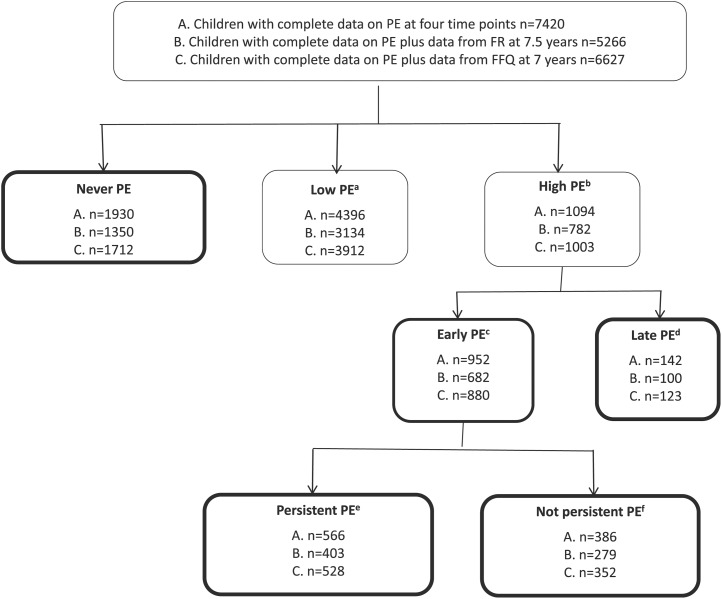
Design: PE was identified in an observational cohort (Avon Longitudinal Study of Parents and Children) from questionnaires administered when children were aged 2, 3, 4.5, and 5.5 y. Dietary intake was assessed at 3.5 and 7.5 y with a 3-d food record. The dietary assessment at 3.5 y compared picky eaters with nonpicky eaters identified at age 3 y, and the assessment at 7.5 y compared longitudinally defined PE groups.
Results: Picky eaters aged 3 y had lower mean carotene, iron, and zinc intakes than nonpicky eaters. There were similar differences between the longitudinally defined PE groups. Iron and zinc intakes were most likely to be below recommended amounts, with free sugar intake much higher than recommended. There were no significant differences in energy intakes between the groups, and intakes were adequate relative to estimated average requirements. Nutrient differences were explained by lower intakes of meat, fish, vegetables, and fruits in picky eaters than in nonpicky eaters. There were higher intakes of sugary foods and drinks in older picky eaters.
Conclusions: PE did not result in compromised macronutrient intakes, although intakes of zinc and iron were more likely to be below recommendations for picky eaters than for nonpicky eaters. Emphasis should be placed on allaying parental concerns about picky eaters being prone to inadequate nutrient intakes and on encouraging all parents to extend their child's diet to include more nutrient-rich items, especially fruits and vegetables, and less nutrient-poor sugary foods.
Keywords: ALSPAC; antioxidants; fruits; macronutrients; meat; micronutrients; picky eating; vegetables.
Figures
References
-
- Dovey TM, Staples PA, Gibson EL, Halford JC. Food neophobia and ‘picky/fussy’ eating in children: a review. Appetite 2008;50:181–93. - PubMed
-
- Taylor CM, Wernimont S, Northstone K, Emmett P. Picky/fussy eating in children: a review of definitions and assessment measures, and prevalence in a UK longitudinal cohort. Appetite 2015;95:349–59. - PubMed
-
- Jacobi C, Agras WS, Bryson S, Hammer LD. Behavioral validation, precursors, and concomitants of picky eating in childhood. J Am Acad Child Adolesc Psychiatry 2003;42:76–84. - PubMed
-
- Carruth BR, Skinner J, Houck K, Moran J 3rd, Coletta F, Ott D. The phenomenon of “picky eater”: a behavioral marker in eating patterns of toddlers. J Am Coll Nutr 1998;17:180–6. - PubMed
Publication types
MeSH terms
Substances
Grants and funding
LinkOut - more resources
Full Text Sources
Other Literature Sources
