


The involvement of Bcl-2 family proteins in AKT-regulated cell survival in cisplatin resistant epithelial ovarian cancer
- PMID: 27935869
- PMCID: PMC5352061
- DOI: 10.18632/oncotarget.13817
The involvement of Bcl-2 family proteins in AKT-regulated cell survival in cisplatin resistant epithelial ovarian cancer
Erratum in
-
Correction: The involvement of Bcl-2 family proteins in AKT-regulated cell survival in cisplatin resistant epithelial ovarian cancer.Oncotarget. 2020 Jan 28;11(4):488-489. doi: 10.18632/oncotarget.27376. eCollection 2020 Jan 28. Oncotarget. 2020. PMID: 32064052 Free PMC article.
Abstract
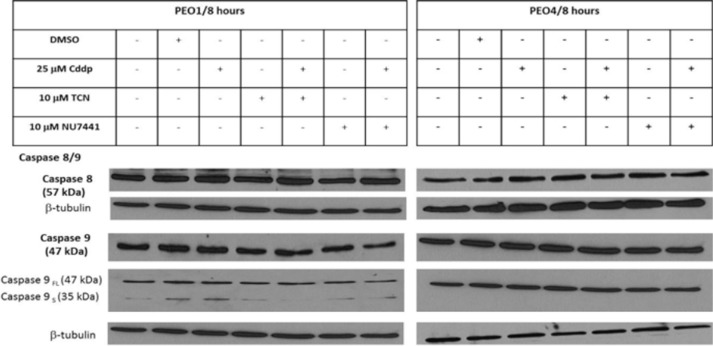
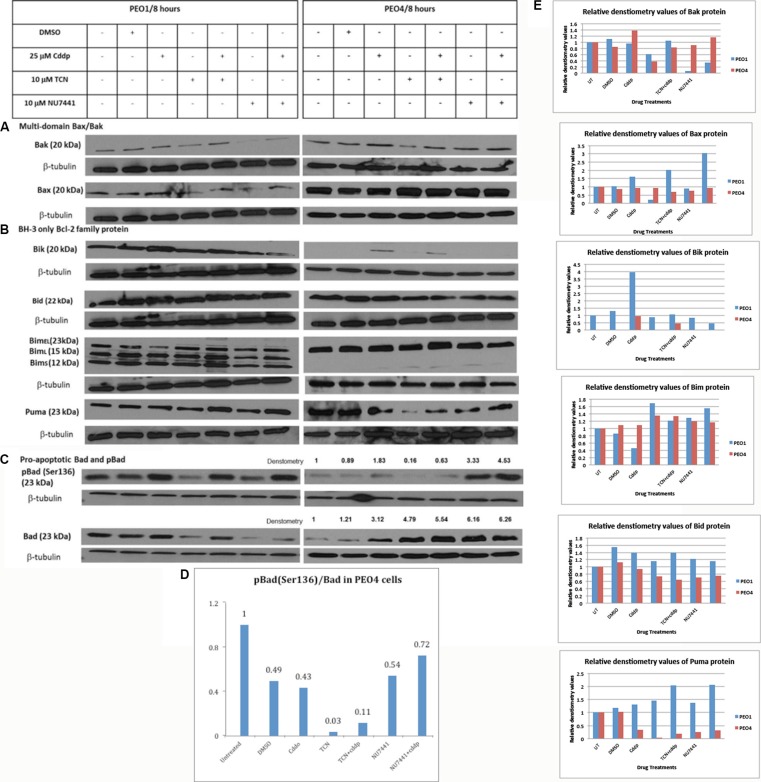
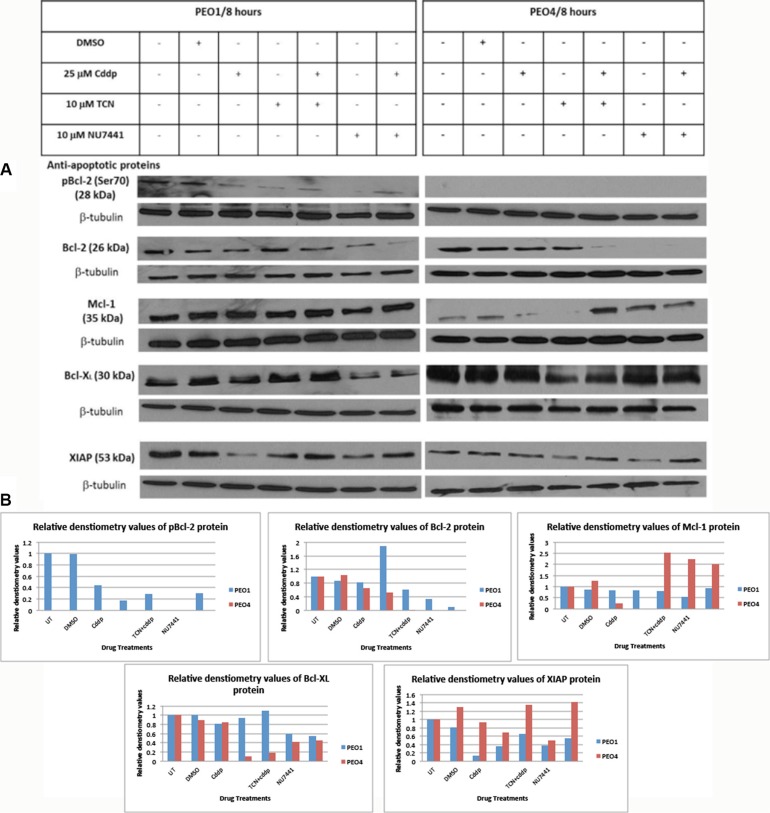
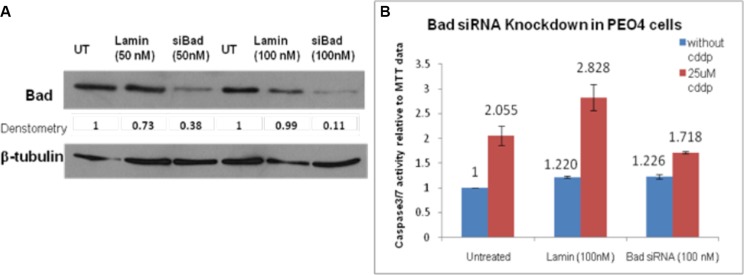
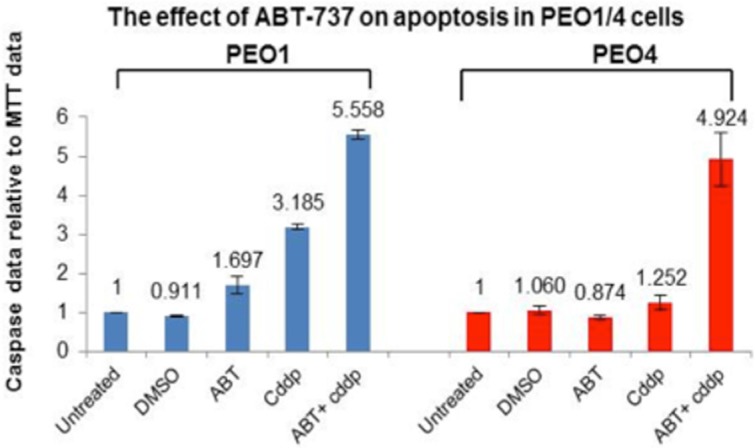
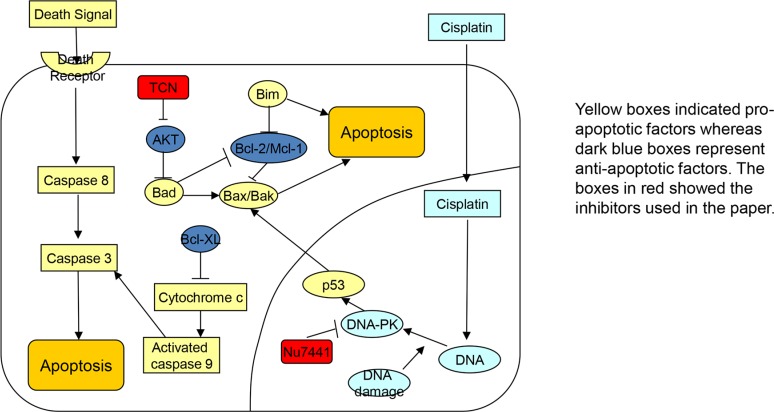
Many studies involving patients with cisplatin-resistant ovarian cancer have shown that AKT activation leads to inhibition of apoptosis. The aim of this study was to examine the potential involvement of the Bcl-2 family proteins in AKT-regulated cell survival in response to cisplatin treatment. Cisplatin-sensitive (PEO1) and cisplatin-resistant (PEO4) cells were taken from ascites of patients with ovarian cancer before cisplatin treatment and after development of chemoresistance. It was found that cisplatin treatment activated the AKT signaling pathway and promoted cell proliferation in cisplatin-resistant EOC cells. When AKT was transfected into nucleus of cisplatin-resistant ovarian cancer cells, DNA-PK was phosphorylated at S473. The activated AKT (pAKT-S473) in these cells inhibited the death signal induced by cisplatin thereby inhibiting cisplatin-mediated apoptosis. Results from this study showed that the combination of cisplatin, DNA-PK inhibitor NU7441, and AKT inhibitor TCN can overcome drug resistance, increase apoptosis, and re-sensitize PEO4 cells to cisplatin treatment. A decrease in apoptotic activity was seen in PEO4 cells when Bad was downregulated by siRNA, which indicated that Bad promotes apoptosis in PEO4 cells. Use of the Bcl-2 inhibitor ABT-737 showed that ABT-737 binds to Bcl-2 but not Mcl-1 and releases Bax/Bak which leads to cell apoptosis. The combination of ABT-737 and cisplatin leads to a significant increase in the death of PEO1 and PEO4 cells. All together, these results indicate that Bcl-2 family proteins are regulators of drug resistance. The combination of cisplatin and Bcl-2 family protein inhibitor could be a strategy for the treatment of cisplatin-resistant ovarian cancer.
Keywords: AKT; Bcl-2; cisplatin; drug resistance; epithelial ovarian cancer.
Conflict of interest statement
Authors declare no conflicts of interests.
Figures
References
-
- Agarwal R, Kaye SB. Ovarian cancer: strategies for overcoming resistance to chemotherapy. Nat Rev Cancer. 2003;3:502–16. - PubMed
-
- Bozulic L, Surucu B, Hynx D, Hemmings BA. PKB alpha/Akt1 acts downstream of DNA-PK in the DNA double-strand break response and promotes survival. Mol Cell. 2008;30:203–13. - PubMed
-
- Fraser M, Bai T, Tsang BK. Akt promotes cisplatin resistance in human ovarian cancer cells through inhibition of p53 phosphorylation and nuclear function. Int J Cancer. 2008;122:534–46. - PubMed
MeSH terms
Substances
LinkOut - more resources
Full Text Sources
Other Literature Sources
Medical
Molecular Biology Databases
Research Materials
