


Effect of fortified milk on growth and nutritional status in young children: a systematic review and meta-analysis
- PMID: 27938461
- PMCID: PMC10261583
- DOI: 10.1017/S1368980016003189
Effect of fortified milk on growth and nutritional status in young children: a systematic review and meta-analysis
Abstract
Objective: Adequate nutrition is critical for optimal growth and development. However, young children may be at risk of nutrient deficiencies when transitioning to weaning foods for a variety of reasons. Supplementation with fortified milk may provide potentially lacking essential nutrients, but effects on growth and nutritional status are yet to be established.
Design: Five databases were searched for randomised controlled trials using fortified milk against control milk in young children. Outcomes were growth, body composition and/or biochemical markers. Pooled differences in means were calculated for continuous outcomes and odds ratios for binary outcomes.
Setting: Randomised controlled trials set in any country.
Subjects: Otherwise healthy children aged 6-47 months.
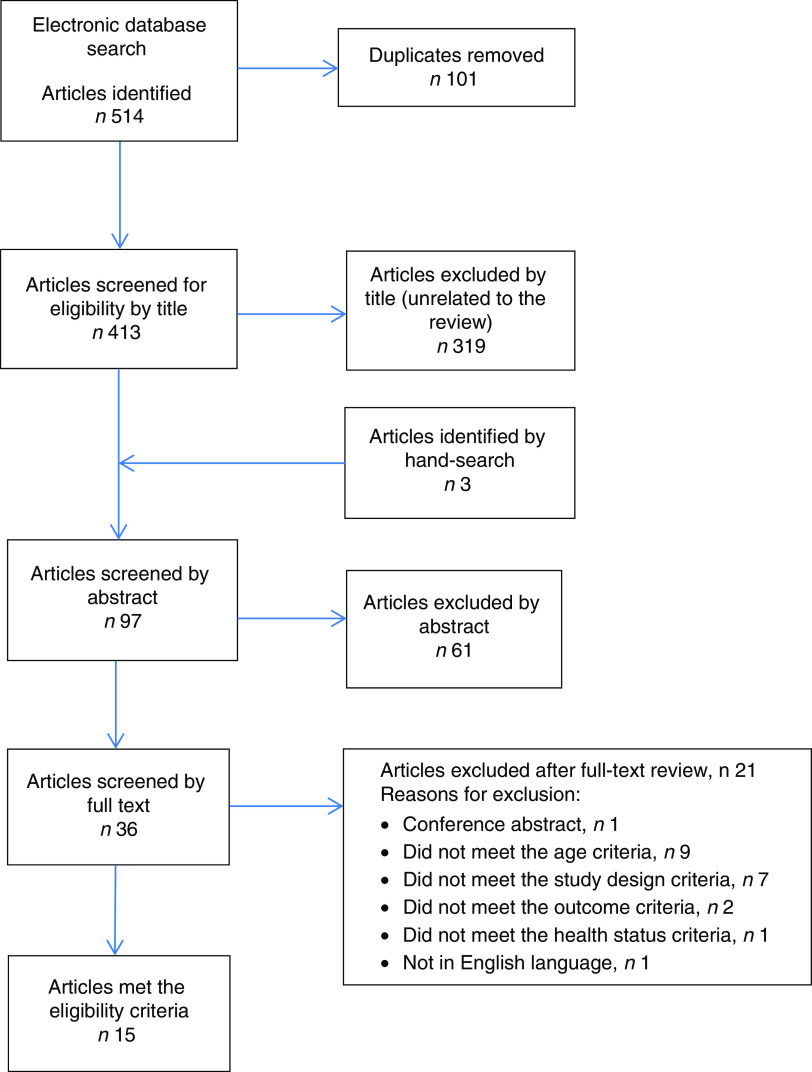
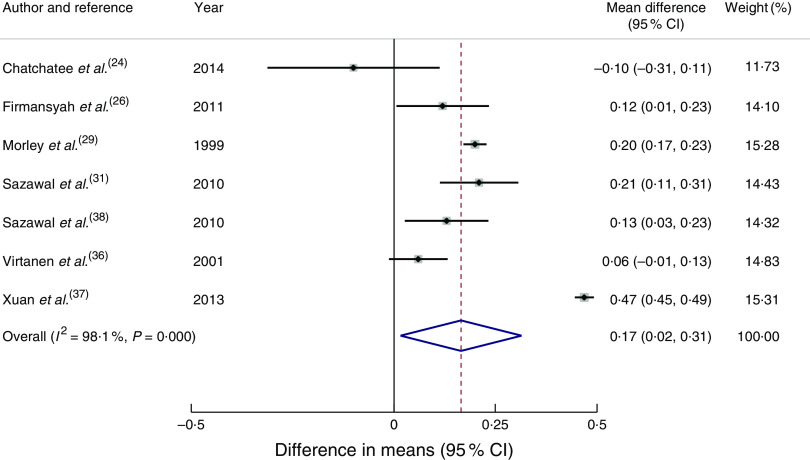
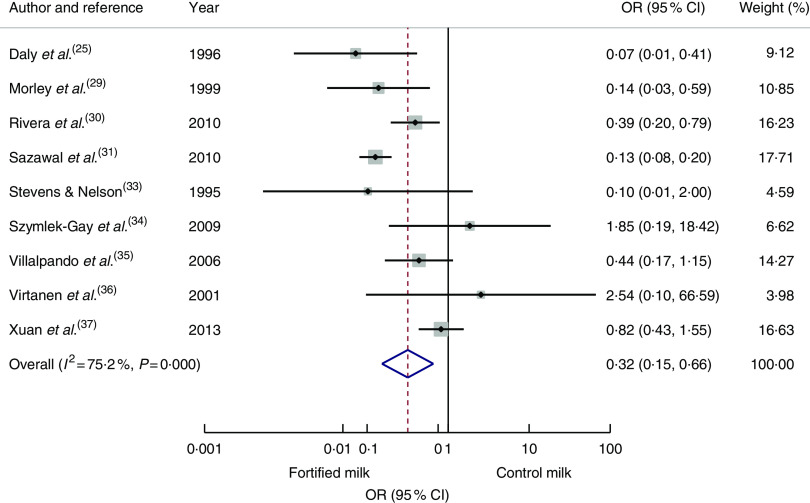
Results: Fifteen articles met the eligibility criteria. Fortification varied from Fe, Zn, vitamins, essential fatty acids, to pre- and/or probiotics. Frequently reported outcomes were weight, height and Fe status. Studies varied in geographical location, sample size and duration. Fortified milk had minimal effects on weight gain (mean difference=0·17 kg; 95 % CI 0·02, 0·31 kg) compared with control milk. The risk of anaemia was reduced in fortified milk groups (OR=0·32; 95 % CI 0·15, 0·66) compared with control groups. There were no significant effects on height gain, changes in body composition or Hb concentration.
Conclusions: Fortified milk is an effective source of complementary nutrition to supplement children in need when consumed in appropriate amounts in addition to a normal diet. Due to compositional differences, further research on fortified milk is warranted before making global recommendations on benefits for growth and nutritional outcomes in young children.
Keywords: Fortified milk; Growth; Iron deficiency; Nutritional status; Young children.
Figures
References
-
- Picciano MF, Smiciklas-Wright H, Birch LL et al. (2000) Nutritional guidance is needed during dietary transition in early childhood. Pediatrics 106, 109–114. - PubMed
-
- Dovey TM, Staples PA, Gibson EL et al. (2008) Food neophobia and ‘picky/fussy’ eating in children: a review. Appetite 50, 181–193. - PubMed
-
- Falciglia GA, Couch SC, Gribble LS et al. (2000) Food neophobia in childhood affects dietary variety. J Am Diet Assoc 100, 1474–1481. - PubMed
-
- Fox MK, Reidy K, Novak T et al. (2006) Sources of energy and nutrients in the diets of infants and toddlers. J Am Diet Assoc 106, 1 Suppl. 1, S28–S42. - PubMed
Publication types
MeSH terms
Substances
LinkOut - more resources
Full Text Sources
Other Literature Sources
Medical
Miscellaneous
