


What determines duration of palliative care before death for patients with advanced disease? A retrospective cohort study of community and hospital palliative care provision in a large UK city
- PMID: 27940628
- PMCID: PMC5168608
- DOI: 10.1136/bmjopen-2016-012576
What determines duration of palliative care before death for patients with advanced disease? A retrospective cohort study of community and hospital palliative care provision in a large UK city
Abstract
Objective: For patients with advanced cancer, several randomised controlled trials have shown that access to palliative care at least 6 months before death can improve symptoms, reduce unplanned hospital admissions, minimise aggressive cancer treatments and enable patients to make choices about their end-of-life care, including exercising the choice to die at home. This study determines in a UK population the duration of palliative care before death and explores influencing factors.
Design: This retrospective cohort study analysed referrals to three specialist palliative care services; a hospital-based inpatient palliative care team, and two community-based services (hospices). For each patient referred to any of the above services we identified the date of first referral to that team and calculated the median interval between first referral and death. We also calculated how referral time varied by age, sex, diagnosis and type of palliative care service.
Participants: 4650 patients referred to specialist palliative care services in Leeds UK between April 2012 and March 2014.
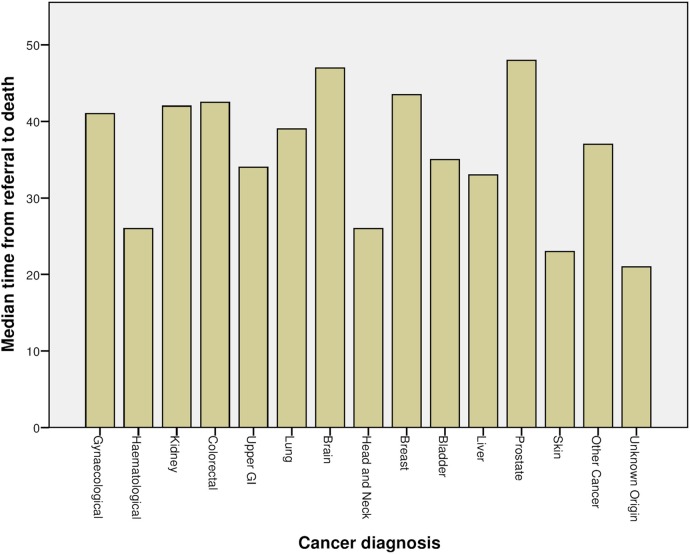
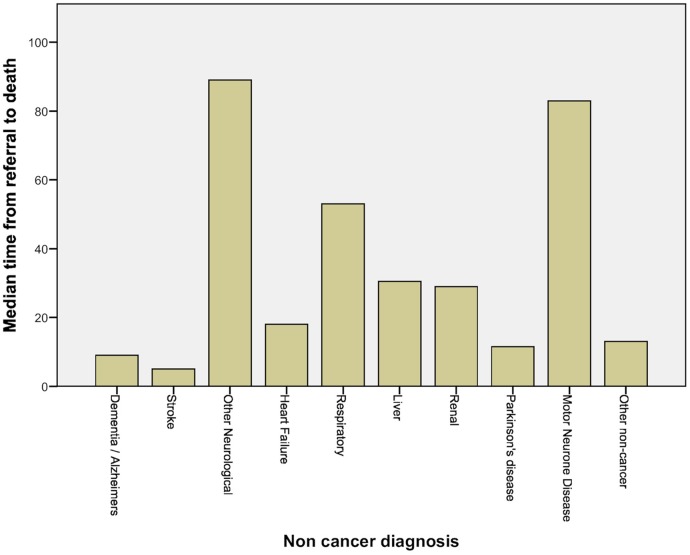
Results: Median age of the sample was 75 years. 3903 (84.0%) patients had a diagnosis of cancer. Age, diagnosis and place of referral were significant predictors of duration of palliative care before death. Age was independently associated (J=2 672 078, z=-392046.14, r=0.01) with duration of palliative care regardless of diagnosis. Patients over 75 years have 29 fewer days of palliative care than patients under 50. Patients with non-cancer diagnoses have 13 fewer days of palliative care than patients with cancer. Additionally, patients referred to hospital palliative care receive 24.5 fewer days palliative care than those referred to community palliative care services.
Conclusions: The current timing of referral to palliative care may limit the benefits to patients in terms of improvements in end-of-life care, particularly for older patients and patients with conditions other than cancer.
Keywords: PALLIATIVE CARE; Timing of referral.
Published by the BMJ Publishing Group Limited. For permission to use (where not already granted under a licence) please go to http://www.bmj.com/company/products-services/rights-and-licensing/.
Conflict of interest statement
All authors MIB, LZ, MA, SD have completed the Unified Competing Interest form (http://www.icmje.org/coi_disclosure.pdf available on request from the corresponding author) and declare: no support from any organisation for the submitted work; no financial relationships with any organisations that might have an interest in the submitted work in the previous 3 years, no other relationships or activities that could appear to have influenced the submitted work.
Figures
References
-
- Brumley R, Enguidanos S. Increased satisfaction with home care and lower costs: results of a randomized trial of in-home palliative care. J Am Geriatr Soc 2007;55:993–1000. - PubMed
Publication types
MeSH terms
Grants and funding
LinkOut - more resources
Full Text Sources
Other Literature Sources
Medical
Miscellaneous
