. 2017 Feb;49(2):296-302.
doi: 10.1038/ng.3744. Epub 2016 Dec 12.

ARID1A loss impairs enhancer-mediated gene regulation and drives colon cancer in mice

Affiliations

ARID1A loss impairs enhancer-mediated gene regulation and drives colon cancer in mice

Radhika Mathur et al. Nat Genet. 2017 Feb.

Abstract

Genes encoding subunits of SWI/SNF (BAF) chromatin-remodeling complexes are collectively mutated in ∼20% of all human cancers. Although ARID1A is the most frequent target of mutations, the mechanism by which its inactivation promotes tumorigenesis is unclear. Here we demonstrate that Arid1a functions as a tumor suppressor in the mouse colon, but not the small intestine, and that invasive ARID1A-deficient adenocarcinomas resemble human colorectal cancer (CRC). These tumors lack deregulation of APC/β-catenin signaling components, which are crucial gatekeepers in common forms of intestinal cancer. We find that ARID1A normally targets SWI/SNF complexes to enhancers, where they function in coordination with transcription factors to facilitate gene activation. ARID1B preserves SWI/SNF function in ARID1A-deficient cells, but defects in SWI/SNF targeting and control of enhancer activity cause extensive dysregulation of gene expression. These findings represent an advance in colon cancer modeling and implicate enhancer-mediated gene regulation as a principal tumor-suppressor function of ARID1A.


Figures
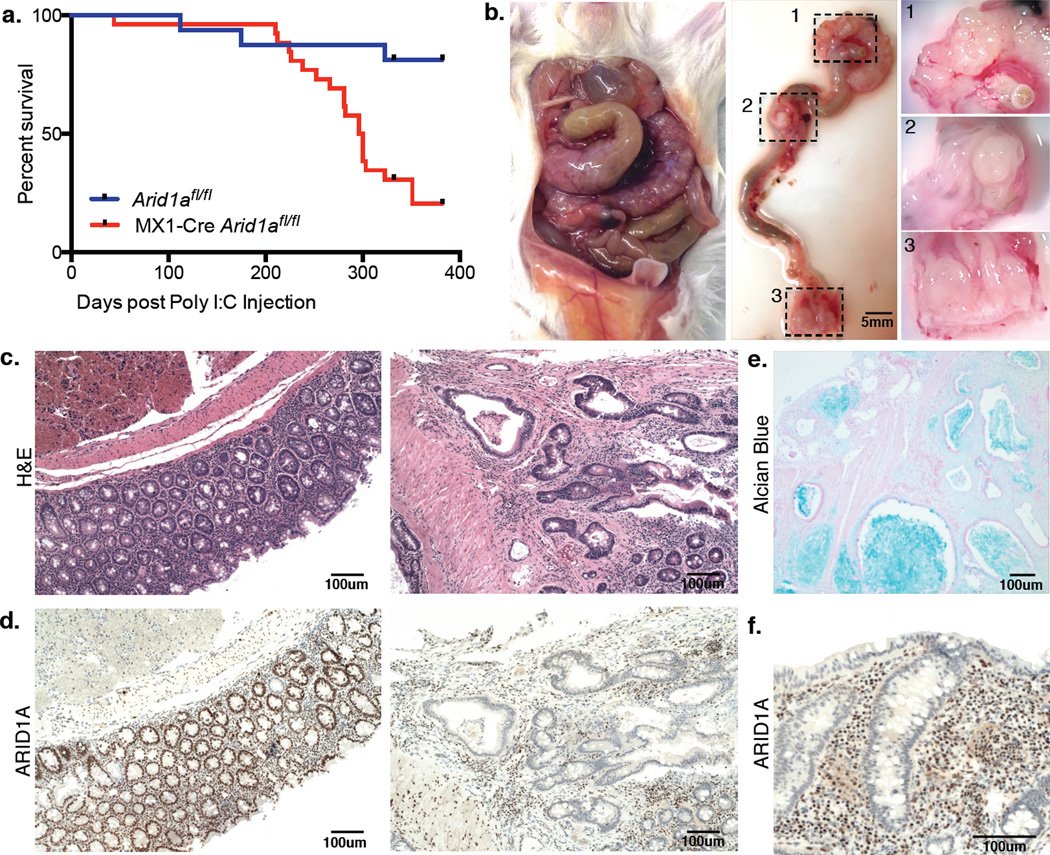
Figure 1
Figure 1. ARID1A loss drives invasive colon adenocarcinoma in mice
(a) Survival of MX1-Cre Arid1afl/fl mice (n=26) and control Arid1afl/fl mice (n=16) following injection of Poly I:C; (b) MX1-Cre Arid1afl/fl mouse with tumors in the (1) cecum, (2) mid-colon, and (3) rectum; (c) H&E staining on normal colon epithelium (left) and tumor (right) tissue sections from MX1-Cre Arid1afl/fl mouse; (d) ARID1A immunohistochemistry (IHC) on above tissue sections; (e) Alcian blue staining on tumor section from MX1-Cre Arid1afl/fl mouse; (f) ARID1A IHC on tumor section from MX1-Cre Arid1afl/fl mouse showing lymphocytic infiltrate.
Figure 2
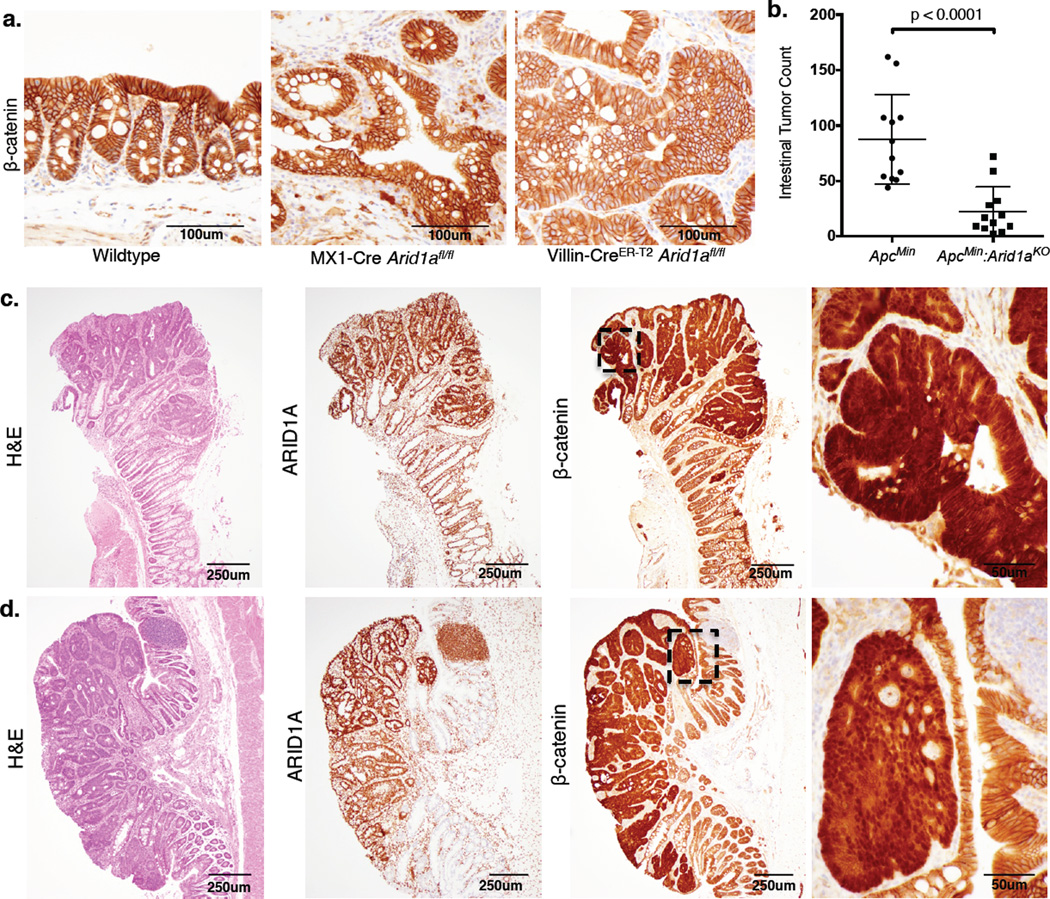
Figure 2. ARID1A loss drives colon tumorigenesis independent of APC inactivation
(a) β-catenin IHC in wildtype mouse colon and tumor tissue sections from MX1-Cre Arid1afl/fl and Villin-CreER-T2 Arid1afl/fl mice; (b) Total tumor count in the small intestine and colon of ApcMin (n=12) and ApcMin:Arid1aKO mice (n=12), p-value shown from unpaired two-tailed T-test; (c) Colon adenoma in ApcMin mouse with H&E staining, ARID1A IHC, and β-catenin IHC (β-catenin IHC magnification shown for marked tumor region); (d) Same as (c) for colon adenoma in ApcMin:Arid1aKO mouse.
Figure 3
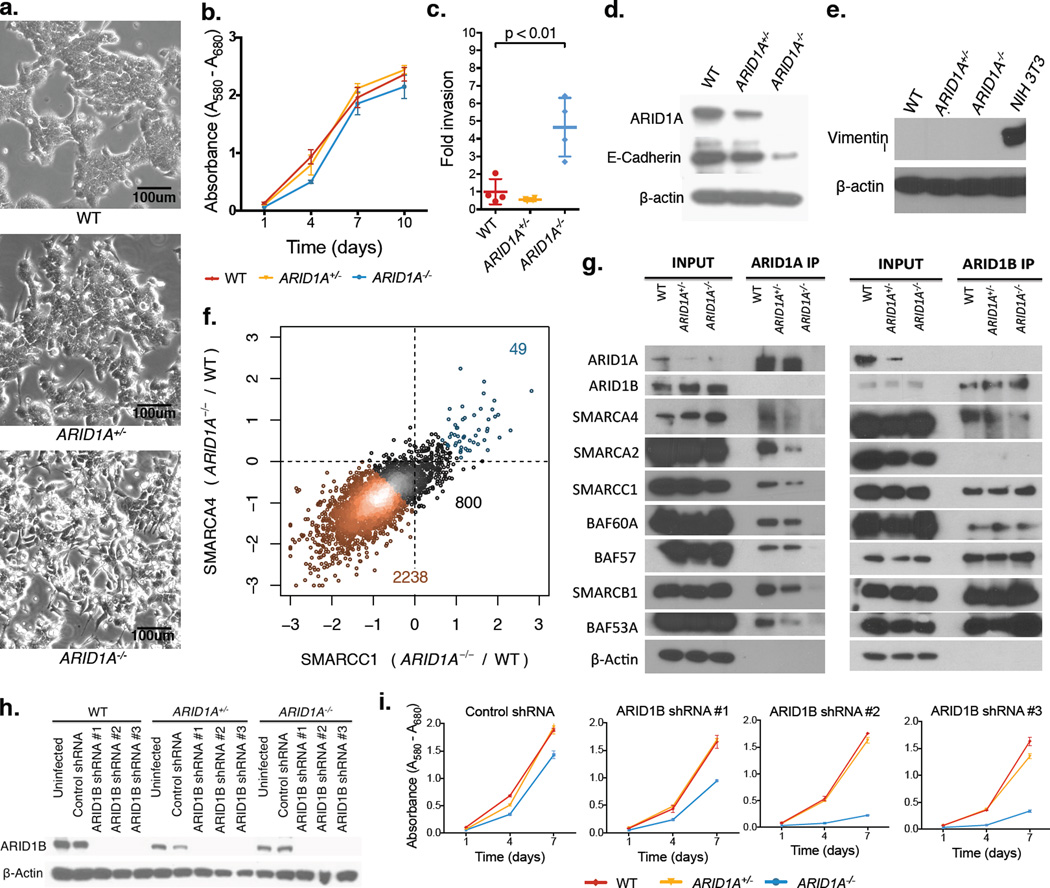
Figure 3. ARID1A loss causes defects in SWI/SNF targeting to chromatin
a) Live cell morphology of HCT116 ARID1A WT, ARID1A+/−, and Arid1a−/− cells in culture; b) Proliferation measured by MTT assay, error bars show standard deviation of 3 measurements (technical replicates); c) Invasion measured by Matrigel-chamber based assay, error bars show standard deviation of 4 measurements (technical replicates); d) Protein levels of ARID1A, E-Cadherin, and β-actin; e) Protein levels of Vimentin and β-actin (Note: NIH 3T3 fibroblast cells included for positive control); f) Fold change (log2) in SMARCA4 and SMARCC1 ChIP-Seq signals at SWI/SNF binding sites in Arid1a−/− cells relative to WT; g) Immunoprecipitation of SWI/SNF complexes using antibodies targeting ARID1A and ARID1B; h) Protein levels of ARID1B and β-actin following ARID1B knockdown with 3 independent shRNAs; i) Proliferation following shRNA-mediated ARID1B knockdown measured by MTT assay; error bars show standard deviation of 3 measurements (technical replicates).
Figure 4
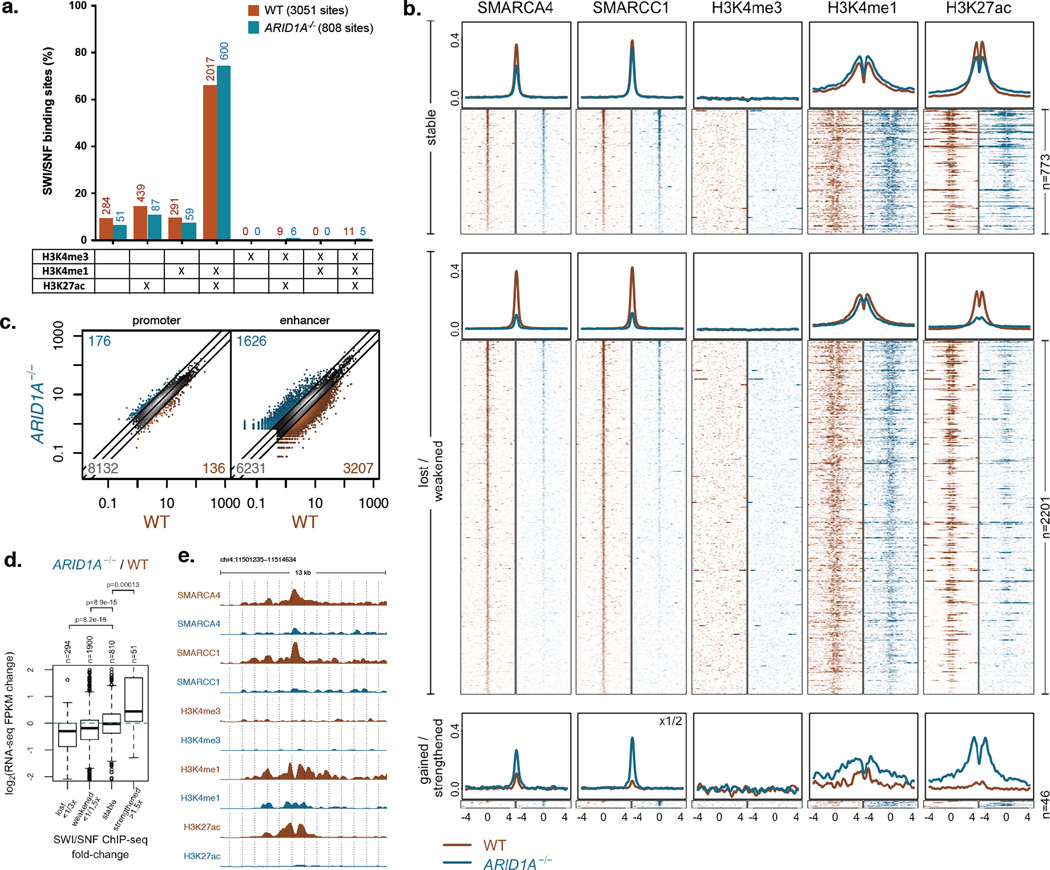
Figure 4. SWI/SNF complexes are targeted to enhancers and contribute to their activity
a) Distribution of SWI/SNF binding sites in HCT116 WT and Arid1a−/− cells relative to histone modifications (Note: difference between WT and Arid1a−/− cells is not significant in a paired t-test); b) ChIP-seq profiles of SMARCA4, SMARCC1, H3K4me3, H3K4me1, and H3K27ac in WT and ARID1A−/− cells around all TSS-distal SWI/SNF binding sites (Notes: labels on the right of the figure indicate number of sites in each category; labels on top right corners indicate any alterations made in scaling of Y-axis); c) H3K27ac levels in WT and ARID1A−/− cells at TSS-proximal (promoter) and TSS-distal (enhancer) enrichment regions (Note: numbers in the three corners denote numbers of activated (>2×), inactivated (<1/2×), and stable sites); d) Fold changes (log2) of gene expression between WT and Arid1a−/− cells for genes nearest to TSS-distal SWI/SNF binding sites split based on Arid1a−/− / WT ChIP-Seq signal; e) ChIP-seq tracks of SMARCA4, SMARCC1, H3K4me3, H3K4me1, and H3K27ac in WT and ARID1A−/− cells.
Figure 5
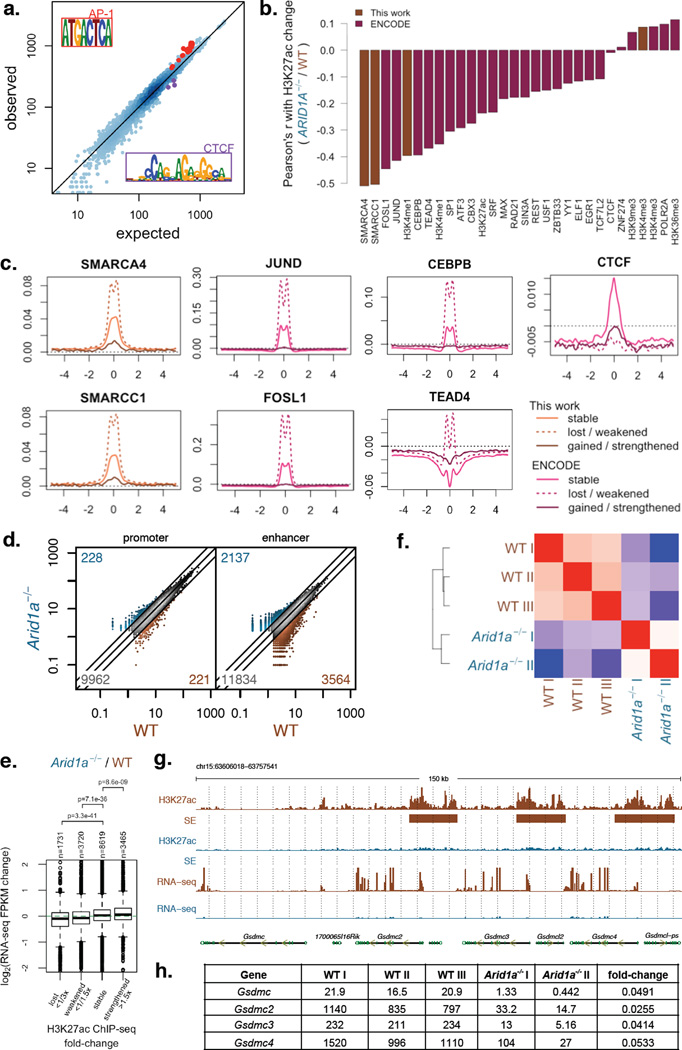
Figure 5. ARID1A loss impairs enhancer-mediated gene regulation in the colonic epithelium
a) Observed vs. expected TF motif instances at TSS-distal H3K27ac regions (enhancers) with reduced H3K27ac signal based on enrichment regions with stable H3K27ac signal. Motifs highly similar to AP1 and CTCF motifs are highlighted; b) Correlation between H3K27ac signal change (Arid1a−/− / WT) and WT ChIP-Seq signal levels of different factors profiled in this work and by the ENCODE Project. c) ChIP-Seq profiles for SMARCA4, SMARCC1, JUND, FOSL1, and CTCF in WT HCT116 cells centered around TSS-distal H3K27ac regions (enhancers) that remain stable, show lost/weakened H3K27ac, or show gained/strengthened H3K27ac in Arid1a−/− cells relative to WT; d) H3K27ac levels at TSS-proximal (promoter) and TSS-distal (enhancer) enrichment regions for colon epithelium from wildtype (WT) and Villin-CreER-T2 Arid1afl/fl (Arid1a−/−) mice (Note: numbers in the three corners denote numbers of activated (>2×), inactivated (<1/2×) and stable sites); e) Fold changes (log2) of gene expression between WT and Arid1a−/− mouse colon epithelium for genes nearest to TSS-distal H3K27ac regions (enhancers) split based on Arid1a−/− / WT ChIP-Seq signal; f) Pearson's correlation among RNA-Seq samples based on FPKM values for mouse colon epithelium dissociated from individual wildtype mice (WT, n=3) and Villin-CreER-T2 Arid1afl/fl mice (Arid1a−/−, n=2); G) H3K7ac ChIP-Seq tracks, super-enhancer (SE) calls, and RNA-Seq tracks at Gsdmc locus in WT and Arid1a−/− mouse colon epithelium. H) RNA-Seq FKPM values for individual WT and Arid1a−/− mice for Gsdmc, Gsdmc2, Gsdmc3, and Gsdmc4.
Figure 6
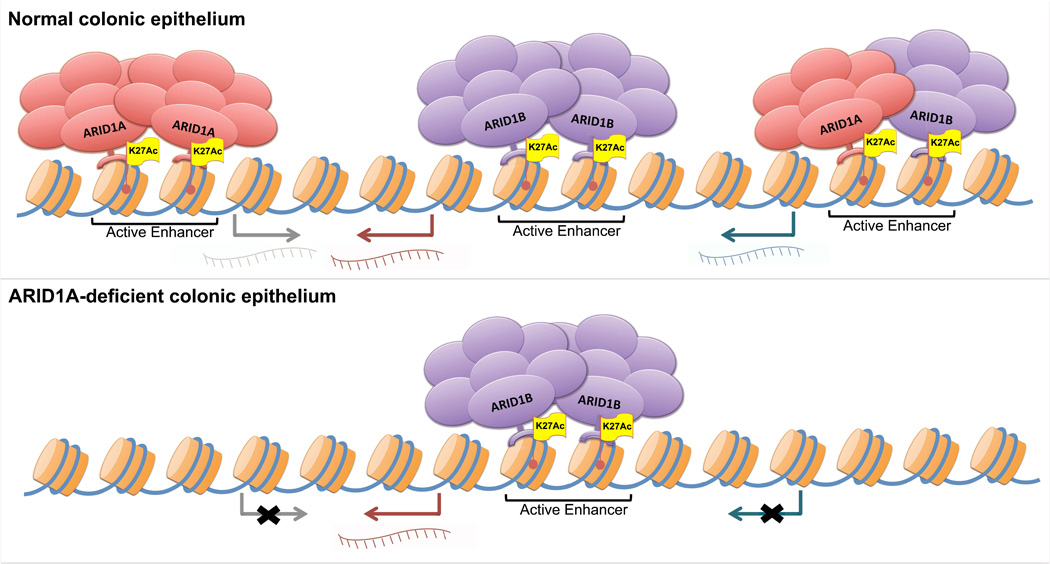
Figure 6. Defective SWI/SNF targeting and control of enhancer activity in the ARID1A-deficient colonic epithelium (Model)!

References

    1. Garraway LA, Lander ES. Lessons from the Cancer Genome. Cell. 2013;153(1):17–37. http://doi.org/10.1016/j.cell.2013.03.002. - DOI - PubMed
    1. Kadoch C, Hargreaves DC, Hodges C, Elias L, Ho L, Ranish J, Crabtree GR. Proteomic and bioinformatic analysis of mammalian SWI/SNF complexes identifies extensive roles in human malignancy. Nature Publishing Group. 2013;45(6):592–601. - PMC - PubMed
    1. Kühn R, Schwenk F, Aguet M, Rajewsky K. Inducible gene targeting in mice. Science. 1995;269(5229):1427–1429. - PubMed
    1. Hamilton SR, Bosman FT, Boffetta P, et al. Carcinoma of the colon and rectum. In: Bosman FT, Carneiro F, Hruban RH, Theise ND, editors. WHO Classification of Tumours of the Digestive System. Lyon: IARC Press; 2010. pp. 134–146.
    1. Marjou el F, Janssen K-P, Chang BH-J, Li M, Hindie V, Chan L, et al. Tissue-specific and inducible Cre-mediated recombination in the gut epithelium. Genesis (New York, N.Y. : 2000) 2004;39(3):186–193. http://doi.org/10.1002/gene.20042. - DOI - PubMed

Methods-only References

    1. Gao X, Tate P, Hu P, Tjian R, Skarnes WC, Wang Z. ES cell pluripotency and germ-layer formation require the SWI/SNF chromatin remodeling component BAF250a. Proceedings of the National Academy of Sciences of the United States of America. 2008;105(18):6656–6661. http://doi.org/10.1073/pnas.0801802105. - DOI - PMC - PubMed
    1. Weiser MM. Intestinal epithelial cell surface membrane glycoprotein synthesis. I. An indicator of cellular differentiation. The Journal of Biological Chemistry. 1973;248(7):2536–2541. - PubMed
    1. Li H, Durbin R. Fast and accurate long-read alignment with Burrows-Wheeler transform. Bioinformatics. 2010;26:589–595. [PMID: 20080505] - PMC - PubMed
    1. Li H. Aligning sequence reads, clone sequences and assembly contigs with BWA-MEM. arXiv: 1303.3997v2 [q-bio.GN] 2013
    1. Koboldt DC, Zhang Q, Larson DE, Shen D, McLellan MD, Lin L, et al. VarScan 2: somatic mutation and copy number alteration discovery in cancer by exome sequencing. Genome Research. 2012;22(3):568–576. http://doi.org/10.1101/gr.129684.111. - DOI - PMC - PubMed