


Influence of donor age on induced pluripotent stem cells
- PMID: 27941802
- PMCID: PMC5505172
- DOI: 10.1038/nbt.3749
Influence of donor age on induced pluripotent stem cells
Abstract
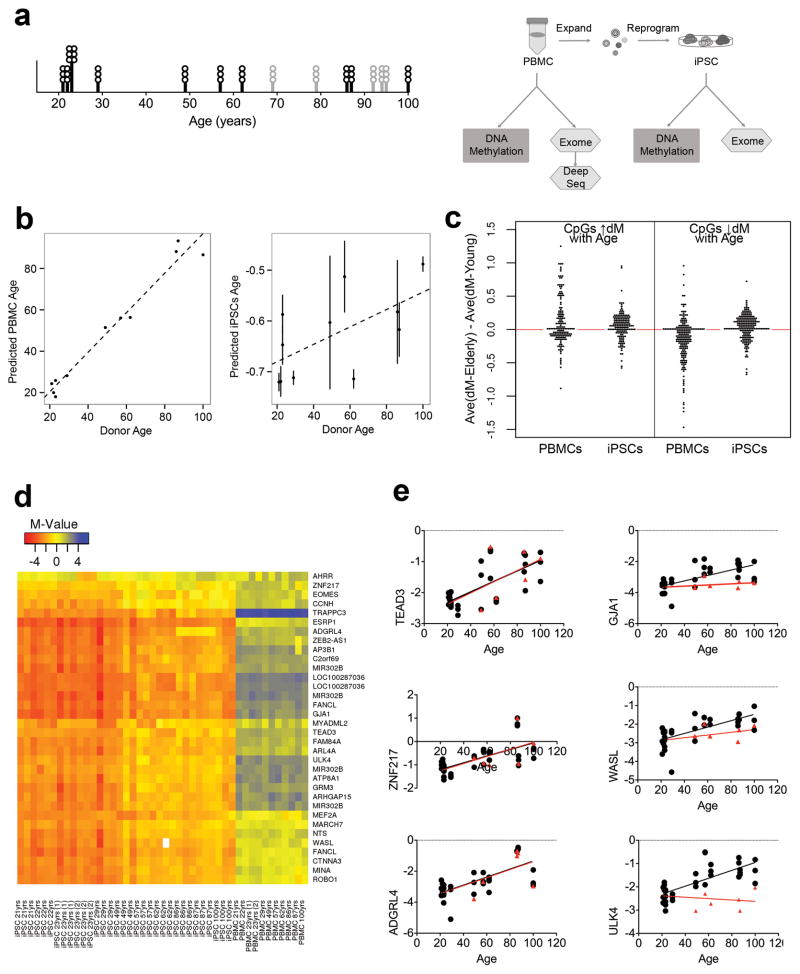
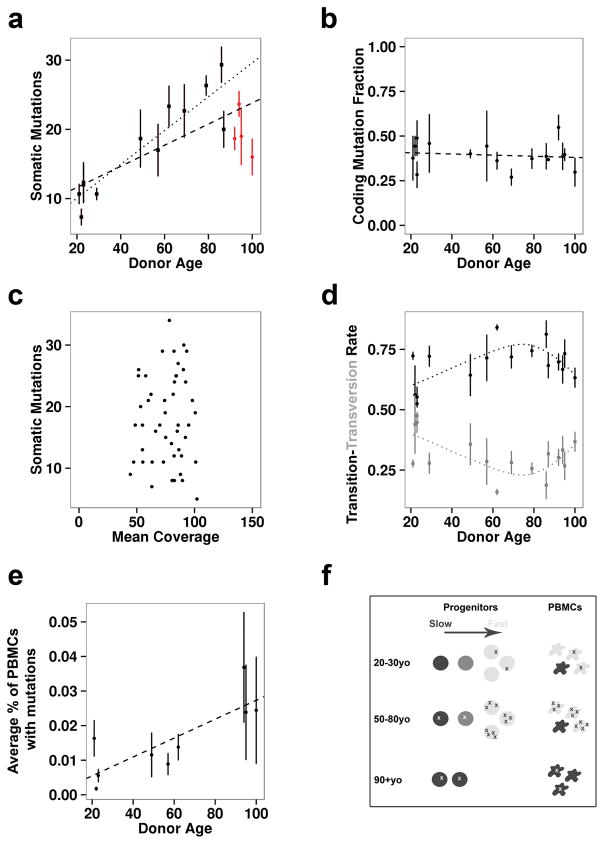
Induced pluripotent stem cells (iPSCs) are being pursued as a source of cells for autologous therapies, many of which will be aimed at aged patients. To explore the impact of age on iPSC quality, we produced iPSCs from blood cells of 16 donors aged 21-100. We find that iPSCs from older donors retain an epigenetic signature of age, which can be reduced through passaging. Clonal expansion via reprogramming also enables the discovery of somatic mutations present in individual donor cells, which are missed by bulk sequencing methods. We show that exomic mutations in iPSCs increase linearly with age, and all iPSC lines analyzed carry at least one gene-disrupting mutation, several of which have been associated with cancer or dysfunction. Unexpectedly, elderly donors (>90 yrs) harbor fewer mutations than predicted, likely due to a contracted blood progenitor pool. These studies establish that donor age is associated with an increased risk of abnormalities in iPSCs and will inform clinical development of reprogramming technology.
Conflict of interest statement
The authors declare no competing financial interests.
Figures
References
-
- Barker RA, Drouin-Ouellet J, Parmar M. Cell-based therapies for Parkinson disease-past insights and future potential. Nature reviews Neurology. 2015;11:492–503. - PubMed
-
- Schwartz SD, et al. Embryonic stem cell trials for macular degeneration: a preliminary report. Lancet. 2012;379:713–720. - PubMed
-
- Schwartz SD, et al. Human embryonic stem cell-derived retinal pigment epithelium in patients with age-related macular degeneration and Stargardt’s macular dystrophy: follow-up of two open-label phase 1/2 studies. Lancet. 2015;385:509–516. - PubMed
MeSH terms
Grants and funding
LinkOut - more resources
Full Text Sources
Other Literature Sources
Medical
