Review
. 2017 Jan 24:12:153-186.
doi: 10.1146/annurev-pathol-052016-100322. Epub 2016 Dec 5.

The Role of Cancer-Associated Fibroblasts and Fibrosis in Liver Cancer

Affiliations
Review

The Role of Cancer-Associated Fibroblasts and Fibrosis in Liver Cancer

Silvia Affo et al. Annu Rev Pathol. .

Abstract

Liver cancer is the second leading cause of cancer mortality worldwide, causing more than 700,000 deaths annually. Because of the wide landscape of genomic alterations and limited therapeutic success of targeting tumor cells, a recent focus has been on better understanding and possibly targeting the microenvironment in which liver tumors develop. A unique feature of liver cancer is its close association with liver fibrosis. More than 80% of hepatocellular carcinomas (HCCs) develop in fibrotic or cirrhotic livers, suggesting an important role of liver fibrosis in the premalignant environment (PME) of the liver. Cholangiocarcinoma (CCA), in contrast, is characterized by a strong desmoplasia that typically occurs in response to the tumor, suggesting a key role of cancer-associated fibroblasts (CAFs) and fibrosis in its tumor microenvironment (TME). Here, we discuss the functional contributions of myofibroblasts, CAFs, and fibrosis to the development of HCC and CCA in the hepatic PME and TME, focusing on myofibroblast- and extracellular matrix-associated growth factors, fibrosis-associated immunosuppressive pathways, as well as mechanosensitive signaling cascades that are activated by increased tissue stiffness. Better understanding of the role of myofibroblasts in HCC and CCA development and progression may provide the basis to target these cells for tumor prevention or therapy.

Keywords: fluke; inflammation; mechanosensitive signaling; primary sclerosing cholangitis (PSC); stiffness; stroma.


Figures
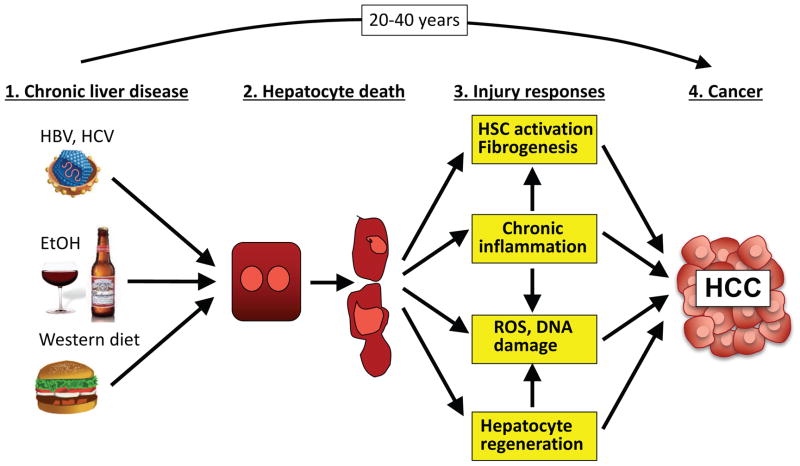
Figure 1
Figure 1. Mechanisms by which the hepatic PME promotes HCC development
Chronic liver injury, resulting in hepatocyte death, contributes to characteristic features of the PME, including liver fibrosis, hepatocyte regeneration, inflammation, increased generation of ROS, and DNA damage. Together these changes in the PME drive the development of HCC, which typically occurs after chronic injury persists for several decades. Abbreviations: HBV, hepatitis B virus; HCC, hepatocellular carcinoma; HCV, hepatitis C virus; HSC, hepatic stellate cell; PME, premalignant environment; ROS, reactive oxygen species.
Figure 2
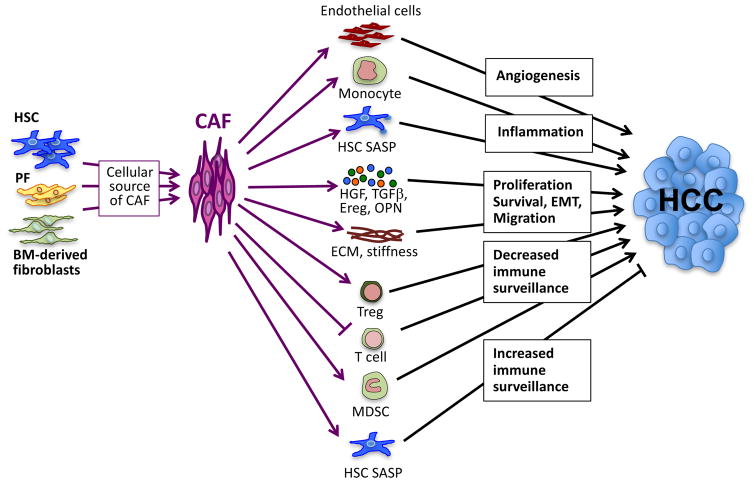
Figure 2. The contribution of CAFs to hepatocarcinogenesis
CAFs may be derived from different cellular sources, including HSCs, PFs, and BM-derived fibroblasts. CAFs may promote HCC by increasing angiogenesis, inflammation, proliferation, survival, the EMT, and alterations of immune surveillance. These effects are either direct through mediators released from CAFs or indirect via interactions with other cells, including endothelial cells, monocytes, T cells, Tregs, and MDSCs. Abbreviations: BM, bone marrow; CAF, cancer-associated fibroblast; ECM, extracellular matrix; EMT, epithelial-mesenchymal transition; Ereg, epiregulin; HCC, hepatocellular carcinoma; HSC, hepatic stellate cell; MDSC, myeloid-derived suppressor cell; OPN, osteopontin; PF, portal fibroblast; SASP, senescence-associated secretory phenotype; Tregs, regulatory T cells.
Figure 3
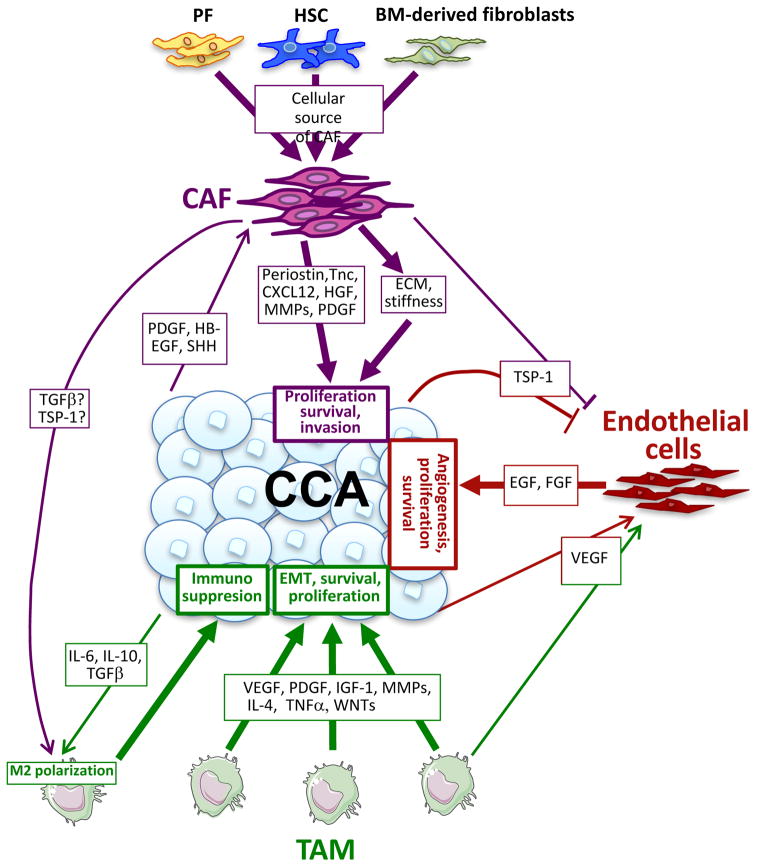
Figure 3. The tumor microenvironment of CCA
In CCA, CAFs may be derived from different cellular sources, including HSCs, PFs, and BM-derived fibroblasts. CAFs promote direct effects on CCA proliferation, survival, and invasion through secreted growth factors, chemokines, MMPs, and ECM, as well as indirect effects via interactions with macrophages and endothelial cells. Abbreviations: BM, bone marrow; CAF, cancer-associated fibroblast; CCA, cholangiocarcinoma; ECM, extracellular matrix; EMT, epithelial-mesenchymal transition; HSC, hepatic stellate cell; PF, portal fibroblast; MMP, matrix metalloproteinase; TAM, tumor-associated macrophage.

References

    1. Torre LA, Bray F, Siegel RL, Ferlay J, Lortet-Tieulent J, Jemal A. Global cancer statistics, 2012. CA Cancer J Clin. 2015;65:87–108. - PubMed
    1. Nault JC, Bioulac-Sage P, Zucman-Rossi J. Hepatocellular benign tumors--from molecular classification to personalized clinical care. Gastroenterology. 2013;144:888–902. - PubMed
    1. Ladep NG, Khan SA, Crossey MM, Thillainayagam AV, Taylor-Robinson SD, Toledano MB. Incidence and mortality of primary liver cancer in England and Wales: changing patterns and ethnic variations. World J Gastroenterol. 2014;20:1544–53. - PMC - PubMed
    1. Taylor-Robinson SD, Toledano MB, Arora S, Keegan TJ, Hargreaves S, et al. Increase in mortality rates from intrahepatic cholangiocarcinoma in England and Wales 1968–1998. Gut. 2001;48:816–20. - PMC - PubMed
    1. West J, Wood H, Logan RF, Quinn M, Aithal GP. Trends in the incidence of primary liver and biliary tract cancers in England and Wales 1971–2001. Br J Cancer. 2006;94:1751–58. - PMC - PubMed