


Immunopathogenesis of Chronic Rhinosinusitis and Nasal Polyposis
- PMID: 27959637
- PMCID: PMC5514544
- DOI: 10.1146/annurev-pathol-052016-100401
Immunopathogenesis of Chronic Rhinosinusitis and Nasal Polyposis
Abstract
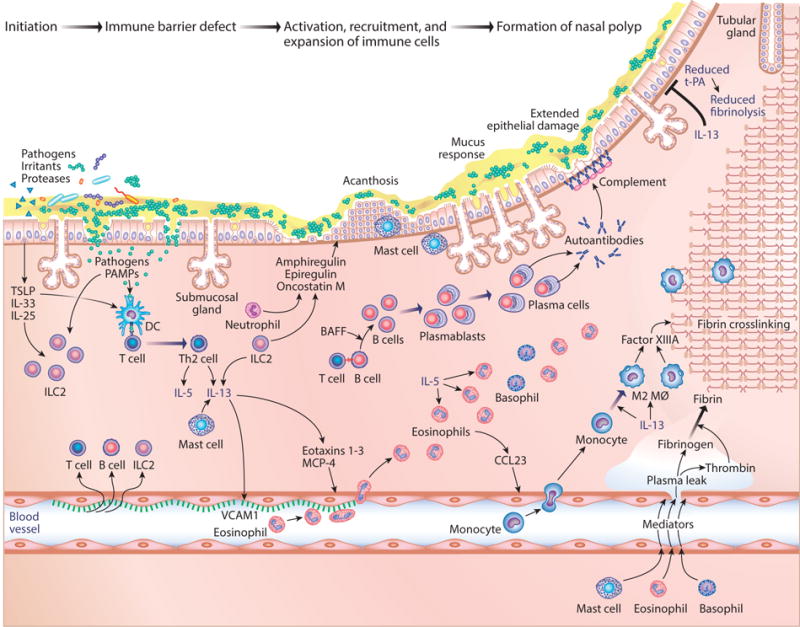
Chronic rhinosinusitis (CRS) is a troublesome, chronic inflammatory disease that affects over 10% of the adult population, causing decreased quality of life, lost productivity, and lost time at work and leading to more than a million surgical interventions annually worldwide. The nose, paranasal sinuses, and associated lymphoid tissues play important roles in homeostasis and immunity, and CRS significantly impairs these normal functions. Pathogenic mechanisms of CRS have recently become the focus of intense investigations worldwide, and significant progress has been made. The two main forms of CRS that have been long recognized, with and without nasal polyps, are each now known to be heterogeneous, based on underlying mechanism, geographical location, and race. Loss of the immune barrier, including increased permeability of mucosal epithelium and reduced production of important antimicrobial substances and responses, is a common feature of many forms of CRS. One form of CRS with polyps found worldwide is driven by the cytokines IL-5 and IL-13 coming from Th2 cells, type 2 innate lymphoid cells, and probably mast cells. Type 2 cytokines activate inflammatory cells that are implicated in the pathogenic mechanism, including mast cells, basophils, and eosinophils. New classes of biological drugs that block the production or action of these cytokines are making important inroads toward new treatment paradigms in polypoid CRS.
Keywords: acantholysis; acanthosis; allergy; chronic rhinosinusitis; eosinophilic inflammation; epithelial barrier; epithelial-to-mesenchymal transition (EMT); glandular hyperplasia; nasal polyp; sinus disease.
Figures
References
-
- Fokkens WJ, Lund VJ, Mullol J, Bachert C, Alobid I, et al. EPOS 2012: European position paper on rhinosinusitis and nasal polyps 2012. A summary for otorhinolaryngologists. Rhinology. 2012;50(1):1–12. - PubMed
-
- Senior BA, Kennedy DW, Tanabodee J, Kroger H, Hassab M, et al. Long-term results of functional endoscopic sinus surgery. Laryngoscope. 1998;108(2):151–57. - PubMed
-
- Laidlaw TM, Boyce JA. Aspirin-exacerbated respiratory disease—new prime suspects. N Engl J Med. 2016;374(5):484–88. - PubMed
-
- Bhattacharyya N, Orlandi RR, Grebner J, Martinson M. Cost burden of chronic rhinosinusitis: a claims-based study. Otolaryngol Head Neck Surg. 2011;144(3):440–45. - PubMed
Publication types
MeSH terms
Grants and funding
LinkOut - more resources
Full Text Sources
Other Literature Sources
Medical
