


Gender disparities in red blood cell transfusion in elective surgery: a post hoc multicentre cohort study
- PMID: 27965248
- PMCID: PMC5168603
- DOI: 10.1136/bmjopen-2016-012210
Gender disparities in red blood cell transfusion in elective surgery: a post hoc multicentre cohort study
Abstract
Objectives: A post hoc gender comparison of transfusion-related modifiable risk factors among patients undergoing elective surgery.
Settings: 23 Austrian centres randomly selected and stratified by region and level of care.
Participants: We consecutively enrolled in total 6530 patients (3465 women and 3065 men); 1491 underwent coronary artery bypass graft (CABG) surgery, 2570 primary unilateral total hip replacement (THR) and 2469 primary unilateral total knee replacement (TKR).
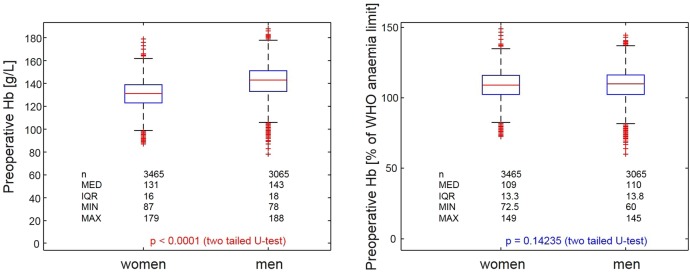
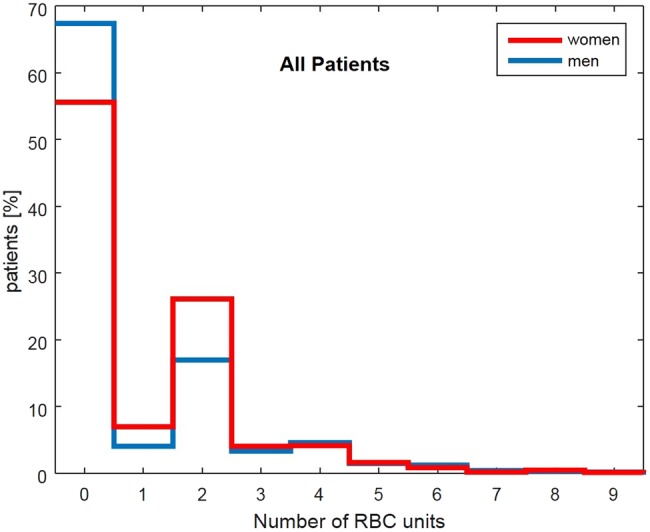
Main outcome measures: Primary outcome measures were the number of allogeneic and autologous red blood cell (RBC) units transfused (postoperative day 5 included) and differences in intraoperative and postoperative transfusion rate between men and women. Secondary outcomes included perioperative blood loss in transfused and non-transfused patients, volume of RBCs transfused, perioperative haemoglobin values and circulating red blood volume on postoperative day 5.
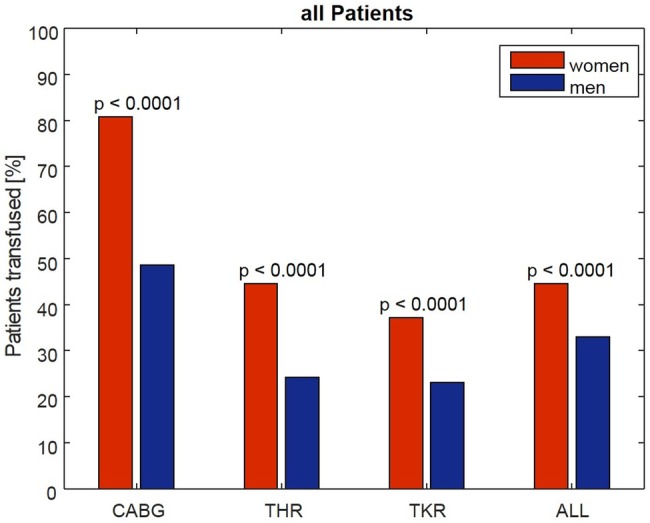
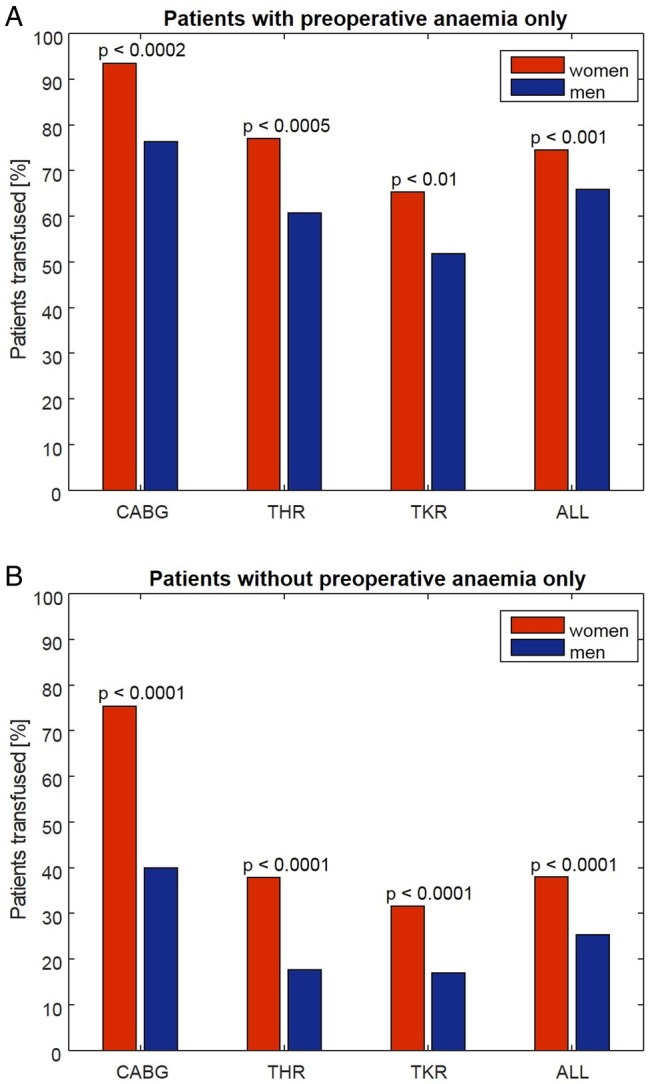
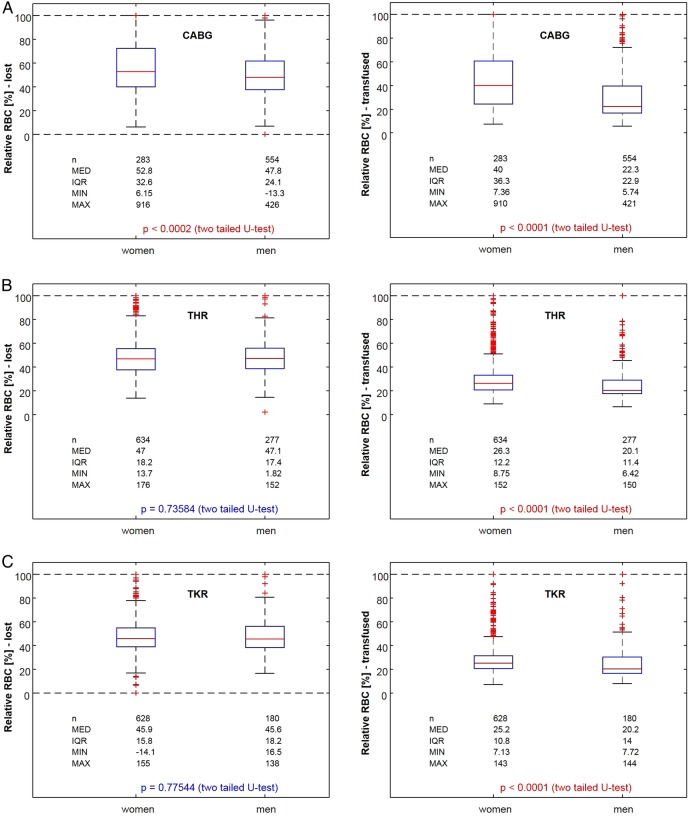
Results: In all surgical groups, the transfusion rate was significantly higher in women than in men (CABG 81 vs 49%, THR 46 vs 24% and TKR 37 vs 23%). In transfused patients, the absolute blood loss was higher among men in all surgical categories while the relative blood loss was higher among women in the CABG group (52.8 vs 47.8%) but comparable in orthopaedic surgery. The relative RBC volume transfused was significantly higher among women in all categories (CABG 40.0 vs 22.3; TKR 25.2 vs 20.2; THR 26.4 vs 20.8%). On postoperative day 5, the relative haemoglobin values and the relative circulating RBC volume were higher in women in all surgical categories.
Conclusions: The higher transfusion rate and volume in women when compared with men in elective surgery can be explained by clinicians applying the same absolute transfusion thresholds irrespective of a patient's gender. This, together with the common use of a liberal transfusion strategy, leads to further overtransfusion in women.
Keywords: Patient blood management; gender; overuse; transfusion.
Published by the BMJ Publishing Group Limited. For permission to use (where not already granted under a licence) please go to http://www.bmj.com/company/products-services/rights-and-licensing/.
Conflict of interest statement
AH lectures for Vifor Pharma and TEM international.
Figures
References
-
- Global Burden of Disease Study 2013 Collaborators. Global, regional, and national incidence, prevalence, and years lived with disability for 301 acute and chronic diseases and injuries in 188 countries, 1990–2013: a systematic analysis for the Global Burden of Disease Study 2013. Lancet 2015;386:743–800. 10.1016/S0140-6736(15)60692-4 - DOI - PMC - PubMed
-
- Blomkalns AL, Chen AY, Hochman JS et al. Gender disparities in the diagnosis and treatment of non-ST-segment elevation acute coronary syndromes: large-scale observations from the CRUSADE (Can Rapid Risk Stratification of Unstable Angina Patients Suppress Adverse Outcomes With Early Implementation of the American College of Cardiology/American Heart Association Guidelines) National Quality Improvement Initiative. J Am Coll Cardiol 2005;45:832–7. 10.1016/j.jacc.2004.11.055 - DOI - PubMed
Publication types
MeSH terms
Substances
LinkOut - more resources
Full Text Sources
Other Literature Sources
Medical
