


Evidence of Increased Antibiotic Resistance in Phylogenetically-Diverse Aeromonas Isolates from Semi-Intensive Fish Ponds Treated with Antibiotics
- PMID: 27965628
- PMCID: PMC5124577
- DOI: 10.3389/fmicb.2016.01875
Evidence of Increased Antibiotic Resistance in Phylogenetically-Diverse Aeromonas Isolates from Semi-Intensive Fish Ponds Treated with Antibiotics
Abstract
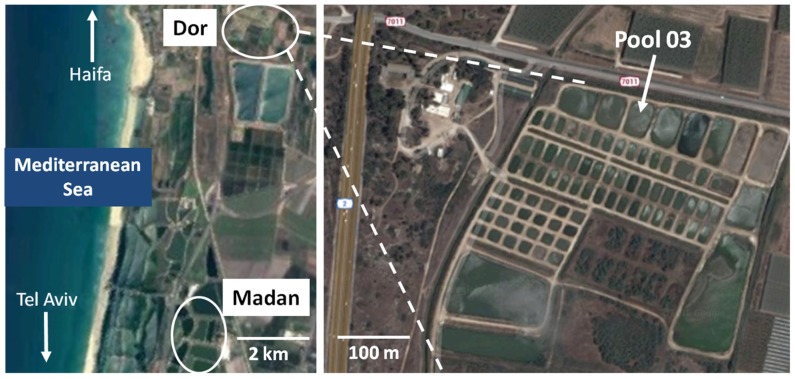
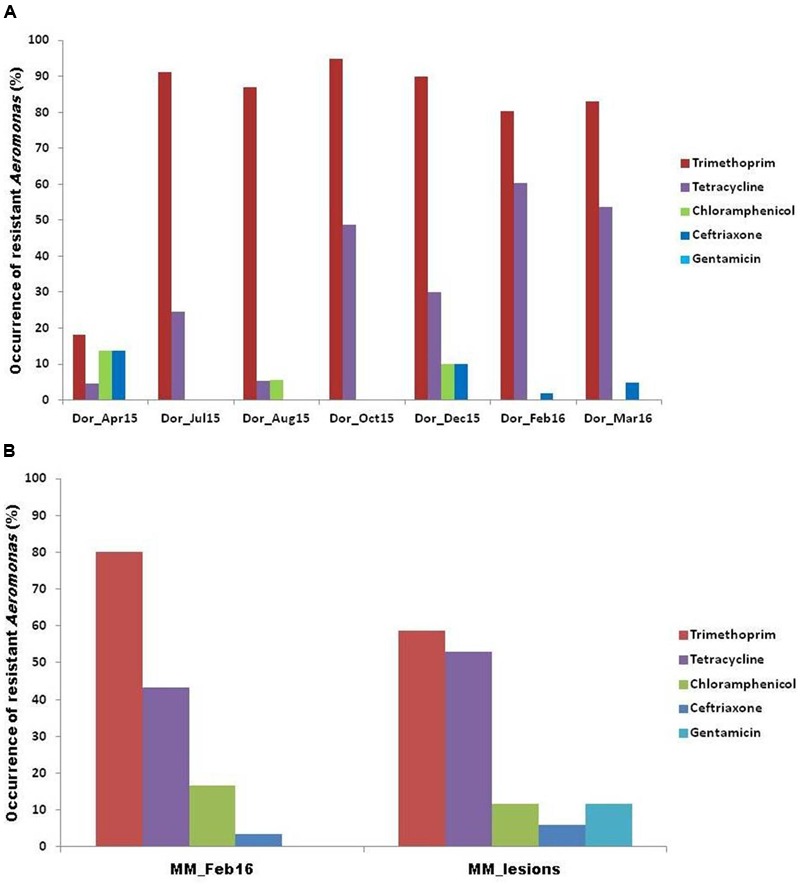
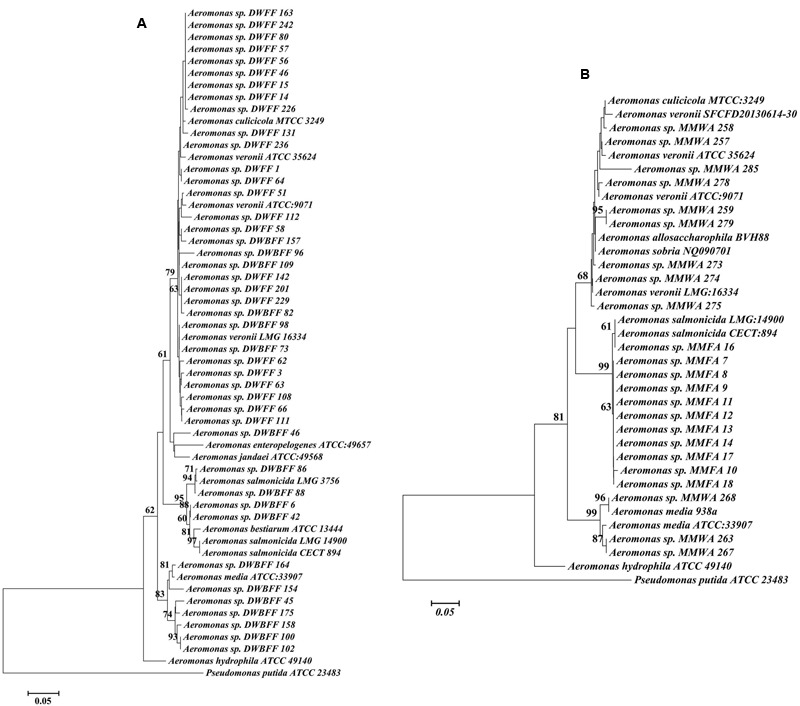
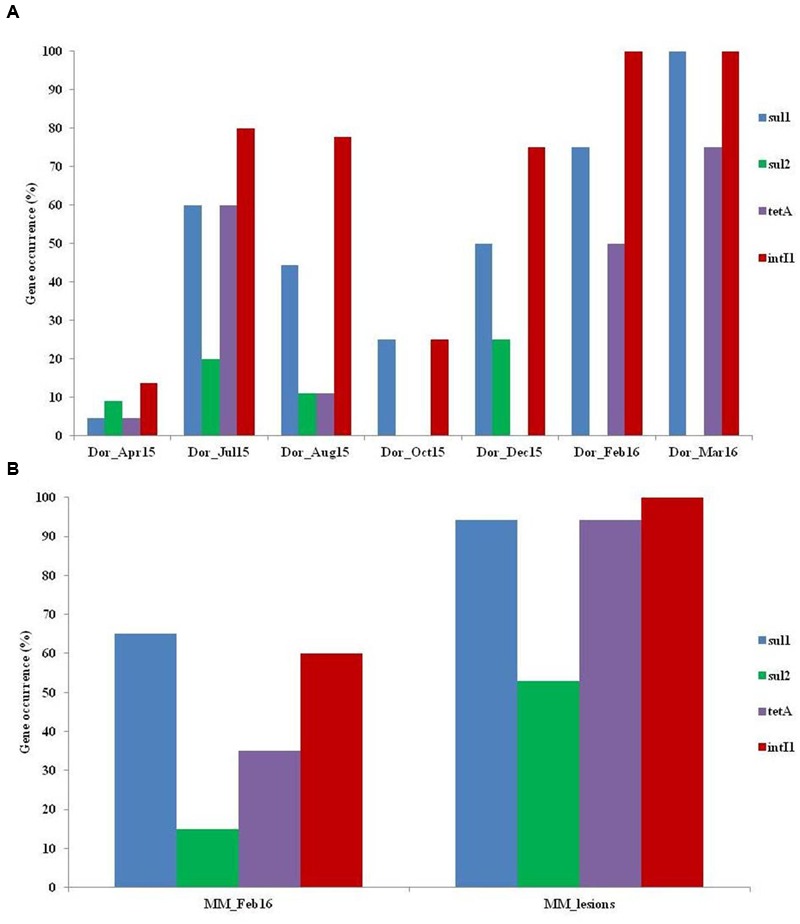
The genus Aeromonas is ubiquitous in aquatic environments encompassing a broad range of fish and human pathogens. Aeromonas strains are known for their enhanced capacity to acquire and exchange antibiotic resistance genes and therefore, are frequently targeted as indicator bacteria for monitoring antimicrobial resistance in aquatic environments. This study evaluated temporal trends in Aeromonas diversity and antibiotic resistance in two adjacent semi-intensive aquaculture facilities to ascertain the effects of antibiotic treatment on antimicrobial resistance. In the first facility, sulfadiazine-trimethoprim was added prophylactically to fingerling stocks and water column-associated Aeromonas were monitored periodically over an 11-month fish fattening cycle to assess temporal dynamics in taxonomy and antibiotic resistance. In the second facility, Aeromonas were isolated from fish skin ulcers sampled over a 3-year period and from pond water samples to assess associations between pathogenic strains to those in the water column. A total of 1200 Aeromonas isolates were initially screened for sulfadiazine resistance and further screened against five additional antimicrobials. In both facilities, strong correlations were observed between sulfadiazine resistance and trimethoprim and tetracycline resistances, whereas correlations between sulfadiazine resistance and ceftriaxone, gentamicin, and chloramphenicol resistances were low. Multidrug resistant strains as well as sul1, tetA, and intI1 gene-harboring strains were significantly higher in profiles sampled during the fish cycle than those isolated prior to stocking and these genes were extremely abundant in the pathogenic strains. Five phylogenetically distinct Aeromonas clusters were identified using partial rpoD gene sequence analysis. Interestingly, prior to fingerling stocking the diversity of water column strains was high, and representatives from all five clusters were identified, including an A. salmonicida cluster that harbored all characterized fish skin ulcer samples. Subsequent to stocking, diversity was much lower and most water column isolates in both facilities segregated into an A. veronii-associated cluster. This study demonstrated a strong correlation between aquaculture, Aeromonas diversity and antibiotic resistance. It provides strong evidence for linkage between prophylactic and systemic use of antibiotics in aquaculture and the propagation of antibiotic resistance.
Keywords: Aeromonas; antibiotic resistance; antibiotic resistance gene; aquaculture; integron.
Figures
References
-
- Alperi A., Figueras M. J., Inza I., Murcia J. M. (2008). Analysis of 16S rRNA gene mutations in a subset of” Aeromonas” strains and their impact in species delineation. Int. Microbiol. 11 185–194. - PubMed
-
- Altwegg M. (1999). “Aeromonas and Plesiomonas,” in Manual of Clinical Microbiology eds Murray P., Baron E., Pfaller M., Tenover F., Yolken R. (Washington, DC: ASM Press; ) 507–516.
LinkOut - more resources
Full Text Sources
Other Literature Sources
Molecular Biology Databases
