


Urinary iodine concentration identifies pregnant women as iodine deficient yet school-aged children as iodine sufficient in rural Niger
- PMID: 27974077
- PMCID: PMC10261634
- DOI: 10.1017/S1368980016003232
Urinary iodine concentration identifies pregnant women as iodine deficient yet school-aged children as iodine sufficient in rural Niger
Abstract
Objective: To assess iodine status among pregnant women in rural Zinder, Niger and to compare their status with the iodine status of school-aged children from the same households.
Design: Seventy-three villages in the catchment area of sixteen health centres were randomly selected to participate in the cross-sectional survey.
Setting: Salt iodization is mandatory in Niger, requiring 20-60 ppm iodine at the retail level.
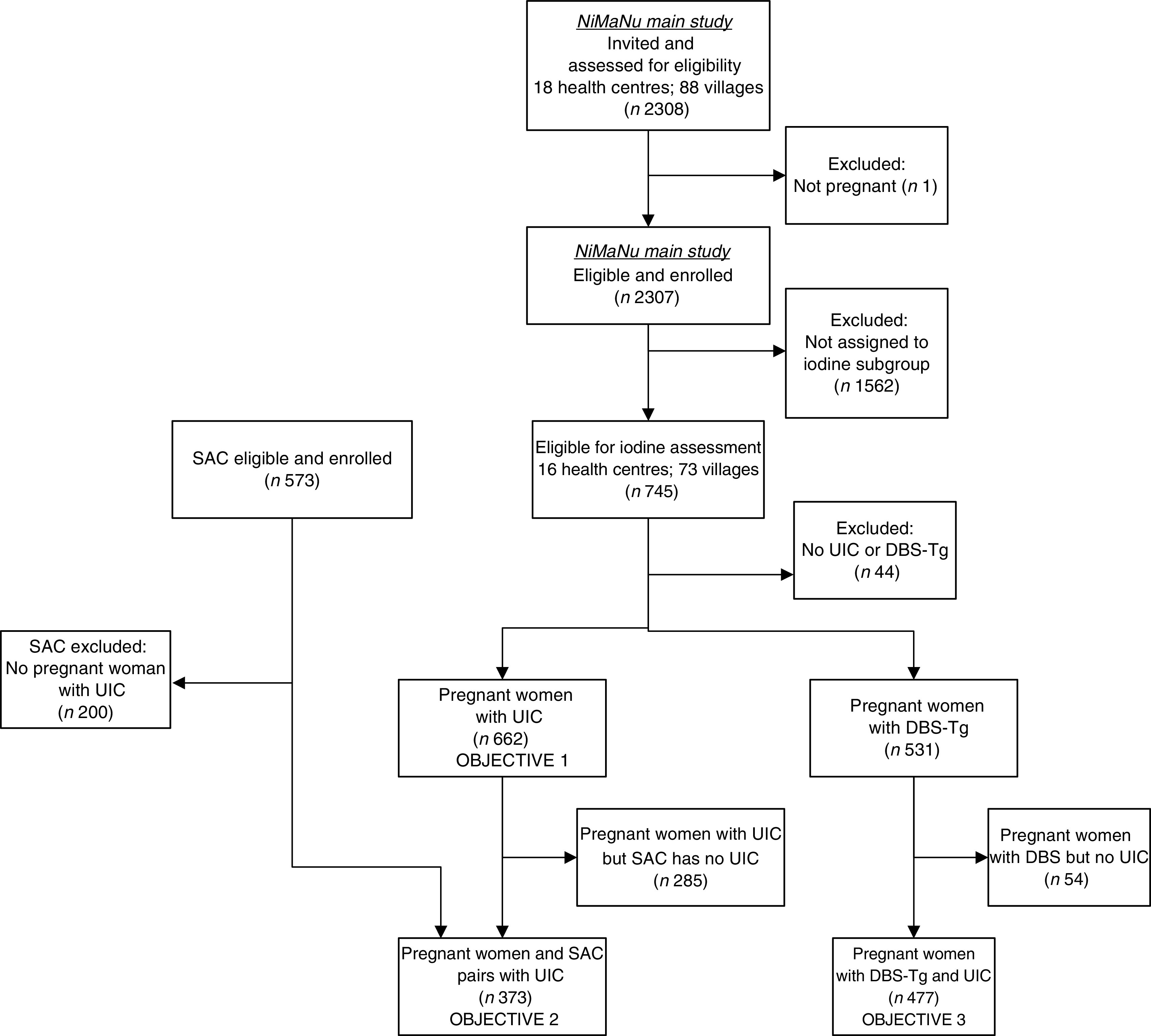
Subjects: A spot urine sample was collected from randomly selected pregnant women (n 662) and one school-aged child from the same household (n 373). Urinary iodine concentration (UIC) was assessed as an indicator of iodine status in both groups. Dried blood spots (DBS) were collected from venous blood samples of pregnant women and thyroglobulin (Tg), thyroid-stimulating hormone and total thyroxine were measured. Iodine content of household salt samples (n 108) was assessed by titration.
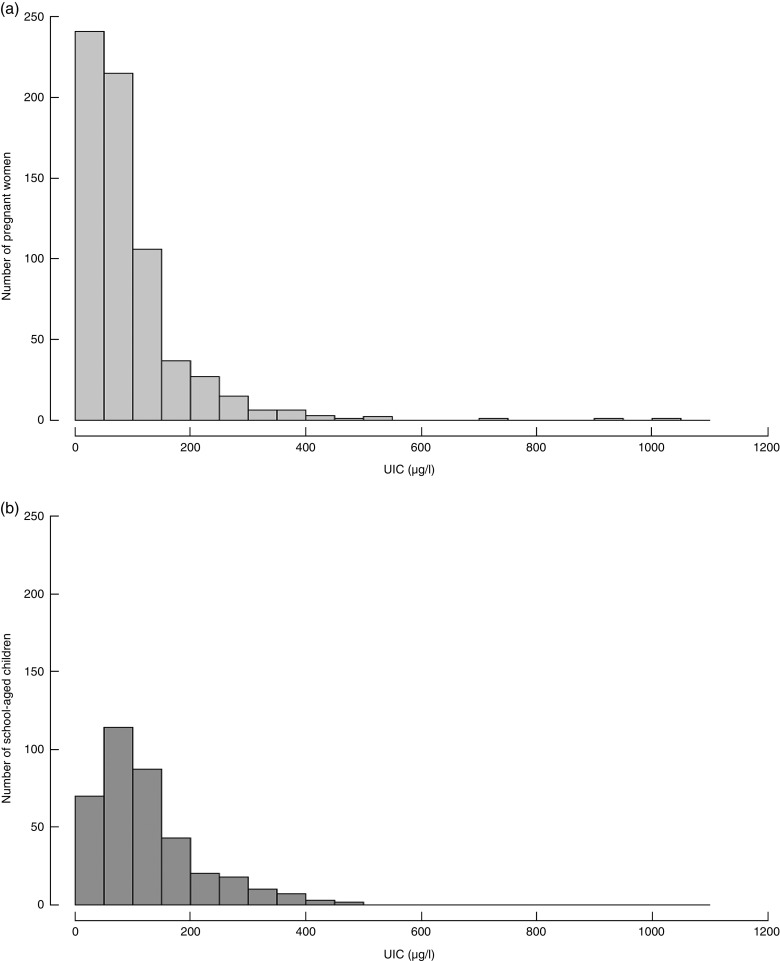
Results: Median iodine content of salt samples was 5·5 ppm (range 0-41 ppm), 98 % had an iodine content 40 µg/l.
Conclusions: In this region of Niger, most salt is inadequately iodized. UIC in pregnant women indicated iodine deficiency, whereas UIC of school-aged children indicated marginally adequate iodine status. Thus, estimating population iodine status based solely on monitoring of UIC among school-aged children may underestimate the risk of iodine deficiency in pregnant women.
Keywords: Iodine; Niger; Pregnant women; School-aged children; Thyroglobulin; Urinary iodine.
Figures
References
-
- Zimmermann MB (2012) The effects of iodine deficiency in pregnancy and infancy. Paediatr Perinat Epidemiol 26, Suppl. 1, 108–117. - PubMed
-
- World Health Organization, International Council for Control of Iodine Deficiency Disorders & UNICEF (2007) Assessment of Iodine Deficiency Disorders and Monitoring Their Elimination: A Guide for Programme Managers, 3rd ed. Geneva: WHO.
-
- Gowachirapant S, Winichagoon P, Wyss L et al. (2009) Urinary iodine concentrations indicate iodine deficiency in pregnant Thai women but iodine sufficiency in their school-aged children. J Nutr 139, 1169–1172. - PubMed
-
- Wong EM, Sullivan KM, Perrine CG et al. (2011) Comparison of median urinary iodine concentration as an indicator of iodine status among pregnant women, school-age children, and nonpregnant women. Food Nutr Bull 32, 206–212. - PubMed
-
- Ategbo EA, Sankar R, Schultink W et al. (2008) An assessment of progress toward universal salt iodization in Rajasthan, India, using iodine nutrition indicators in school-aged children and pregnant women from the same households. Asia Pac J Clin Nutr 17, 56–62. - PubMed
MeSH terms
Substances
LinkOut - more resources
Full Text Sources
Other Literature Sources
Medical
Miscellaneous
