


Engineering extrinsic disorder to control protein activity in living cells
- PMID: 27980211
- PMCID: PMC5362825
- DOI: 10.1126/science.aah3404
Engineering extrinsic disorder to control protein activity in living cells
Abstract
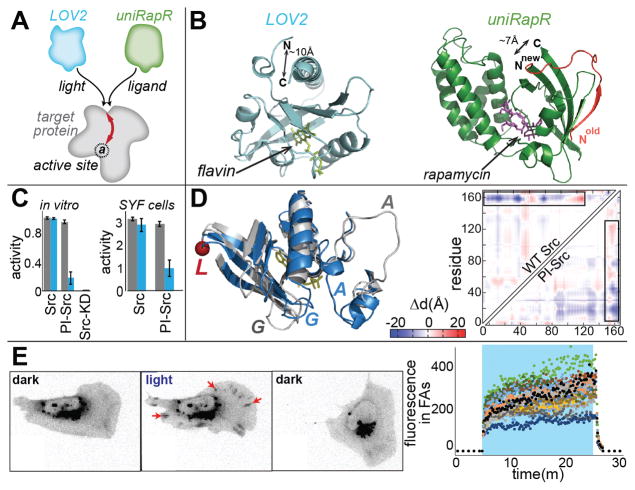
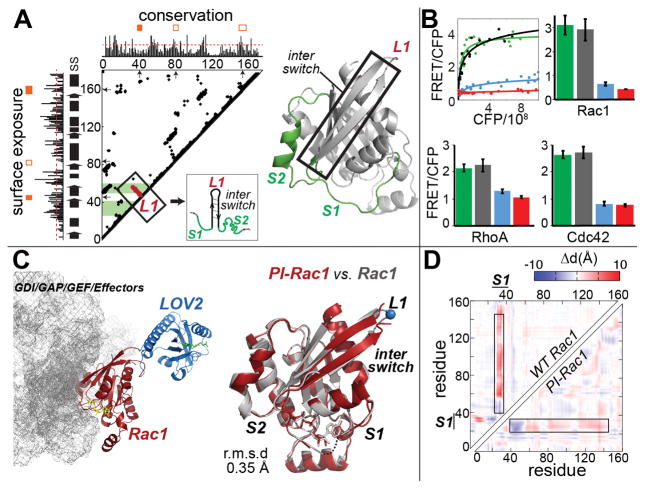
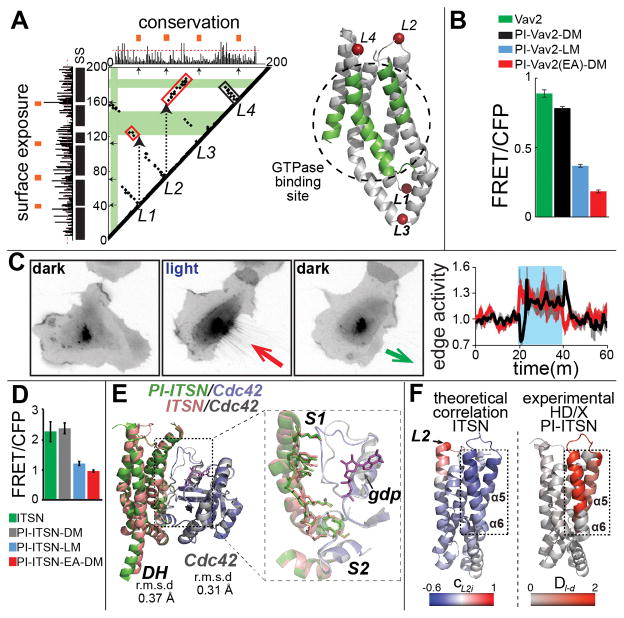
Optogenetic and chemogenetic control of proteins has revealed otherwise inaccessible facets of signaling dynamics. Here, we use light- or ligand-sensitive domains to modulate the structural disorder of diverse proteins, thereby generating robust allosteric switches. Sensory domains were inserted into nonconserved, surface-exposed loops that were tight and identified computationally as allosterically coupled to active sites. Allosteric switches introduced into motility signaling proteins (kinases, guanosine triphosphatases, and guanine exchange factors) controlled conversion between conformations closely resembling natural active and inactive states, as well as modulated the morphodynamics of living cells. Our results illustrate a broadly applicable approach to design physiological protein switches.
Copyright © 2016, American Association for the Advancement of Science.
Figures

References
-
- Banaszynski LA, Wandless TJ. Conditional control of protein function. Chem Biol. 2006;13:11–21. - PubMed
Publication types
MeSH terms
Substances
Grants and funding
LinkOut - more resources
Full Text Sources
Other Literature Sources
Research Materials
