


Molecular epidemiology and genotyping of Chlamydia trachomatis infection in a cohort of young asymptomatic sexually active women (18-25 years) in Milan, Italy
- PMID: 27980376
- PMCID: PMC5139607
Molecular epidemiology and genotyping of Chlamydia trachomatis infection in a cohort of young asymptomatic sexually active women (18-25 years) in Milan, Italy
Abstract
Introduction: Chlamydia trachomatis (Ct) is the most common bacterial cause of sexually transmitted infections (STI) and is associated with severe long-term sequelae in female populations. In Italy Ct infections are not submitted to a screening programme, and its epidemiological profile is understudied. Even scarcer information is available about the genetic diversity on ompA gene, whose sequence defines 18 different genovars. This study aims at evaluating the prevalence of Ct infection in young sexually active asymptomatic women aged 18-25, and characterizing the molecular epidemiology of the different circulating genovars in this population.
Methods: Cervical samples collected from 909 sexually-activeyoung women (mean age 21.5 years) were analyzed through molecular assay for the detection of Ct infection. Phylogenetic analysis on the ompA gene was performed on Ct positive samples to identify the circulating genovars.
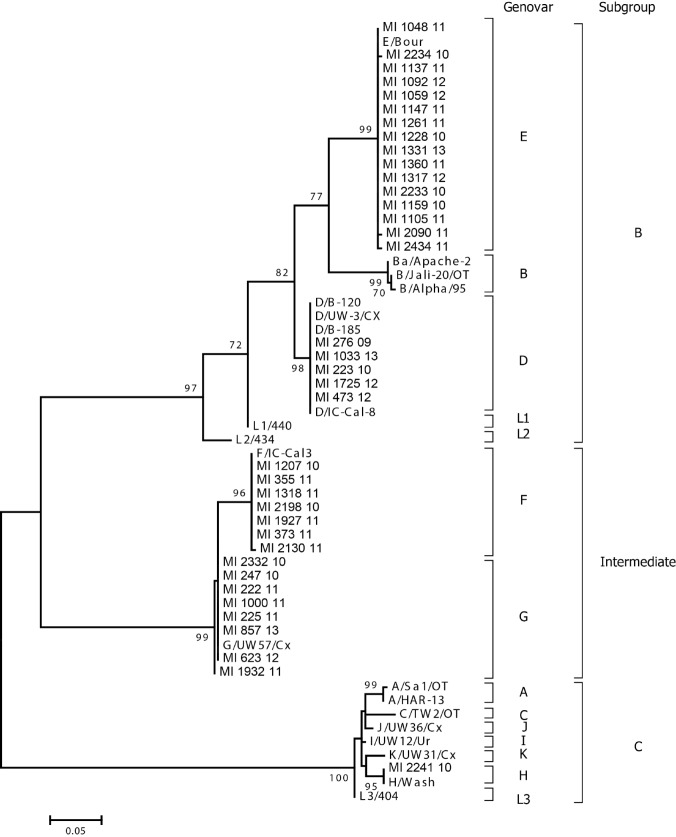
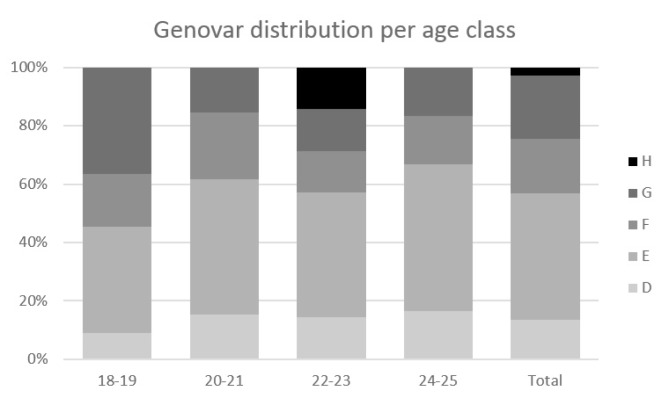
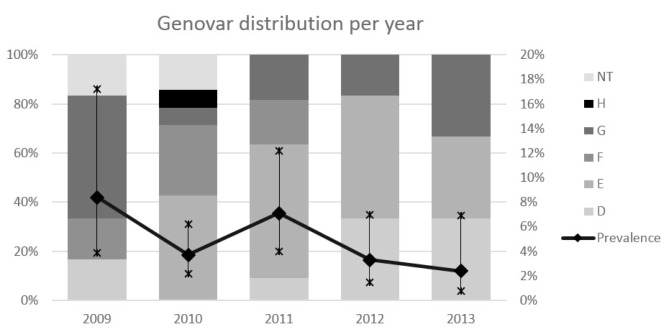
Results: The overall prevalence of Ct-infection was 4.4% (95%CI: 3.2-5.9%): 5.3% among women aged 18-21 years and 3.5% among those aged 22-25 years. Phylogenetic analysis has identified 5 different genovars: D, E, F, G, and H. The most common genovar was the E (46%), followed by genovar F and G (18.9% each), D (13.5%), and H (2.7%).
Conclusions: This study underlines the high prevalence of asymptomatic Ct-infections among young women. Overall, about half of the asymptomatic infections is sustained by genovar E. The introduction in Italy of a systematic screening program should be considered to allow a better understanding of Ct spreading and providing women with an opportunity for early treatment to protect their sexual and reproductive health.
Keywords: C. trachomatis genovars; C. trachomatis infection; Molecular epidemiology; Sexually active asymptomatic young women; Sexually transmitted diseases.
Figures
References
-
- Redmond SM, Alexander-Kisslig K, Woodhall SC, Broek IV, Bergen J, Ward H, Uusküla A, Herrmann B, Andersen B, Götz HM, et al. Genital Chlamydia prevalence in Europe and non-European high income countries: systematic review and meta-analysis. Plos One. 2015;10:e0115753–e0115753. doi:10.1371/journal.pone.0115753. - PMC - PubMed
-
- Cates W, Wasseheit JN. Genital Chlamydia infections: epidemiology and reproductive sequelae. Am J Obstet Gynecol. 1994;164:1771–1781. - PubMed
-
- Haggerty C, Gottlieb S, Taylor B, Low N, Xu F, Ness RB. Risk of sequelae after Chlamydia trachomatis genital infection in women. J Infect Dis. 2010;201:S134–S155. doi: 10.1086/652395. - PubMed
-
- Oakeshott P, Kerry S, Aghaizu A, Atherton H, Hay S, Taylor-Robinson D, Simms I, Hay P. Randomised controlled trial of screening for Chlamydia trachomatis to prevent pelvic inflammatory disease: the POPI (prevention of pelvic infection) trial. BMJ. 2010;340:c1642–c1642. doi: http://dx.doi.org/10.1136/bmj.c1642. - PMC - PubMed
-
- Geisler WM. Diagnosis and management of uncomplicated Chlamydia trachomatis infections in adolescents and adults: summary of evidence reviewed for the 2010 Centers for Disease Control and Prevention Sexually Transmitted Diseases Treatment Guidelines. Clin Infect Dis. 2011;53:S92–S98. doi:10.1093/ cid/cir698. - PubMed