. 2016 Dec 14;5(6):13.
doi: 10.1167/tvst.5.6.13. eCollection 2016 Dec.

Development of a Pediatric Visual Field Test

Affiliations

Development of a Pediatric Visual Field Test

Marco A Miranda et al. Transl Vis Sci Technol. .

Abstract

Purpose: We describe a pediatric visual field (VF) test based on a computer game where software and hardware combine to provide an enjoyable test experience.

Methods: The test software consists of a platform-based computer game presented to the central VF. A storyline was created around the game as was a structure surrounding the computer monitor to enhance patients' experience. The patient is asked to help the central character collect magic coins (stimuli). To collect these coins a series of obstacles need to be overcome. The test was presented on a Sony PVM-2541A monitor calibrated from a central midpoint with a Minolta CS-100 photometer placed at 50 cm. Measurements were performed at 15 locations on the screen and the contrast calculated. Retinal sensitivity was determined by modulating stimulus in size. To test the feasibility of the novel approach 20 patients (4-16 years old) with no history of VF defects were recruited.

Results: For the 14 subjects completing the study, 31 ± 15 data points were collected on 1 eye of each patient. Mean background luminance and stimulus contrast were 9.9 ± 0.3 cd/m2 and 27.9 ± 0.1 dB, respectively. Sensitivity values obtained were similar to an adult population but variability was considerably higher - 8.3 ± 9.0 dB.

Conclusions: Preliminary data show the feasibility of a game-based VF test for pediatric use. Although the test was well accepted by the target population, test variability remained very high.

Translational relevance: Traditional VF tests are not well tolerated by children. This study describes a child-friendly approach to test visual fields in the targeted population.

Keywords: children's vision; glaucoma; perimetry; psychophysics; visual field.


Figures
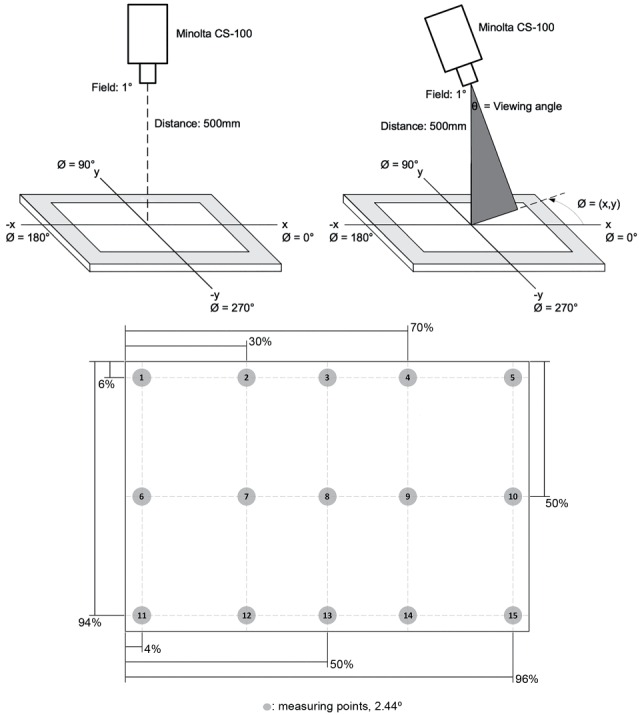
Figure 1
Figure 1
Measurement technique for central, top left, and peripheral, top right, areas of the screen and calibration locations on the Sony OLED monitor, bottom.
Figure 2
Figure 2
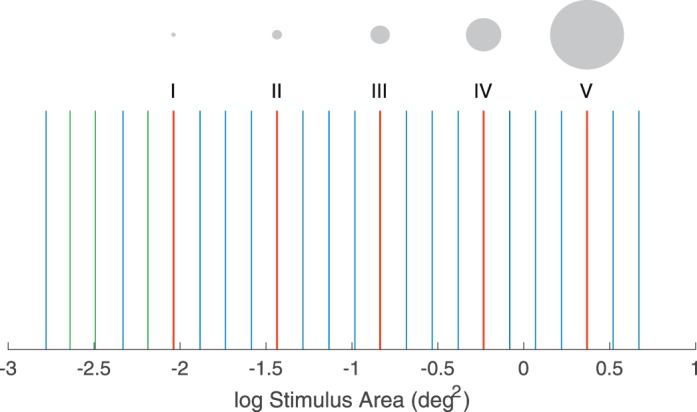
Stimulus areas available to test. Values in red represent the 5 Goldmann size stimuli and values in green were removed due to pixel density limitations. Both values in red and blue were available in the test.
Figure 3
Figure 3
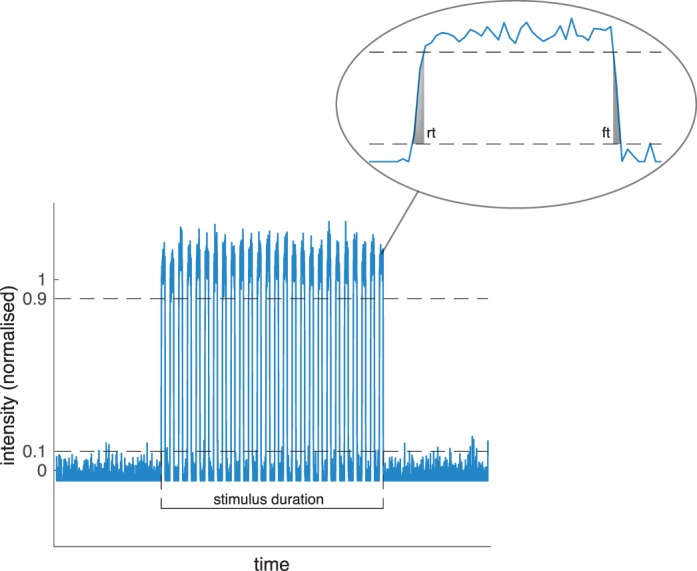
Schematic for stimuli presentation duration. Blue line represents the data collected and interpolation between data points for a typical OLED panel; horizontal gray dashed lines represents the 10% and 90% bounds of the intended light intensity transition. The magnified region represents a single peak. Rise time (RT) is the period it takes for a transition between 10% and 90% intensity on the first frame. Fall time (FT) is the period necessary for a transition between 90% and 10% intensity on the last frame. Rise time and FT were calculated as the mean RT and FT for each peak.
Figure 4
Figure 4
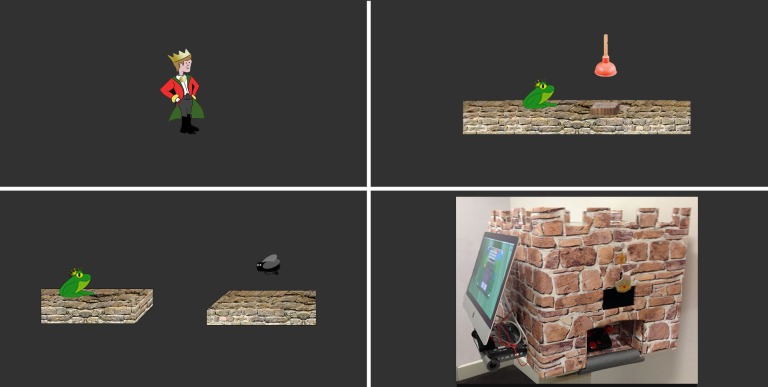
Top left: Image of the central character of the game before being cursed by a witch. Top right and bottom left: Magnification of the images of the central character transformed into a frog and obstacles to overcome. Bottom right: Apparatus for the computer game. The OLED monitor is situated inside the castle-like structure.
Figure 5
Figure 5
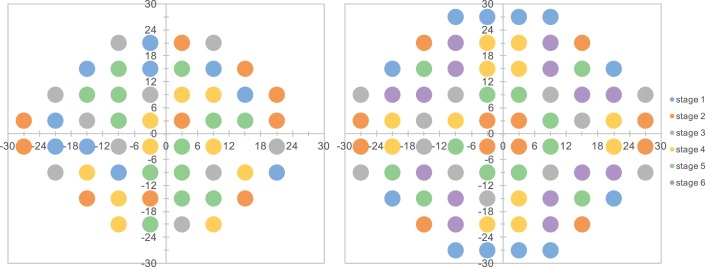
Test pattern and pseudo-randomization used while screening for glaucoma (left, 5-stage procedure) and neurological (right, 6-stage procedure) disorders. Within each stage, locations are presented randomly. Once a criterion has been reached, healthy or unhealthy following a 2 out of 3 rule, the next block of locations is tested. The test can be stopped at the end of each stage or, if the child still is cooperating, proceed to the next stage.
Figure 6
Figure 6
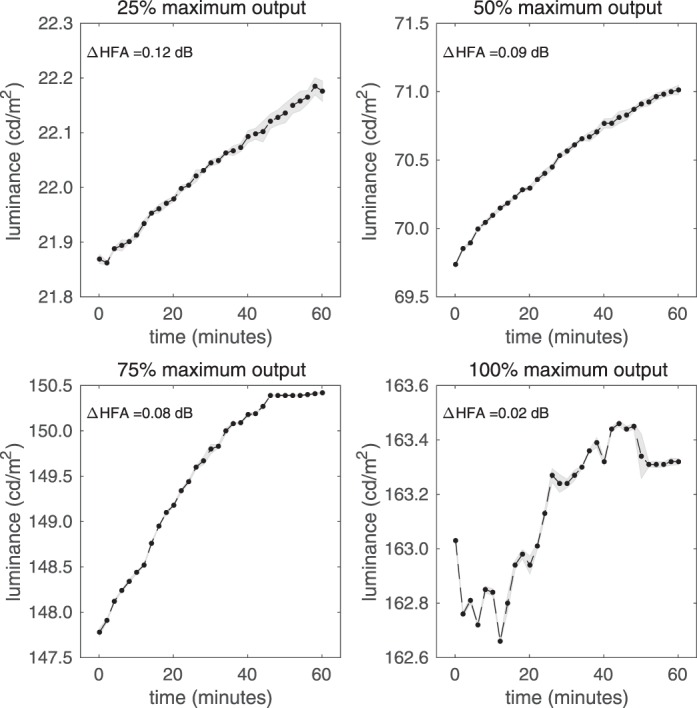
Changes in luminance throughout 1-hour period. Measurements were performed every 2 minutes at 25, 50, 75, and 100% of the monitor's maximum output. ΔHFA represents the difference between maximum and minimum luminance obtained converted into HFA equivalent dB units for a constant background of 10 cd/m2 and maximum luminance of 3183 cd/m2. The gray area represents the 95% confidence interval (t[0.025,4]*σ/√5) for each set of measurements obtained at each time point.
Figure 7
Figure 7
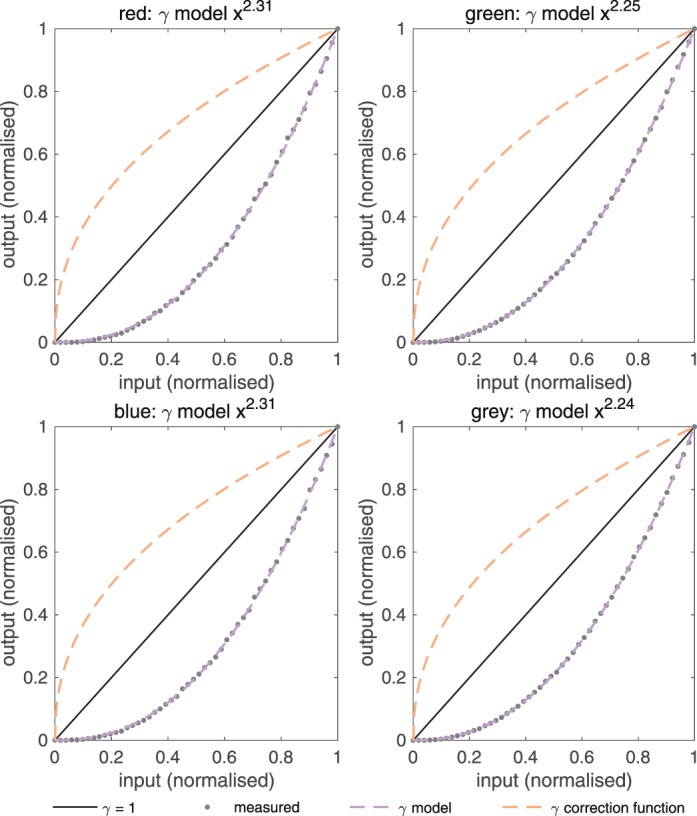
Gamma obtained by the OLED screen and correspondent correction function for the red, green, and blue channels and gray output. Normalised luminance values and calculated γ function are presented in blue (dots) and red (line), respectively. The inverse of the γ function is presented in green (line). Using the inverse γ function input will compensate for the observed γ and produce a linear relationship between input and luminance output - γ of 1 (black line).
Figure 8
Figure 8
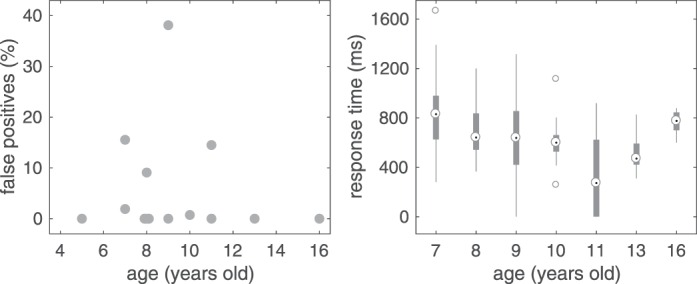
Left: False-positives plotted against age. Right: Median response time plotted against age. Circle with central black dot represents the median, box the interquartile range, whiskers 1.5 times the interquartile range, and circles outliers. All collected response times are presented, even those that were marked false-positives.
Figure 9
Figure 9
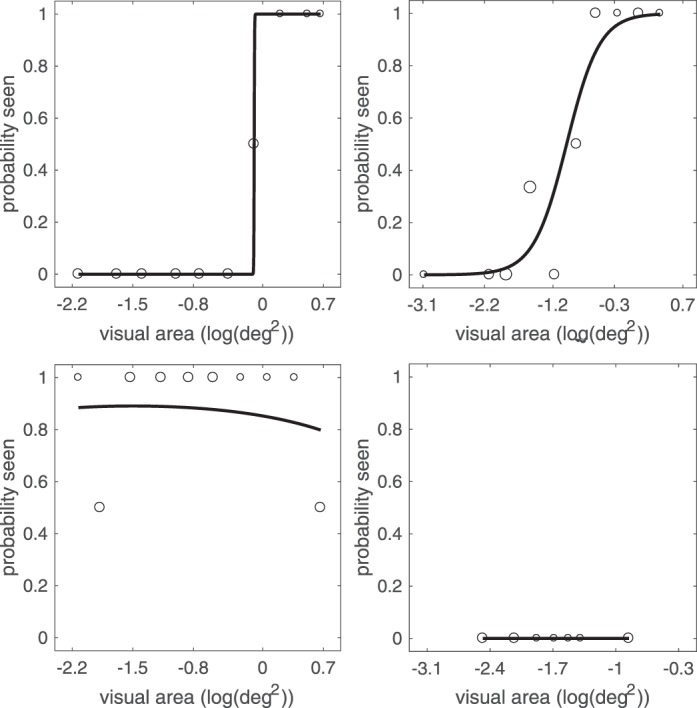
Example of frequency-of-seeing data obtained. Top: example of typical observers, one with low variability (left), other with average variability (right). Bottom: example of data excluded from analysis.

References

    1. Walters BC,, Rahi JS,, Cumberland PM. Perimetry in children: survey of current practices in the United Kingdom and Ireland. Ophthalmic Epidemiol. 2012. ; 19: 358–363. - PubMed
    1. Billson F. The future of paediatric ophthalmology. Clin Exp Ophthalmol. 2000. ; 28: 334–337. - PubMed
    1. Quinn GE,, Miller DL,, Evans JA,, Tasman WE,, McNamara JA,, Schaffer DB. Measurement of Goldmann visual fields in older children who received cryotherapy as infants for threshold retinopathy of prematurity. Arch Ophthalmol. 1996. ; 114: 425–428. - PubMed
    1. Safran AB,, Laffi GL,, Bullinger A,, et al. Feasibility of automated visual field examination in children between 5 and 8 years of age. Br J Ophthalmol. 1996. ; 80: 515–518. - PMC - PubMed
    1. Morales J,, Brown SM. The feasibility of short automated static perimetry in children. Ophthalmology. 2001. ; 108: 157–162. - PubMed