


Regulation of Ketone Body Metabolism and the Role of PPARα
- PMID: 27983603
- PMCID: PMC5187893
- DOI: 10.3390/ijms17122093
Regulation of Ketone Body Metabolism and the Role of PPARα
Abstract
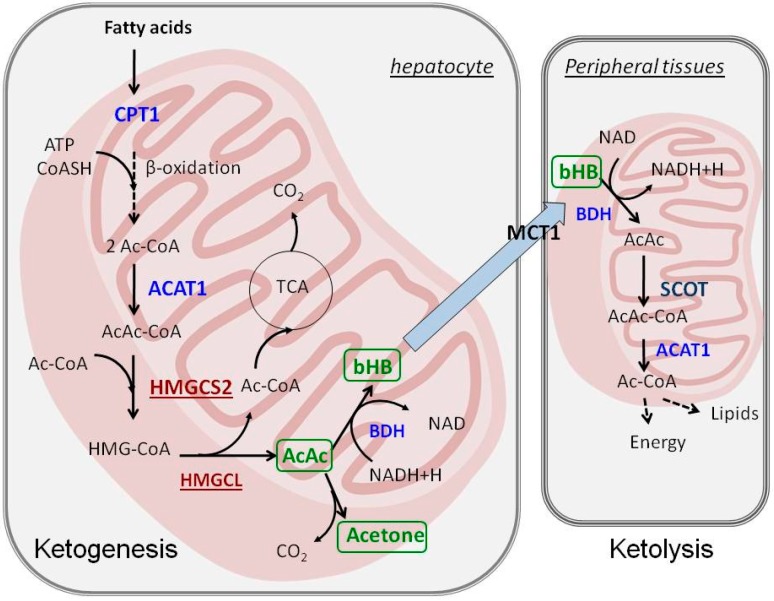
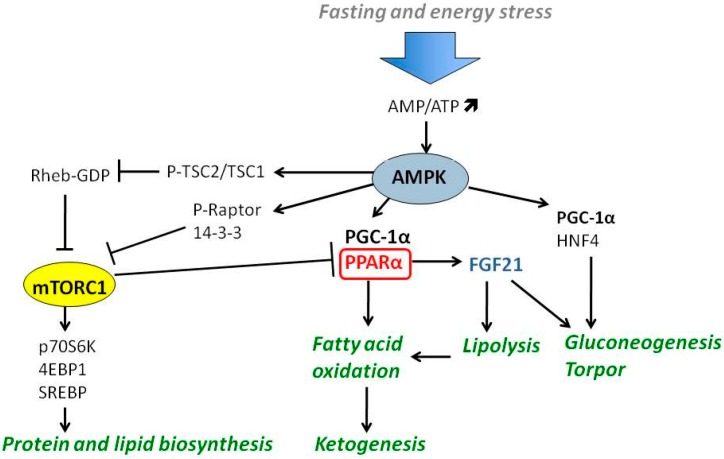
Ketogenesis and ketolysis are central metabolic processes activated during the response to fasting. Ketogenesis is regulated in multiple stages, and a nuclear receptor peroxisome proliferator activated receptor α (PPARα) is one of the key transcription factors taking part in this regulation. PPARα is an important element in the metabolic network, where it participates in signaling driven by the main nutrient sensors, such as AMP-activated protein kinase (AMPK), PPARγ coactivator 1α (PGC-1α), and mammalian (mechanistic) target of rapamycin (mTOR) and induces hormonal mediators, such as fibroblast growth factor 21 (FGF21). This work describes the regulation of ketogenesis and ketolysis in normal and malignant cells and briefly summarizes the positive effects of ketone bodies in various neuropathologic conditions.
Keywords: 3-hydroxy-3-methylglytaryl-CoA synthetase 2 (HMGCS2); fasting; fenofibrate; glioma; melanoma; β hydroxybutyrate.
Conflict of interest statement
The authors declare no conflict of interest.
Figures
References
-
- Veech R.L. The therapeutic implications of ketone bodies: The effects of ketone bodies in pathological conditions: Ketosis, ketogenic diet, redox states, insulin resistance, and mitochondrial metabolism. Prostaglandins Leukot. Essent. Fat. Acids. 2004;70:309–319. doi: 10.1016/j.plefa.2003.09.007. - DOI - PubMed
-
- Alberti K.G., Johnston D.G., Gill A., Barnes A.J., Orskov H. Hormonal regulation of ketone-body metabolism in man. Biochem. Soc. Symp. 1978;43:163–182. - PubMed
Publication types
MeSH terms
Substances
Grants and funding
LinkOut - more resources
Full Text Sources
Other Literature Sources
Miscellaneous
