


PAM-Dependent Target DNA Recognition and Cleavage by C2c1 CRISPR-Cas Endonuclease
- PMID: 27984729
- PMCID: PMC5278635
- DOI: 10.1016/j.cell.2016.11.053
PAM-Dependent Target DNA Recognition and Cleavage by C2c1 CRISPR-Cas Endonuclease
Abstract
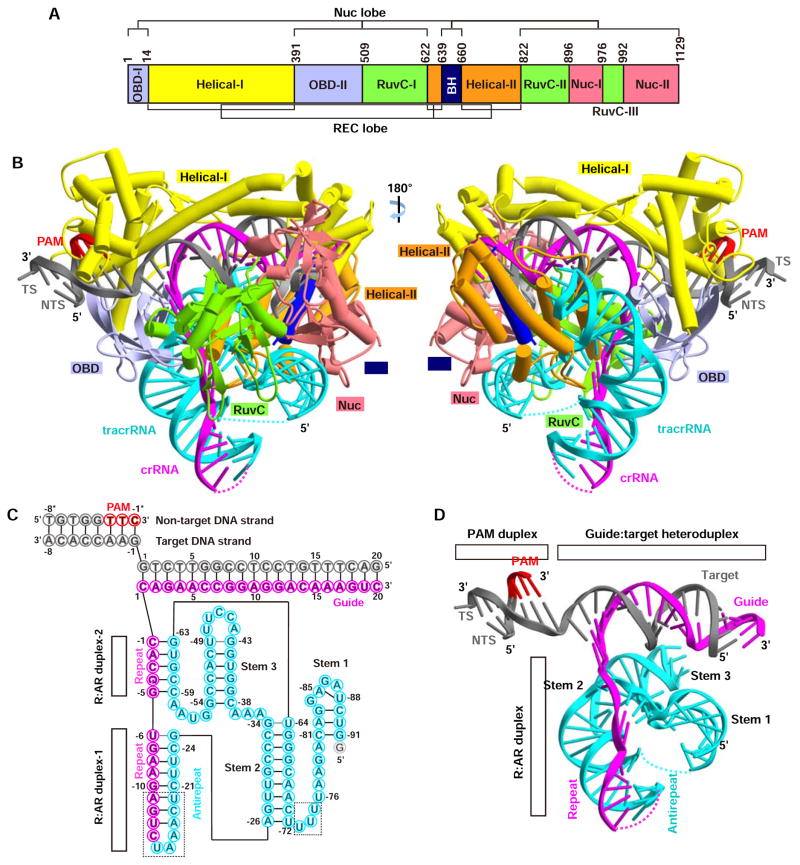
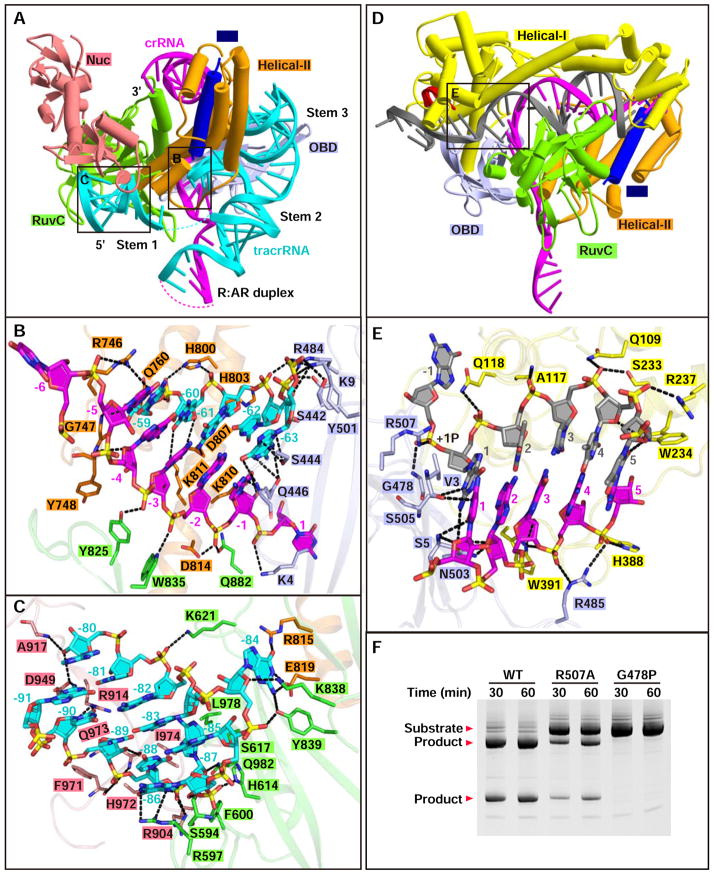
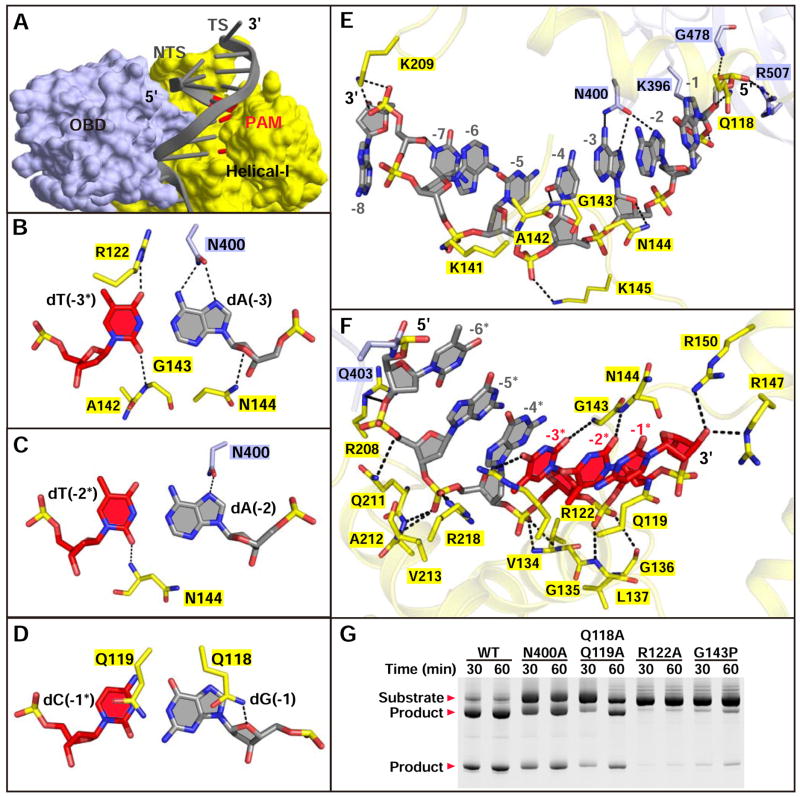
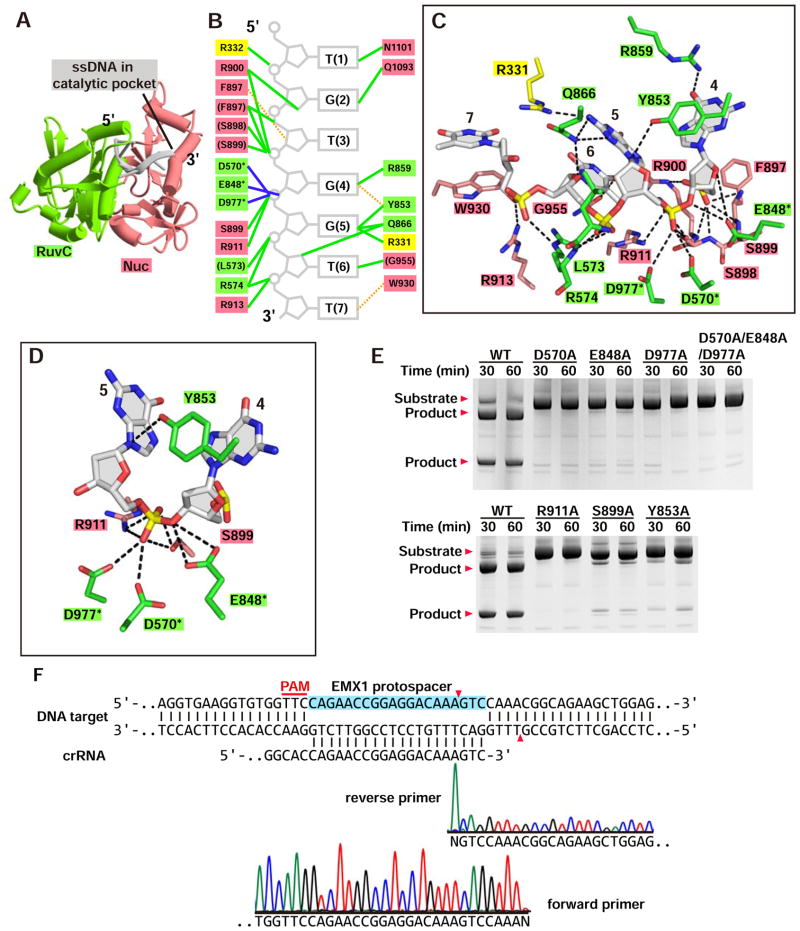
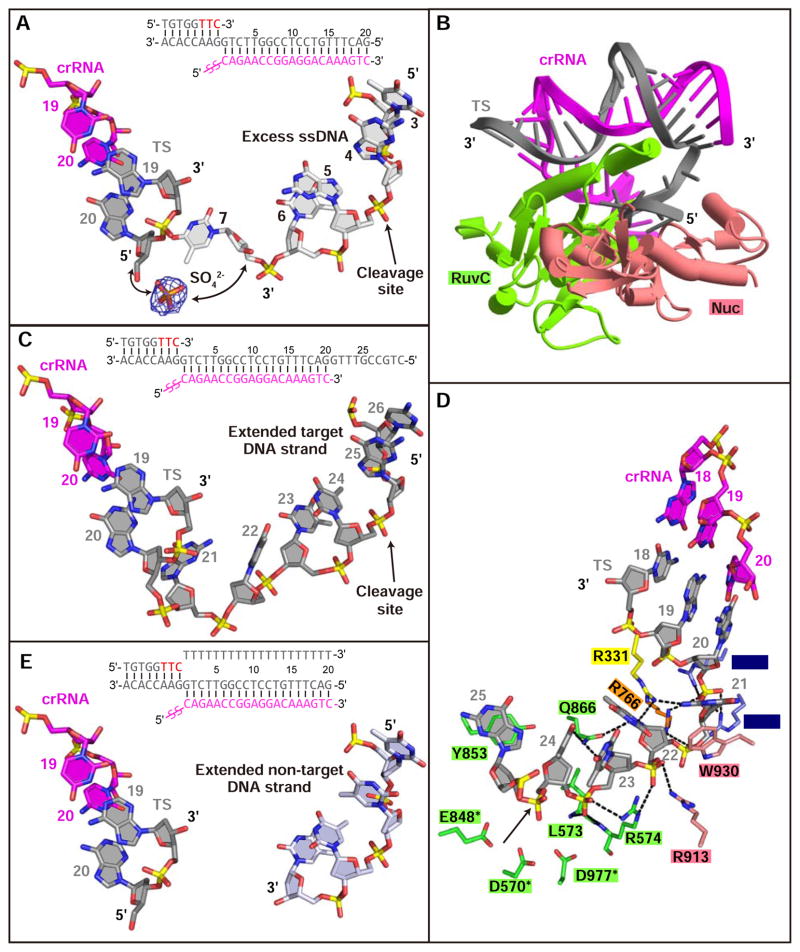
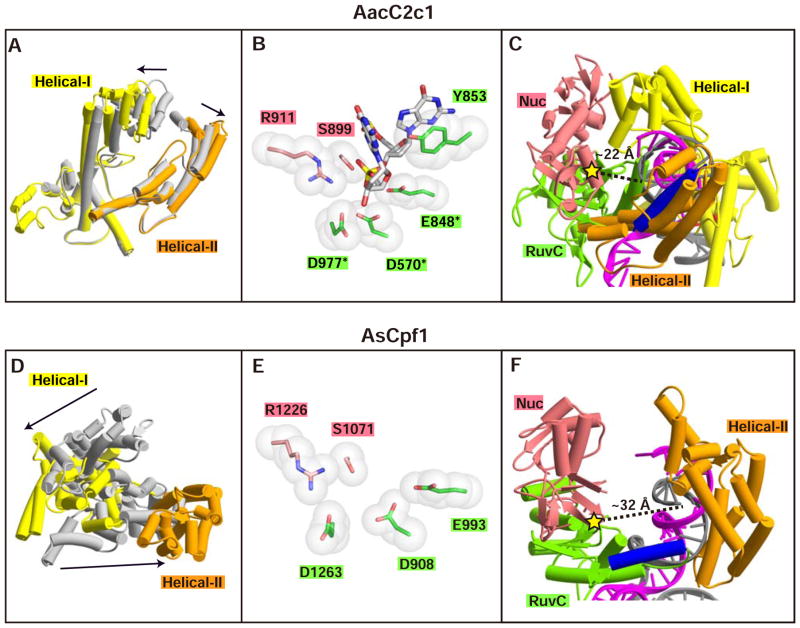
C2c1 is a newly identified guide RNA-mediated type V-B CRISPR-Cas endonuclease that site-specifically targets and cleaves both strands of target DNA. We have determined crystal structures of Alicyclobacillus acidoterrestris C2c1 (AacC2c1) bound to sgRNA as a binary complex and to target DNAs as ternary complexes, thereby capturing catalytically competent conformations of AacC2c1 with both target and non-target DNA strands independently positioned within a single RuvC catalytic pocket. Moreover, C2c1-mediated cleavage results in a staggered seven-nucleotide break of target DNA. crRNA adopts a pre-ordered five-nucleotide A-form seed sequence in the binary complex, with release of an inserted tryptophan, facilitating zippering up of 20-bp guide RNA:target DNA heteroduplex on ternary complex formation. Notably, the PAM-interacting cleft adopts a "locked" conformation on ternary complex formation. Structural comparison of C2c1 ternary complexes with their Cas9 and Cpf1 counterparts highlights the diverse mechanisms adopted by these distinct CRISPR-Cas systems, thereby broadening and enhancing their applicability as genome editing tools.
Keywords: C2c1; RuvC catalytic pocket; binary complex with sgRNA; genome editing tool; sequence-specific PAM recognition; structure; ternary complex with added DNA; type V CRISPR-Cas endonuclease.
Copyright © 2016 Elsevier Inc. All rights reserved.
Figures

References
-
- Barrangou R, Fremaux C, Deveau H, Richards M, Boyaval P, Moineau S, Romero DA, Horvath P. CRISPR provides acquired resistance against viruses in prokaryotes. Science. 2007;315:1709–1712. - PubMed
MeSH terms
Substances
Grants and funding
LinkOut - more resources
Full Text Sources
Other Literature Sources
Miscellaneous
