


PTSD-Related Cardiovascular Disease and Accelerated Cellular Aging
- PMID: 27990033
- PMCID: PMC5154362
- DOI: 10.3928/00485713-20160729-01
PTSD-Related Cardiovascular Disease and Accelerated Cellular Aging
Abstract
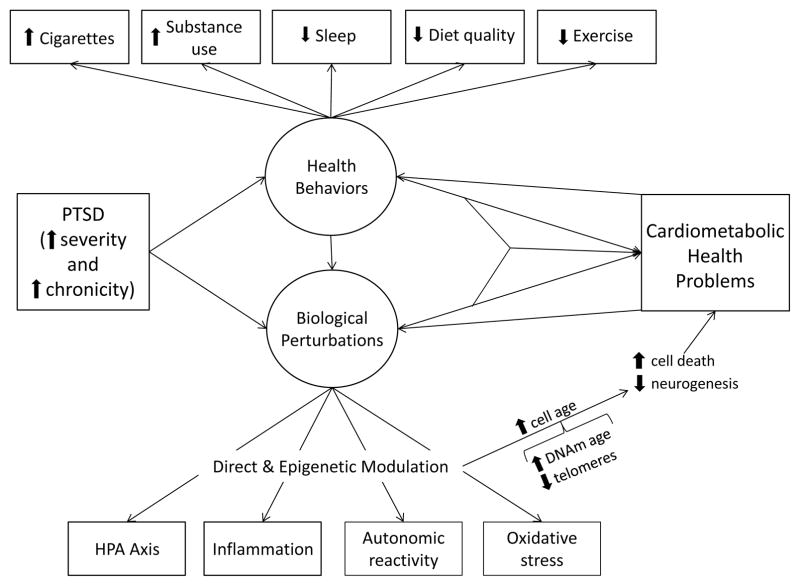
We reviewed the literature from 2010 to 2016 on the relationship between posttraumatic stress disorder (PTSD) and cardiometabolic health conditions, including metabolic syndrome, coronary artery disease, stroke, and myocardial infarction, among others. Collectively, PTSD was associated with increased risk of cardiometabolic health problems, with pre-clinical and clinical studies offering evidence of behavioral (e.g., poor sleep, cigarette use, poor diet and insufficient exercise) and biological (e.g., autonomic reactivity, inflammation) mediators of these associations. We discuss the possibility that these behavioral and biological mechanisms lead to accelerated cellular aging, as regulated in the epigenome, which contributes to premature cardiometabolic health decline. This has implications for the assessment, prevention, and treatment of cardiometabolic conditions among those with PTSD. It also highlights the need to better understand the mechanisms linking PTSD to accelerated aging and to develop interventions to attenuate or reverse this phenomenon.
Figures
References
-
- Schnurr PP, Green BL. Understanding relationships among trauma, post-traumatic stress disorder, and health outcomes. Adv Mind Body Med. 2004;20:18–29. - PubMed
Grants and funding
LinkOut - more resources
Full Text Sources
Other Literature Sources