


The Problem with Big Data: Operating on Smaller Datasets to Bridge the Implementation Gap
- PMID: 27990415
- PMCID: PMC5130981
- DOI: 10.3389/fpubh.2016.00248
The Problem with Big Data: Operating on Smaller Datasets to Bridge the Implementation Gap
Abstract
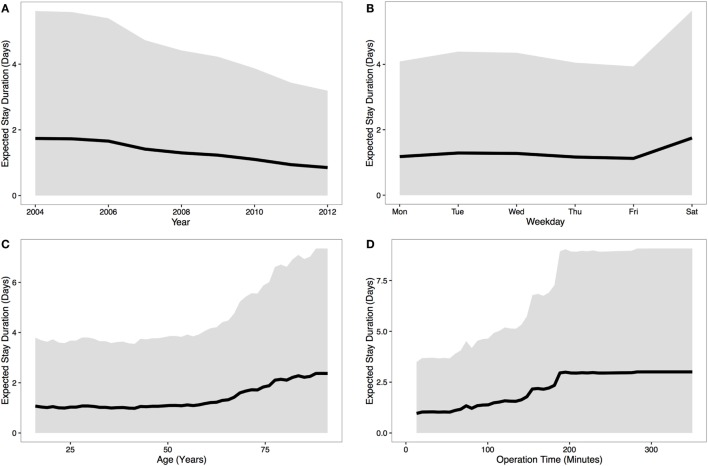
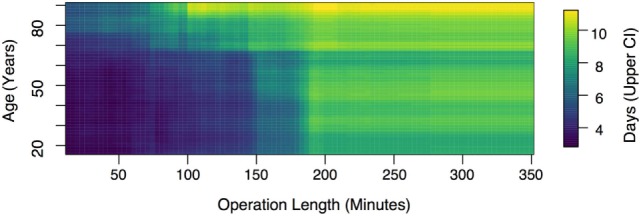
Big datasets have the potential to revolutionize public health. However, there is a mismatch between the political and scientific optimism surrounding big data and the public's perception of its benefit. We suggest a systematic and concerted emphasis on developing models derived from smaller datasets to illustrate to the public how big data can produce tangible benefits in the long term. In order to highlight the immediate value of a small data approach, we produced a proof-of-concept model predicting hospital length of stay. The results demonstrate that existing small datasets can be used to create models that generate a reasonable prediction, facilitating health-care delivery. We propose that greater attention (and funding) needs to be directed toward the utilization of existing information resources in parallel with current efforts to create and exploit "big data."
Keywords: big data; health economics; length of stay; small data; surgery.
Figures
References
-
- NHS England. High Quality Datasets: Our Vision. (2014). Available from: http://www.nhs.uk/NHSEngland/thenhs/records/healthrecords/Pages/care-dat...
-
- Carter P. Operational Productivity and Performance in English NHS Acute Hospitals: Unwarranted Variations: An Independent Report for the Department of Health by Lord Carter. London: Department of Health; (2016). Available from: https://www.gov.uk/government/uploads/system/uploads/attachment_data/fil... (accessed 1 April 2016).
-
- Ipsos MORI Social Research Institute. The One-Way Mirror: Public Attitudes to Commercial Access to Health Data. (2016). Available from: https://www.ipsos-mori.com/Assets/Docs/Publications/sri-wellcome-trust-c... (accessed 1 April 2016).
-
- Parliamentary Office of Science & Technology. Big data and public health. POSTnote. London: The Parliamentary Office of Science and Technology; (2014). p. 1–4.
LinkOut - more resources
Full Text Sources
Other Literature Sources
Miscellaneous
