. 2017 Feb;18(2):152-160.
doi: 10.1038/ni.3643. Epub 2016 Dec 19.

A gene network regulated by the transcription factor VGLL3 as a promoter of sex-biased autoimmune diseases

Affiliations

A gene network regulated by the transcription factor VGLL3 as a promoter of sex-biased autoimmune diseases

Yun Liang et al. Nat Immunol. 2017 Feb.

Abstract

Autoimmune diseases affect 7.5% of the US population, and they are among the leading causes of death and disability. A notable feature of many autoimmune diseases is their greater prevalence in females than in males, but the underlying mechanisms of this have remained unclear. Through the use of high-resolution global transcriptome analyses, we demonstrated a female-biased molecular signature associated with susceptibility to autoimmune disease and linked this to extensive sex-dependent co-expression networks. This signature was independent of biological age and sex-hormone regulation and was regulated by the transcription factor VGLL3, which also had a strong female-biased expression. On a genome-wide level, VGLL3-regulated genes had a strong association with multiple autoimmune diseases, including lupus, scleroderma and Sjögren's syndrome, and had a prominent transcriptomic overlap with inflammatory processes in cutaneous lupus. These results identified a VGLL3-regulated network as a previously unknown inflammatory pathway that promotes female-biased autoimmunity. They demonstrate the importance of studying immunological processes in females and males separately and suggest new avenues for therapeutic development.


Conflict of interest statement

Competing Financial Interests. The authors declare no competing financial interests.

Figures
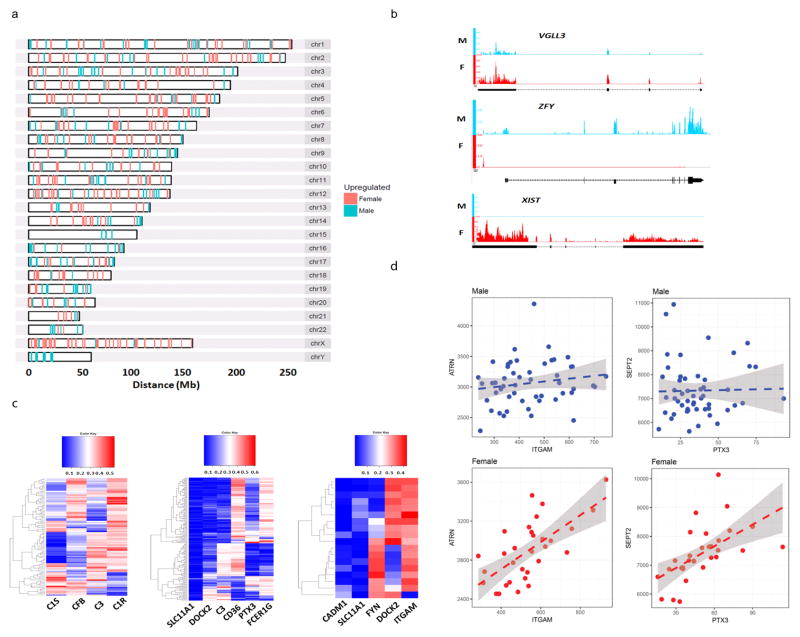
Figure 1
Figure 1. Identification of sex-biased genes from human skin biopsies
a, chromosomal locations of female- and male-biased genes. b, raw RNA-Seq reads in female and male skin for XIST, ZFY, and VGLL3. c, sex-biased co-expression correlation for genes in the complement activation, phagocytosis regulation, T cell proliferation functional categories, respectively (left-to-right). d, sex-specific co-expression correlation for the ITGAM-ATRN and PTX3-SEPT2 gene pairs.
Figure 2
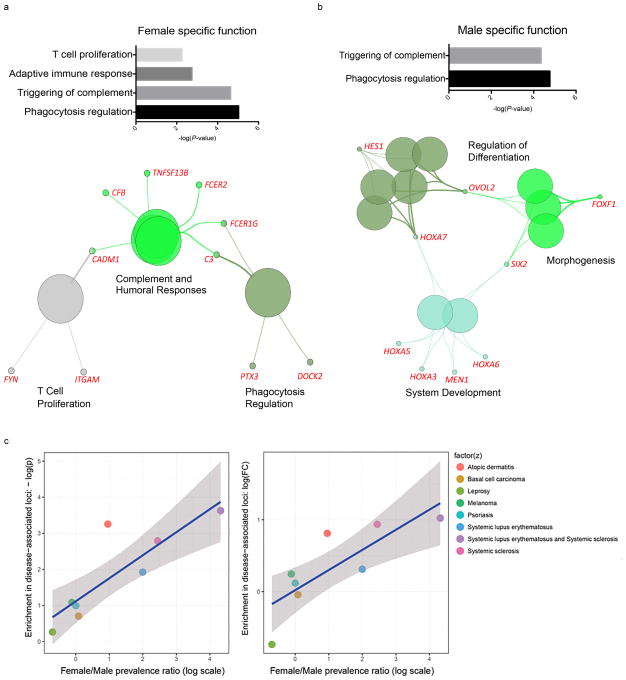
Figure 2. Female-biased genes are associated with autoimmune processes
a, functional categories enriched in female-biased genes. b, functional categories enriched in male-biased genes. c, correlation between enrichment in disease-associated loci with female/male disease prevalence ratio for female-biased DEGs.
Figure 3
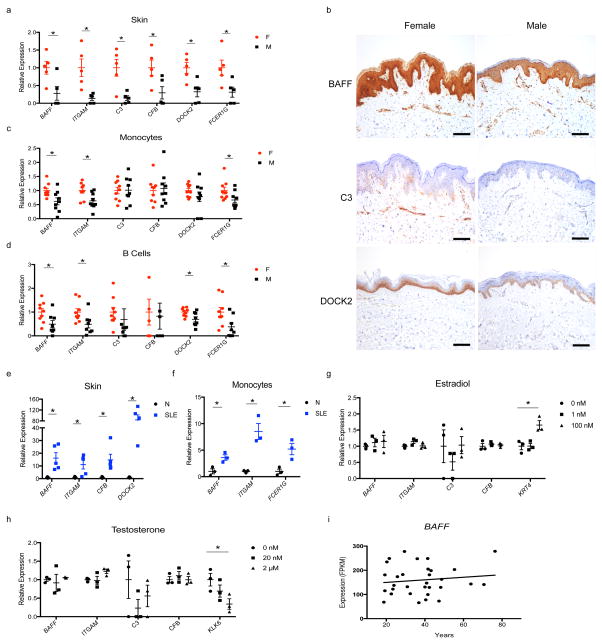
Figure 3. Female-biased immune gene expression is dependent on SLE disease states but not sex hormone levels
a, qRT-PCR of female-biased immune genes in whole skin of healthy humans (n=5 each sex). b, immunohistochemistry images of female-biased immune genes in skin of healthy humans. Scale bar, 50 μm. c, qRT-PCR of female-biased immune genes in monocytes of healthy humans (n=9 each sex). d, qRT-PCR of female-biased immune genes in B cells of healthy humans (n=9 female, 8 male). e, qRT-PCR of female-biased immune genes in skin of SLE patients (SLE) and healthy subjects (N) (n=5 each). f, qRT-PCR of female-biased immune genes in monocytes of SLE patients (SLE) and healthy subjects (N) (n=3 each). g, gene expression by RNA-Seq in primary human keratinocytes with or without estradiol treatment (n=3 independent experiments). h, gene expression by RNA-Seq in primary human keratinocytes with or without testosterone treatment (n=3 independent experiments). i, scatter plot of BAFF expression from RNA-Seq of human skin biopsies versus age at biopsy. Female, F. Male, M. Mean ± s.e.m, * P<0.05, Student’s t-test.
Figure 4
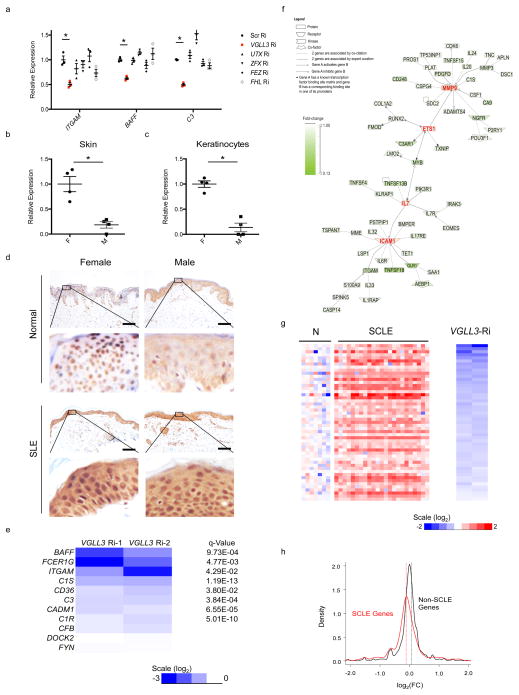
Figure 4. VGLL3 regulates genes associated with autoimmune diseases
a, qRT-PCR of ITGAM, BAFF, and C3 upon RNAi of scrambled siRNA (Scr), VGLL3, UTX, ZFX, FEZ, FHL in primary human keratinocytes (n=3 independent experiments). b, qRT-PCR of VGLL3 in normal female (F) and male (M) skin (n=4 each). c, qRT-PCR of VGLL3 in primary human keratinocytes (n=4 each). d, immunohistochemistry of VGLL3 in healthy (Normal) and SLE patient (SLE) skin. Scale bar, 50 μm. e, log2(FC) and q-Value of the 10 female-biased immune transcripts upon VGLL3 RNAi in primary human keratinocytes from RNA-Seq experiments. f, literature-based network analysis of VGLL3-regulated autoimmune disease genes. g, log2(FC) levels of VGLL3 targets in skin of healthy (N) subjects and SCLE patients (SCLE) as well as upon VGLL3 RNAi. h, density plot of log2(FC) levels upon VGLL3 knockdown for SCLE and non-SCLE genes. P = 2.53 × 10⁻⁸. Mann-Whitney-Wilcoxon test. (a–c) Mean ± s.e.m, *, P<0.05, Student’s t-test.
Figure 5
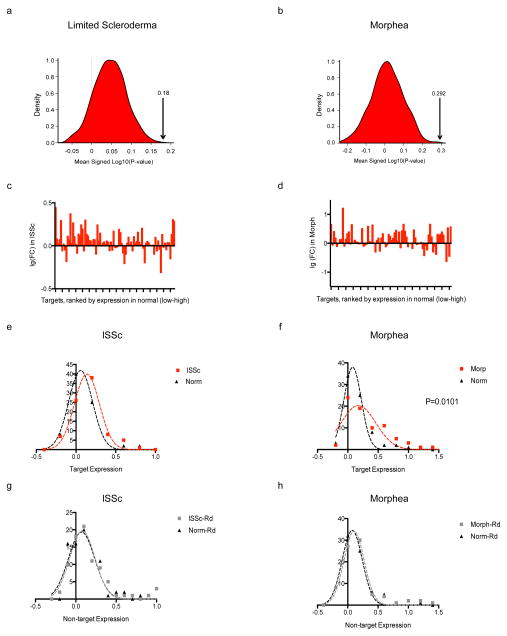
Figure 5. VGLL3 targets are involved in multiple autoimmune conditions
Density plot of the null distribution for the mean signed log10 P-value as compared to the mean of VGLL3 targets indicated by the arrows in limited scleroderma (a) and morphea (b). a,b, P < 0.001. c, d, Expression changes of VGLL3 targets in limited scleroderma (lSSc) (c) and morphea (d). e, f, Expression of VGLL3 targets in diseased (lSSc in e or morphea in f) or normal skin. P = 0.0412 (e); 0.0101 (f). g, h, Expression of non-targets in diseased (lSSc in g or morphea in h) or normal skin. P = 0.8686 (g); 0.6449 (h). Mann-Whitney U test.
Figure 6
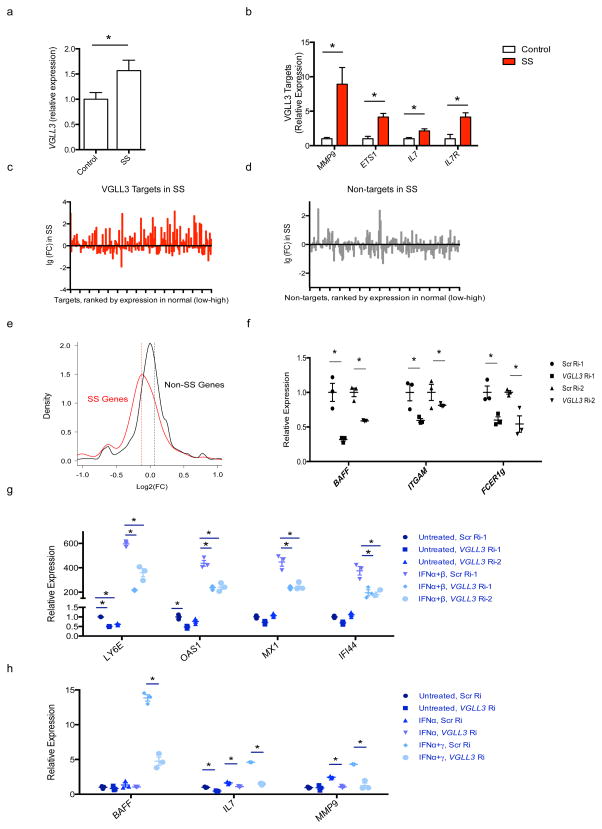
Figure 6. VGLL3 regulation of genes altered in Sjögren’s syndrome
a, VGLL3 mRNA levels as fold change in control versus Sjögren’s syndrome (SS) parotid tissue. b, mRNA levels of MMP9, ETS1, IL7 and IL7R as fold change in control versus SS parotid tissue. c,d, Expression changes of VGLL3 targets (c) and randomly selected non-targets (d) in SS. e, density plot of log2(FC) levels upon VGLL3 knockdown for SS (genes increased at the FC 1.5, q 0.05 threshold in SS) and non-SS genes. P < 2.2 × 10⁻⁶. Mann-Whitney-Wilcoxon test. f, qRT-PCR of BAFF, ITGAM, FCER1g upon VGLL3 knockdown by RNAi (n=3 independent experiments) in monocytes. g, qRT-PCR of LY6E, OAS1, MX1 and IFI44 upon VGLL3 knockdown (n=3 independent experiments), with or without IFNα+IFNβ treatment in monocytes. h, mRNA levels of BAFF, IL7 and MMP9 by fold change in cultured salivary gland cells with scrambled RNAi (Scr Ri) or VGLL3 RNAi (Vgll3 Ri). Cells were untreated or treated with IFN-α or IFN-α+IFN-γ. (a,b) Mean± s.e.m. *, q<0.05 , n=24 for SS and n=25 for control. (f, g, h) Mean ± s.e.m, *, P<0.05, Student’s t-test.

Comment in

  • Is sex bias orchestrated in the skin?
    Pandit A, Meyaard L, Radstake TR. Pandit A, et al. Nat Immunol. 2017 Jan 19;18(2):142-143. doi: 10.1038/ni.3658. Nat Immunol. 2017. PMID: 28102210 No abstract available.

References

    1. AARDA. The Cost Burden of Autoimmune Disease: The Latest Front in the War on Healthcare Spending. 2011.
    1. Fish EN. The X-files in immunity: sex-based differences predispose immune responses. Nat Rev Immunol. 2008;8:737–744. doi: 10.1038/nri2394. - DOI - PMC - PubMed
    1. Whitacre CC. Sex differences in autoimmune disease. Nat Immunol. 2001;2:777–780. doi: 10.1038/ni0901-777. - DOI - PubMed
    1. Klein SL. The effects of hormones on sex differences in infection: from genes to behavior. Neurosci Biobehav R. 2000;24:627–638. doi: 10.1016/S0149-7634(00)00027-0. - DOI - PubMed
    1. Holroyd CR, Edwards CJ. The effects of hormone replacement therapy on autoimmune disease: rheumatoid arthritis and systemic lupus erythematosus. Climacteric. 2009;12:378–386. doi: 10.1080/13697130903025449. - DOI - PubMed

Publication types

MeSH terms