


Low level of PDZ domain containing 1 (PDZK1) predicts poor clinical outcome in patients with clear cell renal cell carcinoma
- PMID: 27993630
- PMCID: PMC5233812
- DOI: 10.1016/j.ebiom.2016.12.003
Low level of PDZ domain containing 1 (PDZK1) predicts poor clinical outcome in patients with clear cell renal cell carcinoma
Abstract
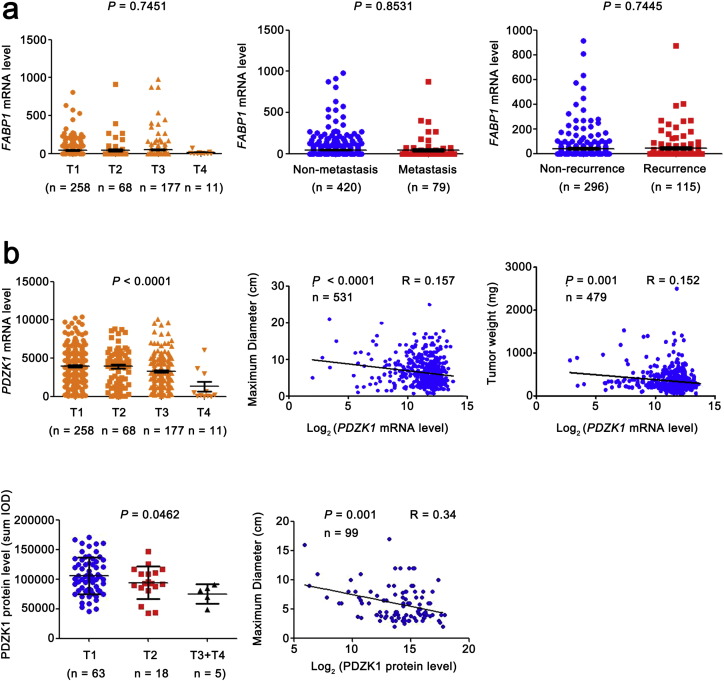
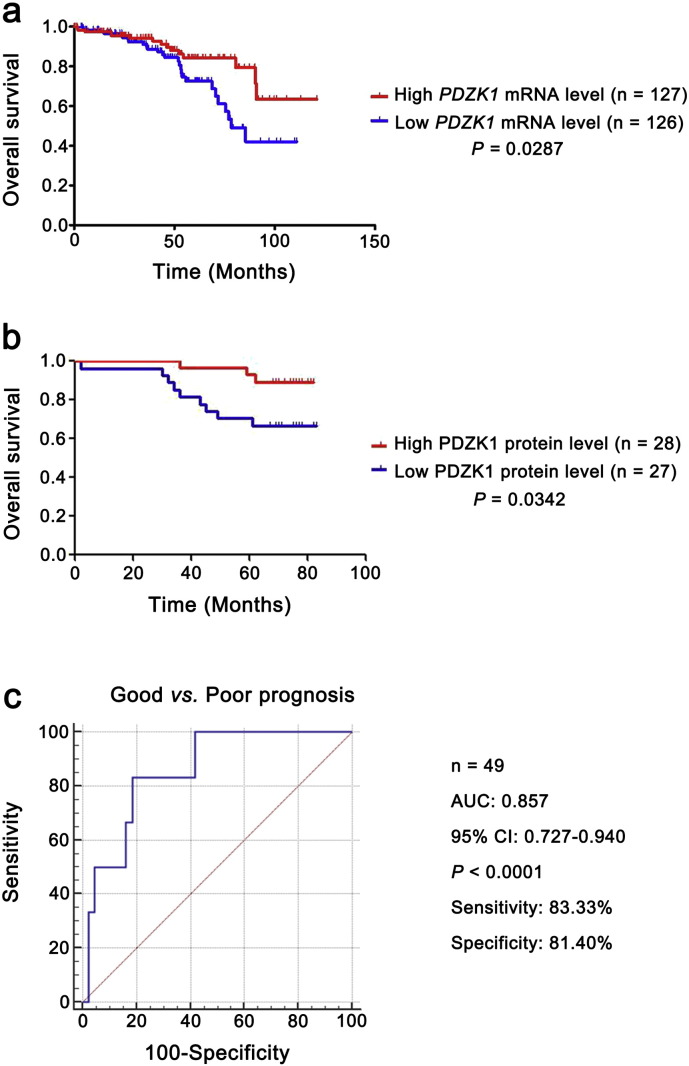
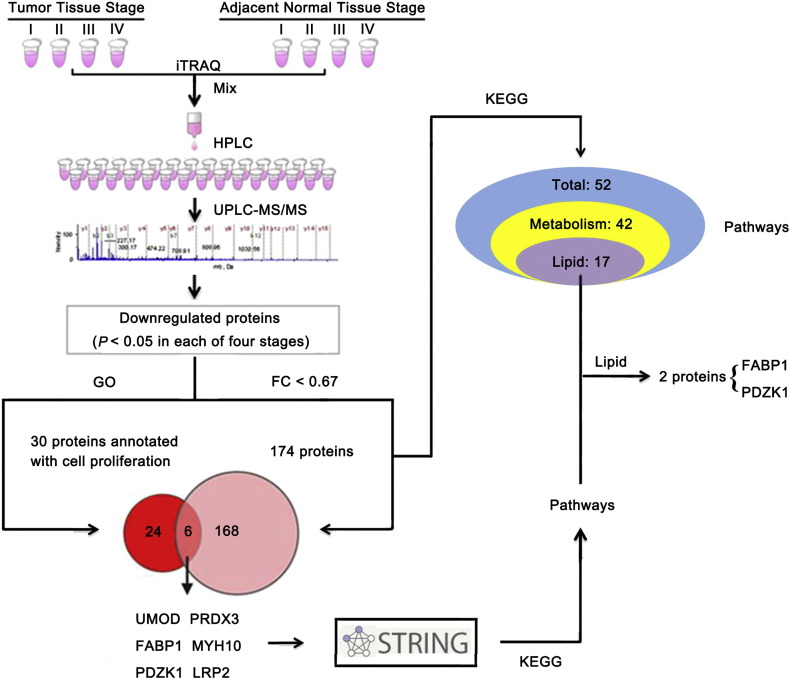
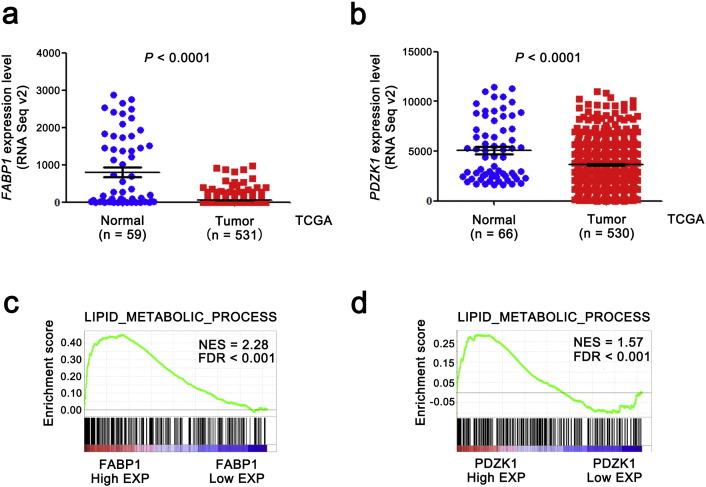
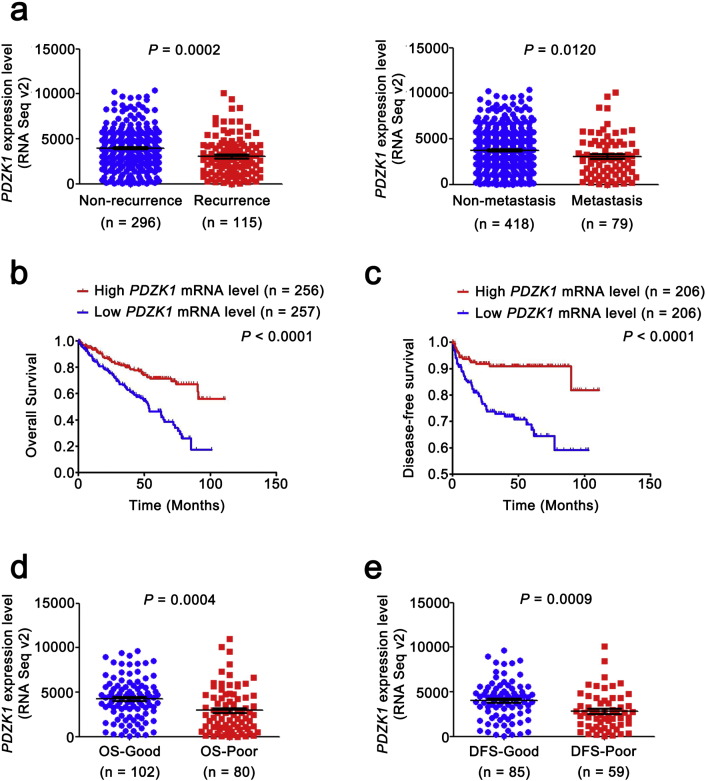
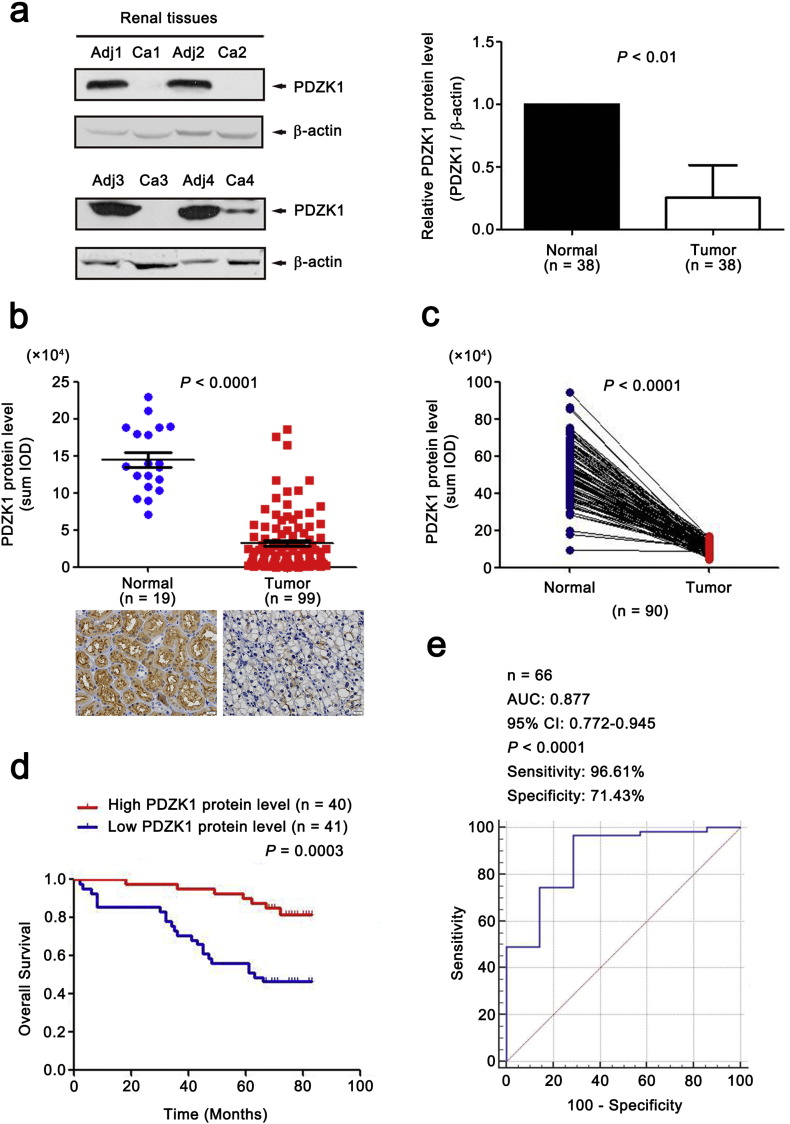
Clear cell renal cell carcinoma (ccRCC) is the most lethal neoplasm of the urologic system. Clinical therapeutic effect varies greatly between individual ccRCC patients, so there is an urgent need to develop prognostic molecular biomarkers to help clinicians identify patients in need of early aggressive management. In this study, samples from primary ccRCC tumor and their corresponding nontumor adjacent tissues (n=18) were analyzed by quantitative proteomic assay. Proteins downregulated in tumors were studied by GO and KEGG pathways enrichment analyses. Six proteins were found both downregulated and annotated with cell proliferation in ccRCC patients. Of these proteins, PDZK1 and FABP1 were also involved in the lipid metabolism pathway. The downregulation of PDZK1 was further validated in TCGA_KIRC dataset (n=532) and independent set (n=202). PDZK1 could discriminate recurrence, metastasis and prognosis between ccRCC patients. Low level of PDZK1 in both mRNA and protein was associated with reduced overall survival (OS) and disease-free survival (DFS) in two independent sets. In univariate and multivariate analyses, PDZK1 was defined as an independent prognostic factor for both OS and DFS. These findings indicated that low level of PDZK1 could predict poor clinical outcome in patients with ccRCC.
Keywords: CAP70; CLAMP; NHERF3; PDZ; Prognostic markers; Proteomics; Renal cancer.
Copyright © 2016 The Authors. Published by Elsevier B.V. All rights reserved.
Figures

Comment in
-
Downregulation of PDZ Domain Containing 1 (PDZK1) is a Poor Prognostic Marker for Clear Cell Renal Cell Carcinoma.EBioMedicine. 2017 Feb;16:20-21. doi: 10.1016/j.ebiom.2017.01.012. Epub 2017 Jan 12. EBioMedicine. 2017. PMID: 28109828 Free PMC article. No abstract available.
References
-
- Eggener S.E., Yossepowitch O., Pettus J.A., Snyder M.E., Motzer R.J., Russo P. Renal cell carcinoma recurrence after nephrectomy for localized disease: predicting survival from time of recurrence. J. Clin. Oncol. 2006;24(19):3101–3106. - PubMed
-
- Feitelson M.A., Arzumanyan A., Kulathinal R.J., Blain S.W., Holcombe R.F., Mahajna J., Marino M., Martinez-Chantar M.L., Nawroth R., Sanchez-Garcia I., Sharma D., Saxena N.K., Singh N., Vlachostergios P.J., Guo S., Honoki K., Fujii H., Georgakilas A.G., Bilsland A., Amedei A., Niccolai E., Amin A., Ashraf S.S., Boosani C.S., Guha G., Ciriolo M.R., Aquilano K., Chen S., Mohammed S.I., Azmi A.S., Bhakta D., Halicka D., Keith W.N., Nowsheen S. Sustained proliferation in cancer: mechanisms and novel therapeutic targets. Semin. Cancer Biol. 2015;35:S25–S54. - PMC - PubMed
-
- Figlin R.A. Renal cell carcinoma: management of advanced disease. J. Urol. 1999;161(2):381–386. - PubMed
-
- Frank I., Blute M.L., Leibovich B.C., Cheville J.C., Lohse C.M., Zincke H. Independent validation of the 2002 American Joint Committee on cancer primary tumor classification for renal cell carcinoma using a large, single institution cohort. J. Urol. 2005;173(6):1889–1892. - PubMed
MeSH terms
Substances
LinkOut - more resources
Full Text Sources
Other Literature Sources
Medical
Research Materials
