A double-blind, randomized, controlled trial to compare the efficacy and tolerability of fixed doses of ropinirole, bupropion, and iron in treatment of restless legs syndrome (Willis-Ekbom disease)
- PMID: 27994356
- PMCID: PMC5144468
- DOI: 10.4103/0972-2327.194424
A double-blind, randomized, controlled trial to compare the efficacy and tolerability of fixed doses of ropinirole, bupropion, and iron in treatment of restless legs syndrome (Willis-Ekbom disease)
Abstract
Background: We aimed to compare the efficacy of fixed doses of bupropion and ropinirole and iron alone for the treatment of restless legs syndrome (RLS) and to look for the tolerability of these medications.
Materials and methods: Patients diagnosed with RLS were randomly divided into three groups with thirty patients in each group (Group A: Bupropion [300 mg/day], Group B: Ropinirole [0.25-0.5 mg/day], and Group C: Oral iron [150 mg elemental iron] along with folic acid [500 μg]). Each participant was then assessed for severity of RLS, as well as RLS-related quality at the baseline, and thereafter, every 14th day till 6 weeks based on the International Restless Legs Scale (IRLS) severity rating scale and Restless Legs Syndrome Quality of Life (RLSQoL) Questionnaire, respectively.
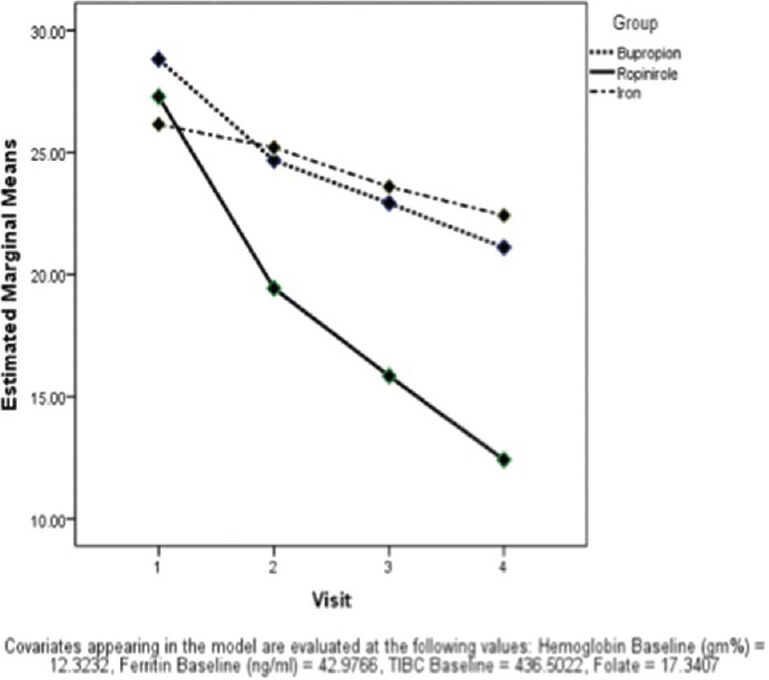
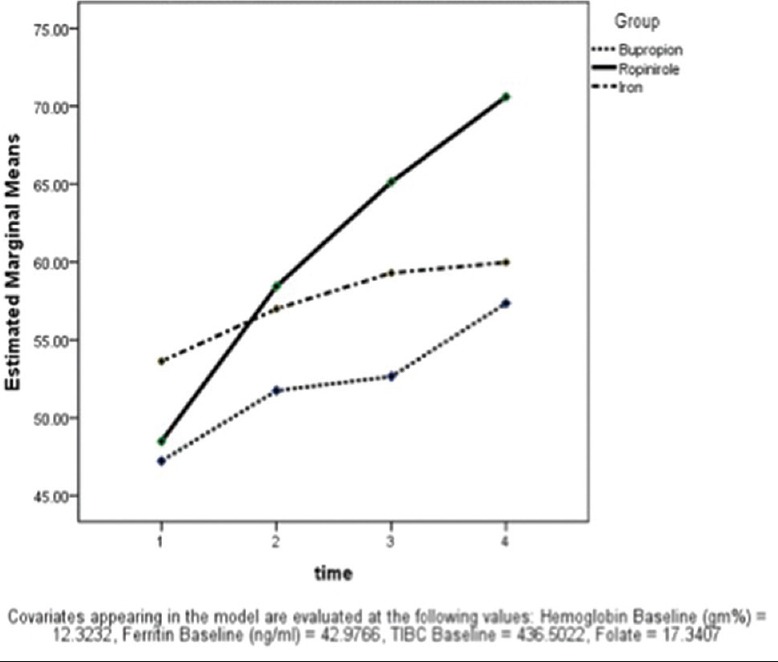
Results: IRLS scores differed significantly from baseline visit to last (F = 4.85; P = 0.01). The interaction between the time x treatment group was significant (F = 10.37; P < 0.001) showing an improvement with the therapy in all the groups. Pair-wise comparison depicted that ropinirole group differed from other two groups in IRLS score (F = 7.06; P = 0.001), which were comparable to each other. Regarding quality of life of these cases, within each group scores differed among all the four visits (F = 5.12; P = 0.002). Unlike IRLS, there was no significant difference among the RLSQOL scores between groups at any point of time (F = 1.2; P = 0.28).
Conclusion: RLS severity decreased across time in all three groups; however, the ropinirole treatment was better than the bupropion and iron-folate therapy. Moreover, RLS-related quality of life although improved among all groups, it was comparable among three groups.
Keywords: Bupropion; Willis-Ekbom disease; efficacy; restless legs syndrome; ropinirole; tolerability.
Conflict of interest statement
There are no conflicts of interest.
Figures
References
-
- Babu RH, Kaza R, Nagarju R. Restless leg syndrome. JITPS. 2010;1:1–8.
-
- Earley CJ, Connor J, Garcia-Borreguero D, Jenner P, Winkelman J, Zee PC, et al. Altered brain iron homeostasis and dopaminergic function in Restless legs syndrome (Willis-Ekbom disease) Sleep Med. 2014;15:1288–301. - PubMed
-
- Chahine LM, Chemali ZN. Restless legs syndrome: A review. CNS Spectr. 2006;11:511–20. - PubMed
-
- Aurora RN, Kristo DA, Bista SR, Rowley JA, Zak RS, Casey KR, et al. The treatment of restless legs syndrome and periodic limb movement disorder in adults – an update for 2012: Practice parameters with an evidence-based systematic review and meta-analyses: An American Academy of Sleep Medicine Clinical Practice Guideline. Sleep. 2012;35:1039–62. - PMC - PubMed
LinkOut - more resources
Full Text Sources
Other Literature Sources