A Comparison of Patient-Reported Outcome Measures Following Different Treatment Approaches for Adolescents with Severe Idiopathic Scoliosis: A Systematic Review
- PMID: 27994796
- PMCID: PMC5165010
- DOI: 10.4184/asj.2016.10.6.1170
A Comparison of Patient-Reported Outcome Measures Following Different Treatment Approaches for Adolescents with Severe Idiopathic Scoliosis: A Systematic Review
Abstract
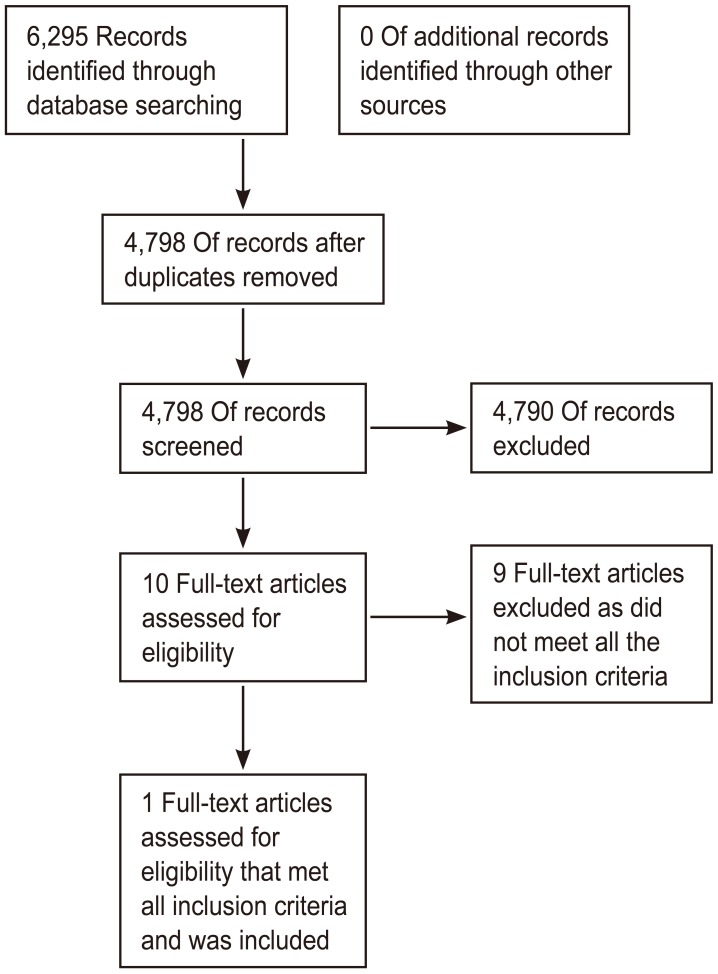
Adolescent idiopathic scoliosis (AIS) is a three-dimensional deformity of the spine which is usually not symptomatic and which can progress during growth and cause a surface deformity. In adulthood, if the final spinal curvature surpasses a certain critical threshold, the risk of health problems and curve progression is increased. Although surgery is usually recommended for curvatures exceeding 40° to 50° to stop curvature progression, recent reviews have shed some light on the long-term complications of such surgery and to the lack of evidence for such complicated procedures within the scientific literature. Furthermore, a number of patients are very fearful of having surgery and refuse this option or live in countries where specialist scoliosis surgery is not available. Other patients may be unable to afford the cost of specialist scoliosis surgery. For these patients the only choice is an alternative non-surgical treatment option. To examine the impact of different management options in patients with severe AIS, with a focus on trunk balance, progression of scoliosis, cosmetic issues, quality of life, disability, psychological issues, back pain, and adverse effects, at both the short-term (a few months) and the long-term (over 20 years). We searched CENTRAL, MEDLINE, EMBASE, CINHAL and two other databases up to January 2016 with no language limitations. We also checked the reference lists of relevant articles and conducted an extensive hand search of the grey literature. We searched for randomised controlled trials as well as prospective and retrospective controlled trials comparing spinal fusion surgery with no treatment or conservative treatment in AIS patients with a Cobb angle greater than 40°. We did not identify any evidence of superiority of effectiveness of operative compared to nonoperative interventions for patients with severe AIS. Within the present literature there is no clear evidence to suggest that a specific type of treatment is superior to other types of treatment.
Keywords: Adolescent; Braces; Exercise; Humans; Kyphosis; Scoliosis.
Conflict of interest statement
HRW is receiving financial support for attending symposia and receives royalties from Koob GmbH & Co KG. The company is held by the spouse of HRW. None of the other authors report any competing interest or potential conflict of interest.
References
-
- Lonstein JE, Winter RB, Bradford DS, Ogilvie JW. Moe's textbook of scoliosis and other spinal deformities. Philadelphia: Saunders; 1987.
-
- White AA, Panjabi MM. Functional analysis and clinical applications. 2nd ed. Baltimore: Lippincott Williams and Wilkins; 1990. Clinical biomechanics of the spine.
-
- Freidel K, Petermann F, Reichel D, Steiner A, Warschburger P, Weiss HR. Quality of life in women with idiopathic scoliosis. Spine (Phila Pa 1976) 2002;27:E87–E91. - PubMed
-
- Kanayama M, Tadano S, Kaneda K, Ukai T, Abumi K. A mathematical expression of three-dimensional configuration of the scoliotic spine. J Biomech Eng. 1996;118:247–252. - PubMed
-
- Stokes IA, Spence H, Aronsson DD, Kilmer N. Mechanical modulation of vertebral body growth. Implications for scoliosis progression. Spine (Phila Pa 1976) 1996;21:1162–1167. - PubMed
Publication types
LinkOut - more resources
Full Text Sources
Other Literature Sources