


Instruments Measuring Integrated Care: A Systematic Review of Measurement Properties
- PMID: 27995711
- PMCID: PMC5192798
- DOI: 10.1111/1468-0009.12233
Instruments Measuring Integrated Care: A Systematic Review of Measurement Properties
Abstract
Policy Points: Investigations on systematic methodologies for measuring integrated care should coincide with the growing interest in this field of research. A systematic review of instruments provides insights into integrated care measurement, including setting the research agenda for validating available instruments and informing the decision to develop new ones. This study is the first systematic review of instruments measuring integrated care with an evidence synthesis of the measurement properties. We found 209 index instruments measuring different constructs related to integrated care; the strength of evidence on the adequacy of the majority of their measurement properties remained largely unassessed.
Context: Integrated care is an important strategy for increasing health system performance. Despite its growing significance, detailed evidence on the measurement properties of integrated care instruments remains vague and limited. Our systematic review aims to provide evidence on the state of the art in measuring integrated care.
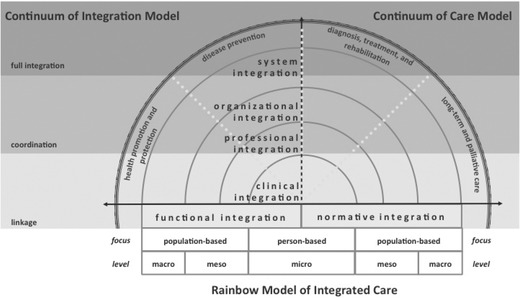
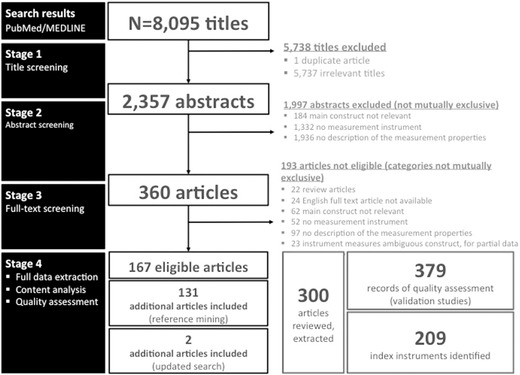
Methods: Our comprehensive systematic review framework builds on the Rainbow Model for Integrated Care (RMIC). We searched MEDLINE/PubMed for published articles on the measurement properties of instruments measuring integrated care and identified eligible articles using a standard set of selection criteria. We assessed the methodological quality of every validation study reported using the COSMIN checklist and extracted data on study and instrument characteristics. We also evaluated the measurement properties of each examined instrument per validation study and provided a best evidence synthesis on the adequacy of measurement properties of the index instruments.
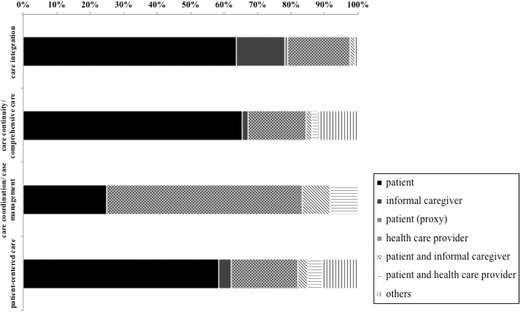
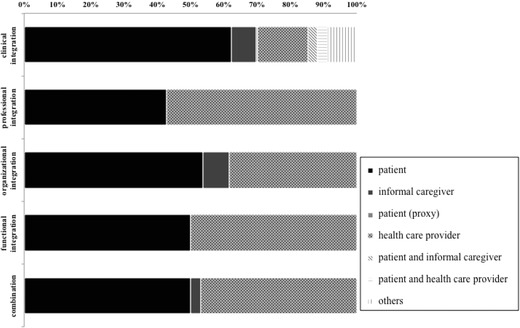
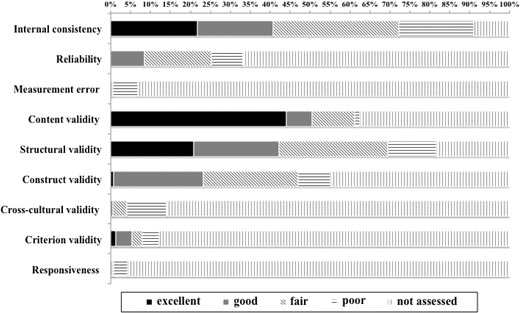
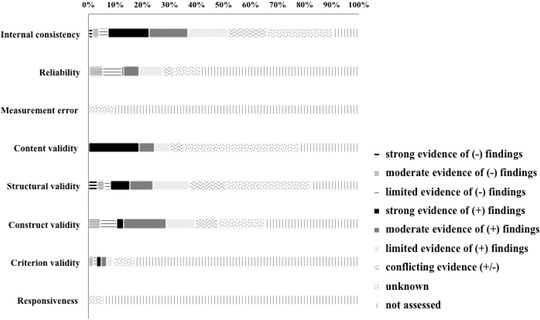
Findings: From the 300 eligible articles, we assessed the methodological quality of 379 validation studies from which we identified 209 index instruments measuring integrated care constructs. The majority of studies reported on instruments measuring constructs related to care integration (33%) and patient-centered care (49%); fewer studies measured care continuity/comprehensive care (15%) and care coordination/case management (3%). We mapped 84% of the measured constructs to the clinical integration domain of the RMIC, with fewer constructs related to the domains of professional (3.7%), organizational (3.4%), and functional (0.5%) integration. Only 8% of the instruments were mapped to a combination of domains; none were mapped exclusively to the system or normative integration domains. The majority of instruments were administered to either patients (60%) or health care providers (20%). Of the measurement properties, responsiveness (4%), measurement error (7%), and criterion (12%) and cross-cultural validity (14%) were less commonly reported. We found <50% of the validation studies to be of good or excellent quality for any of the measurement properties. Only a minority of index instruments showed strong evidence of positive findings for internal consistency (15%), content validity (19%), and structural validity (7%); with moderate evidence of positive findings for internal consistency (14%) and construct validity (14%).
Conclusions: Our results suggest that the quality of measurement properties of instruments measuring integrated care is in need of improvement with the less-studied constructs and domains to become part of newly developed instruments.
Keywords: instrument validation; integrated care; measurement instruments; quality of measurement properties; systematic review.
© 2016 Milbank Memorial Fund.
Figures
References
-
- Ezeh AC, Bongaarts J, Mberu B. Global population trends and policy options. Lancet. 2012;380(9837):142‐148. - PubMed
-
- United Nations Population Fund (UNFPA), HelpAge International . Ageing in the Twenty‐First Century: A Celebration and a Challenge. New York, NY, and London, England: UNFPA and HelpAge International; 2012.
-
- Global Burden of Disease Study 2013 Collaborators . Global, regional, and national incidence, prevalence, and years lived with disability for 301 acute and chronic diseases and injuries in 188 countries, 1990‐2013: a systematic analysis for the Global Burden of Disease Study 2013. Lancet. 2015;386(9995):743‐800. - PMC - PubMed
-
- Wagner EH, Davis C, Schaefer J, Von Korff M, Austin B. A survey of leading chronic disease management programs: are they consistent with the literature? Manag Care Q. 1999;7(3):56‐66. - PubMed
Publication types
MeSH terms
LinkOut - more resources
Full Text Sources
Other Literature Sources
