


Physical Activity, Sedentary Behavior, Cardiorespiratory Fitness and Metabolic Syndrome in Adolescents: Systematic Review and Meta-Analysis of Observational Evidence
- PMID: 27997601
- PMCID: PMC5173371
- DOI: 10.1371/journal.pone.0168503
Physical Activity, Sedentary Behavior, Cardiorespiratory Fitness and Metabolic Syndrome in Adolescents: Systematic Review and Meta-Analysis of Observational Evidence
Abstract
Background: Metabolic syndrome (MetS) has been diagnosed in adolescents and among the associated factors are low levels of physical activity, sedentary behavior over long periods and low cardiorespiratory fitness. However, specifically in adolescents, studies present conflicting results. The aim of the present study was to conduct a systematic review and meta-analysis of observational studies, in order to map the association between physical activity, sedentary behavior, cardiorespiratory fitness and MetS in adolescents.
Methods: A search was performed in the databases PubMed, SPORTDiscus, LILACS and the Cochrane Library. For the meta-analysis, the odds ratio (OR) was calculated together with the respective confidence intervals (95% CI), in which the measures of effect were analyzed by dichotomous data (exposure variables) with MetS used as events.
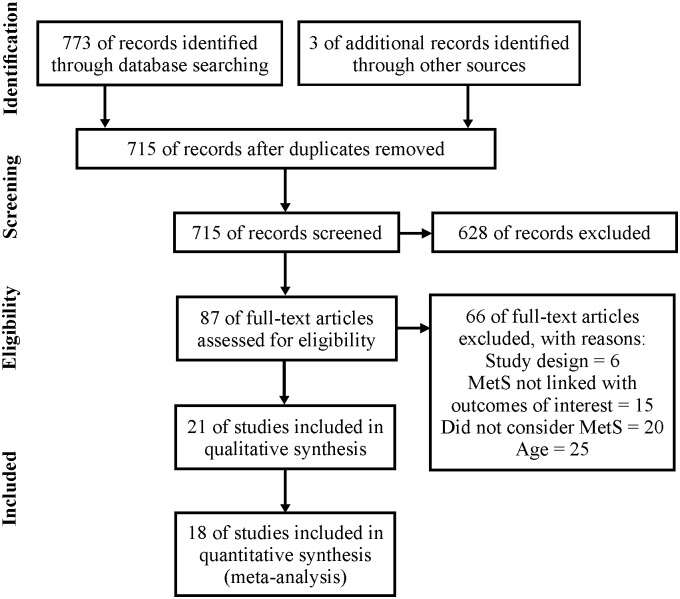
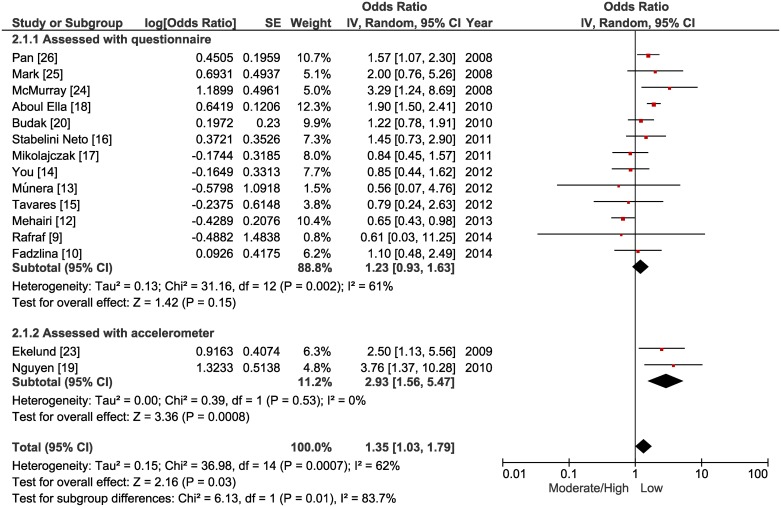
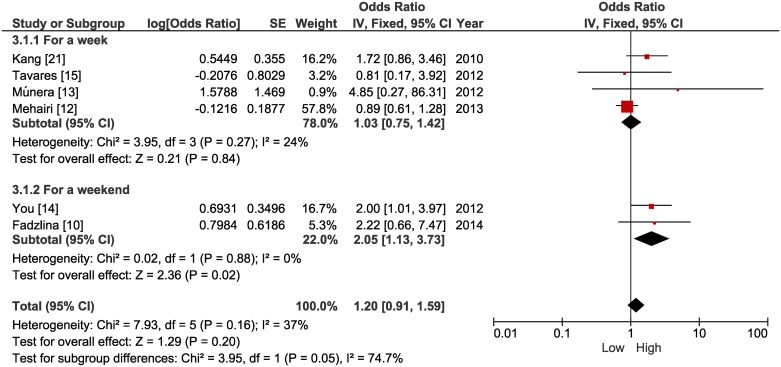
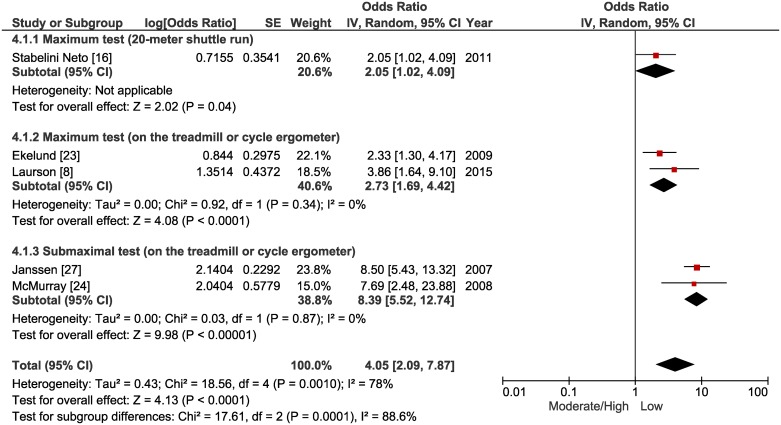
Results: Eighteen studies were included in the meta-analysis. Primary analysis demonstrated that low levels of physical activity (OR = 1.35 [1.03 to 1.79]; p = 0.03) and low cardiorespiratory fitness (OR = 4.05 [2.09 to 7.87]; p < 0.01) were significantly associated with the development of MetS, while for sedentary behavior, represented by screen time > 2 hours/day, a significant association was not identified (OR = 1.20 [0.91 to 1.59]; p = 0.20). Subgroup analyses demonstrated that the association between low physical activity and MetS was dependent on the use of the accelerometry technique (OR = 2.93 [1.56 to 5.47]; p < 0.01). Screen time > 2 hours/day was significantly associated with MetS only on weekends (OR = 2.05 [1.13 to 3.73]; p = 0.02). With respect to cardiorespiratory fitness, a significant association with MetS was found independent of the maximal oxygen uptake (VO2max) measurement method.
Conclusions: Low levels of physical activity, low indices of cardiorespiratory fitness and sedentary behavior, represented by screen time > 2 hours/day on weekends, were significantly associated with the development of MetS in adolescence.
Conflict of interest statement
The authors have declared that no competing interests exist.
Figures
References
-
- Alberti KG, Eckel RH, Grundy SM, Zimmet PZ, Cleeman JI, Donato KA, et al. Harmonizing the metabolic syndrome: a joint interim statement of the International Diabetes Federation Task Force on Epidemiology and Prevention; National Heart, Lung, and Blood Institute; American Heart Association; World Heart Federation; International Atherosclerosis Society; and International Association for the Study of Obesity. Circulation. 2009;120(16):1640–5. 10.1161/CIRCULATIONAHA.109.192644 - DOI - PubMed
-
- Katsiki N, Athyros VG, Karagiannis A, Mikhailidis DP. Characteristics other than the diagnostic criteria associated with metabolic syndrome: an overview. Curr Vasc Pharmacol. 2014;12(4):627–41. - PubMed
-
- Poyrazoglu S, Bas F, Darendeliler F. Metabolic syndrome in young people. Curr Opin Endocrinol Diabetes Obes. 2014;21(1):56–63. - PubMed
Publication types
MeSH terms
LinkOut - more resources
Full Text Sources
Other Literature Sources
Medical
