. 2017 Apr 1;140(7):1597-1608.
doi: 10.1002/ijc.30575. Epub 2017 Feb 6.

Burkitt lymphoma expresses oncofetal chondroitin sulfate without being a reservoir for placental malaria sequestration

Affiliations

Burkitt lymphoma expresses oncofetal chondroitin sulfate without being a reservoir for placental malaria sequestration

Mette Ø Agerbaek et al. Int J Cancer. .

Abstract

Burkitt lymphoma (BL) is a malignant disease, which is frequently found in areas with holoendemic Plasmodium falciparum malaria. We have previously found that the VAR2CSA protein is present on malaria-infected erythrocytes and facilitates a highly specific binding to the placenta. ofCS is absent in other non-malignant tissues and thus VAR2CSA generally facilitates parasite sequestration and accumulation in pregnant women. In this study, we show that the specific receptor for VAR2CSA, the oncofetal chondroitin sulfate (ofCS), is likewise present in BL tissue and cell lines. We therefore explored whether ofCS in BL could act as anchor site for VAR2CSA-expressing infected erythrocytes. In contrast to the placenta, we found no evidence of in vivo sequestering of infected erythrocytes in the BL tissue. Furthermore, we found VAR2CSA-specific antibody titers in children with endemic BL to be lower than in control children from the same malaria endemic region. The abundant presence of ofCS in BL tissue and the absence of ofCS in non-malignant tissue encouraged us to examine whether recombinant VAR2CSA could be used to target BL. We confirmed the binding of VAR2CSA to BL-derived cells and showed that a VAR2CSA drug conjugate efficiently killed the BL-derived cell lines in vitro. These results identify ofCS as a novel therapeutic BL target and highlight how VAR2CSA could be used as a tool for the discovery of novel approaches for directing BL therapy.

Keywords: Burkitt lymphoma; CSA; Plasmodium falciparum; VAR2CSA; cancer; chondroitin sulfate A; chondroitin sulfate proteoglycan; malaria.


Conflict of interest statement

Conflict-of-interest disclosure: A.S., T.M.C., T.G.T., M.A.N. and M.D. have together with University of Copenhagen submitted a patent application on oncofetal CS as a cancer target. M.Ø.A is co-founder and shareholder of VAR2 pharmaceuticals where the patent is located.

Figures
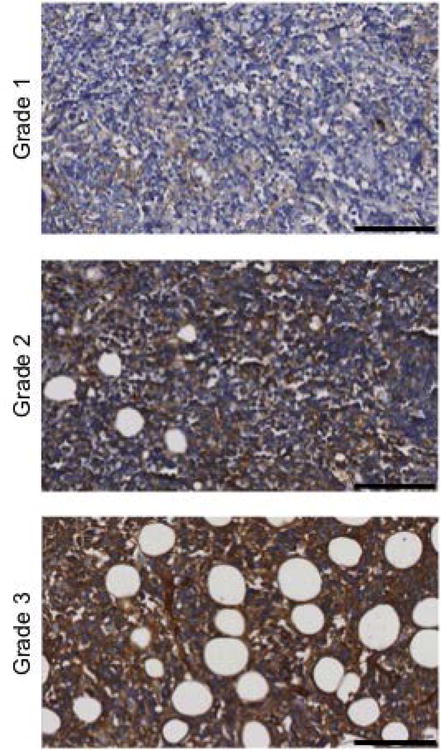
Figure 1
Figure 1. rVAR2 staining of Burkitt lymphoma tissue
Presence of ofCS in BL tissues was analyzed by rVAR2 staining using the Ventana Discovery Platform. rVAR2 staining intensity was scored as negative (grade 0), weak (grade 1), moderate (grade 2), or strong (grade 3). Pictures are representatives of differentially scored tissues of grade 1-3. Staining intensities of ≥2 were considerate positive. The scale bars represent 100μm.
Figure 2
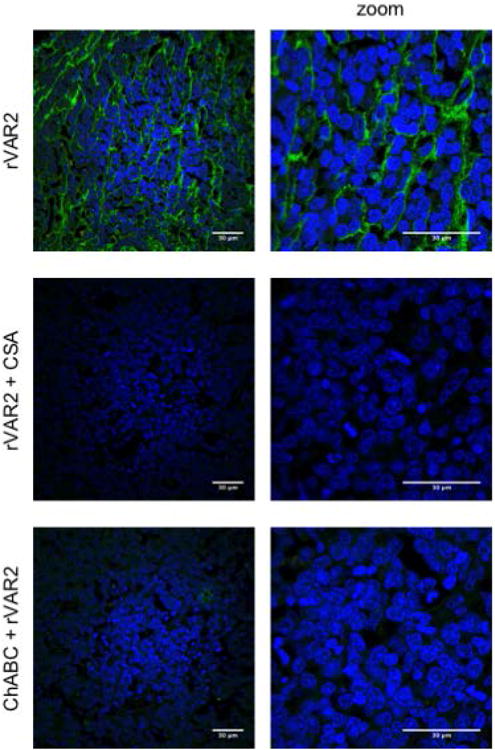
Figure 2. rVAR2 binding to Burkitt lymphoma tissue is specific to ofCS
Specificity of rVAR2 binding to ofCS in BL tissue was tested by immunofluorescence. Tissue was incubated with rVAR2 either after treatment with Chondroitinase ABC (ChABC), or co-incubated with soluble CSA. Tissue was counterstained with DAPI (blue). Panel on the right represents zoomed pictures (2.5×). The scale bars represent 30μm.
Figure 3
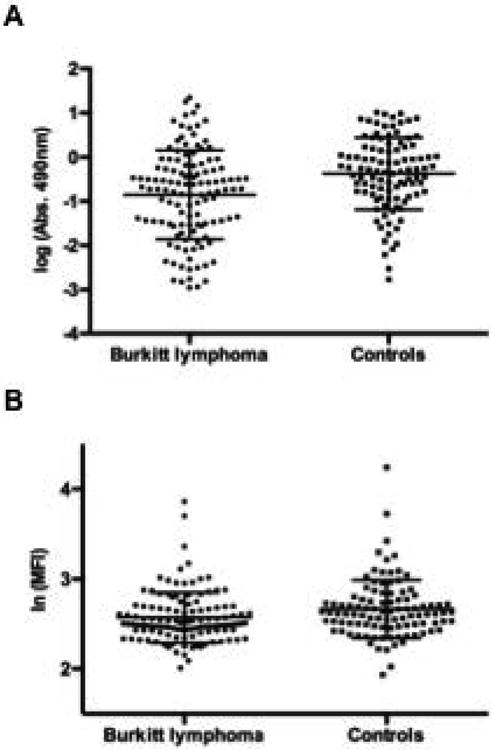
Figure 3. Serum samples of Burkitt lymphoma patients show a decrease in VAR2CSA-specific IgG
(A) IgG reactivity to recombinant VAR2CSA in human serum samples from BL patients (n=121) and endemic controls (n=101). Reactivity was detected using anti-human IgG HRP and measured by ELISA. Bars represent means with standard deviations, (B) IgG binding to VAR2CSA-expressing infected erythrocytes in human serum samples from BL patients and endemic controls. Geometric mean fluorescence intensity (MFI) was assessed by flow cytometry using anti-human IgG FITC. Bars represent means with standard deviations.
Figure 4
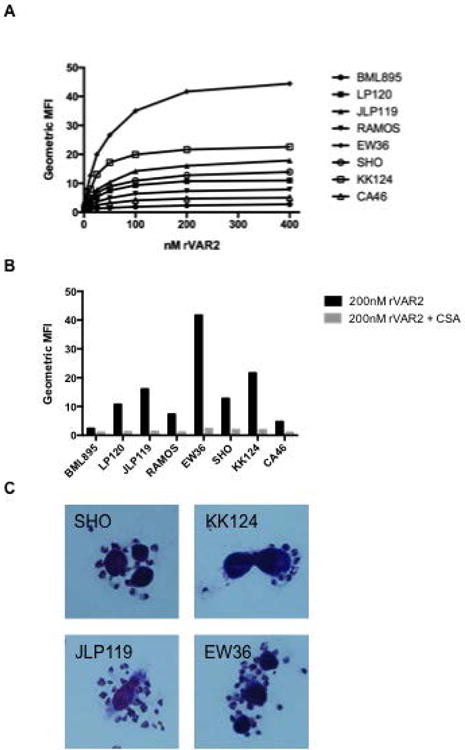
Figure 4. VAR2CSA binds to ofCS on Burkitt lymphoma cell lines
(A) rVAR2 binding to eight different BL cell lines. Signal-to-noise ration of the geometric mean fluorescence intensity (MFI) was tested using an anti-penta his alexa 488 antibody and flow cytometry. The graph is a representative of three independent experiments. (B) rVAR2 binding to BL cell lines with or without the co-incubation of 400 μg/ml soluble CSA in flow cytometry. (C) Binding of VAR2CSA-expressing P. falciparum infected erythrocytes to the BL cell lines as shown by microscopy after Giemsa staining.
Figure 5
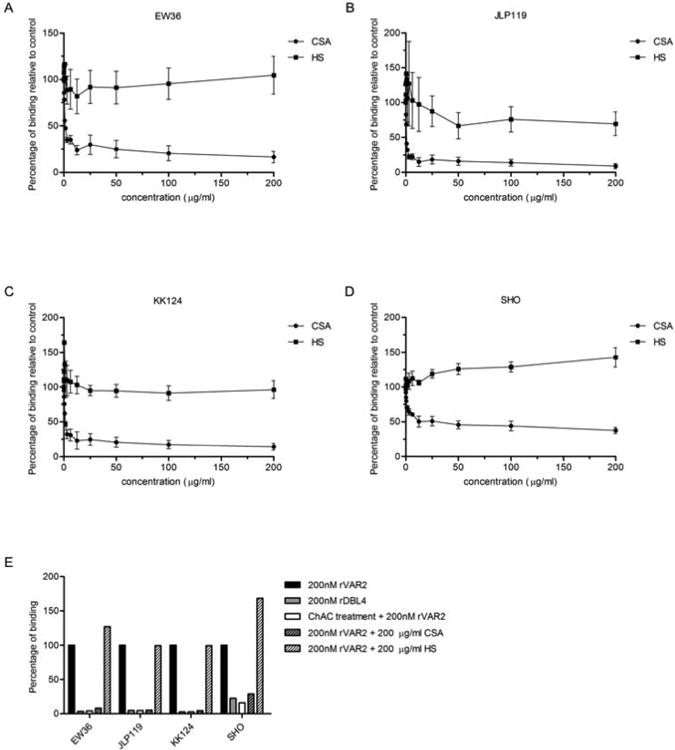
Figure 5. VAR2CSA specifically binds to ofCS on Burkitt lymphoma cell lines
(A) Specificity of rVAR2 binding to the EW36 cell line was tested in flow cytometry by co-incubating 200 nM rVAR2 with a 2-fold dilution of CSA and HS. Percentage of binding towards the control is shown. Data shown as mean (two or three independent experiments) ± SEM. (B) Same as (A) for the JLP119 cell line. (C) Same as (A) for the KK124 cell line. (D) Same as (A) for the SHO cell line. (E) Specificity of rVAR2 binding to four different BL cell lines. The graph shows percentage of binding of rVAR2 to the different cell lines. A control with a domain of the protein not involved in binding to ofCS is shown (rDBL4). Additionally, specificity controls after ChAC treatment and with co-incubation of rVAR2 with 200 ug/ml CSA and HS are also shown.
Figure 6
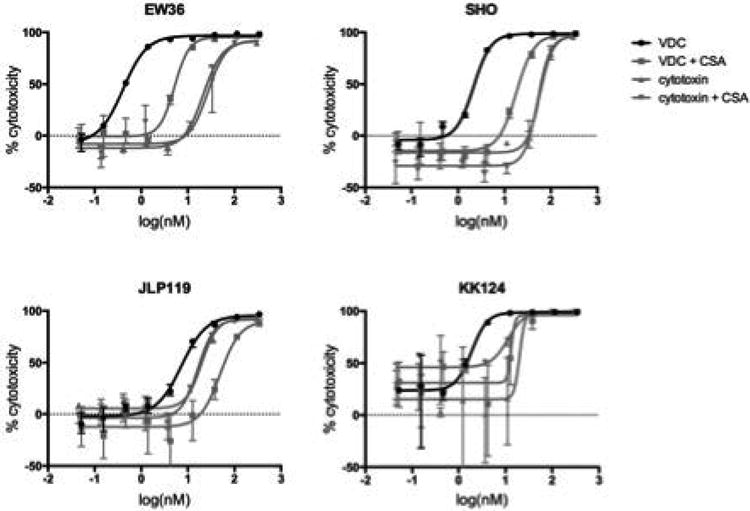
Figure 6. VDC-induced cytotoxicity of BL-derived cells
The cytotoxic effect of treatment with VDC was analyzed using CellTiter-glo reagent after 3 days incubation. The EC50 values were estimated at 0.4nM (EW36), 2.2nM (SHO), 7.2nM (JLP119) and 1.9nM (KK124). Unconjugated cytotoxin was included as a control. The ofCS specificity of VDC binding was demonstrated by an addition of 400ug/ml CSA.

References

    1. Linet MS, Brown LM, Mbulaiteye SM, Check D, Ostroumova E, Landgren A, et al. International long-term trends and recent patterns in the incidence of leukemias and lymphomas among children and adolescents ages 0-19 years. Int J Cancer. 2015 - PMC - PubMed
    1. Jaffe ES, Pittaluga S. Aggressive B-cell lymphomas: a review of new and old entities in the WHO classification. Hematology Am Soc Hematol Educ Program. 2011;2011:506–14. - PMC - PubMed
    1. Kempkes B, Robertson ES. Epstein-Barr virus latency: current and future perspectives. Curr Opin Virol. 2015;14:138–44. - PMC - PubMed
    1. Chene A, Donati D, Orem J, Mbidde ER, Kironde F, Wahlgren M, et al. Endemic Burkitt's lymphoma as a polymicrobial disease: new insights on the interaction between Plasmodium falciparum and Epstein-Barr virus. Semin Cancer Biol. 2009;19(6):411–20. - PubMed
    1. Donati D, Mok B, Chene A, Xu H, Thangarajh M, Glas R, et al. Increased B cell survival and preferential activation of the memory compartment by a malaria polyclonal B cell activator. J Immunol. 2006;177(5):3035–44. - PubMed

Publication types

MeSH terms