


Living in CIN: Mitotic Infidelity and Its Consequences for Tumor Promotion and Suppression
- PMID: 27997823
- PMCID: PMC5204306
- DOI: 10.1016/j.devcel.2016.10.023
Living in CIN: Mitotic Infidelity and Its Consequences for Tumor Promotion and Suppression
Abstract
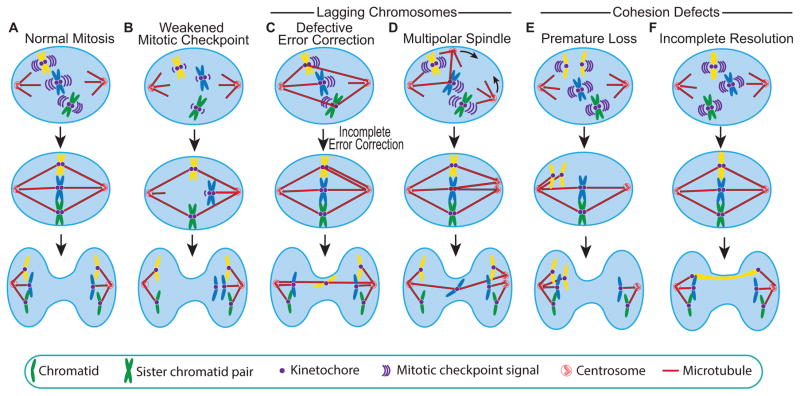
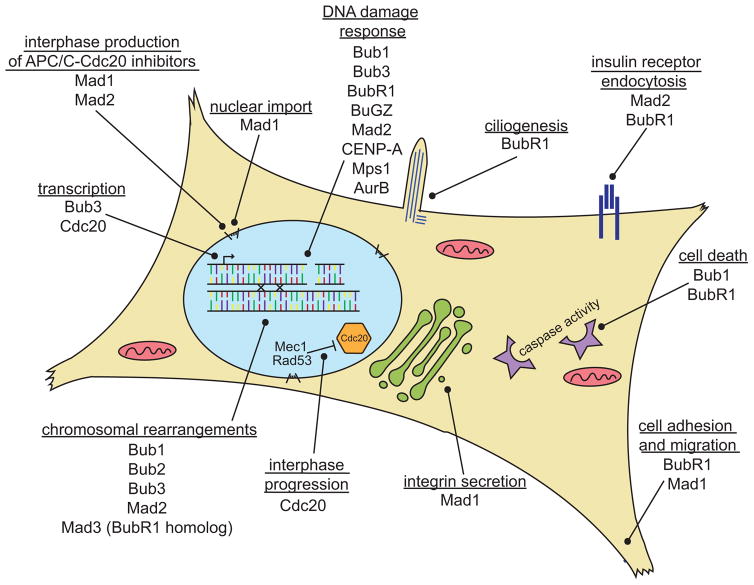
Errors in chromosome segregation during mitosis have been recognized as a hallmark of tumor cells since the late 1800s, resulting in the long-standing hypothesis that mitotic abnormalities drive tumorigenesis. Recent work has shown that mitotic defects can promote tumors, suppress them, or do neither, depending on the rate of chromosome missegregation. Here we discuss the causes of chromosome missegregation, their effects on tumor initiation and progression, and the evidence that increasing the rate of chromosome missegregation may be an effective chemotherapeutic strategy.
Keywords: CIN; aneuploidy; chromosomal instability; mitosis; mitotic checkpoint; spindle assembly checkpoint.
Copyright © 2016 Elsevier Inc. All rights reserved.
Figures
References
-
- Baek KH, Shin HJ, Jeong SJ, Park JW, McKeon F, Lee CW, Kim CM. Caspases-dependent cleavage of mitotic checkpoint proteins in response to microtubule inhibitor. Oncol Res. 2005;15:161–168. - PubMed
-
- Baker DJ, Jeganathan KB, Cameron JD, Thompson M, Juneja S, Kopecka A, Kumar R, Jenkins RB, de Groen PC, Roche P, et al. BubR1 insufficiency causes early onset of aging-associated phenotypes and infertility in mice. Nat Genet. 2004;36:744–749. - PubMed
Publication types
MeSH terms
Substances
Grants and funding
LinkOut - more resources
Full Text Sources
Other Literature Sources
