


Molecular and clinical characterization of PD-L1 expression at transcriptional level via 976 samples of brain glioma
- PMID: 27999734
- PMCID: PMC5139638
- DOI: 10.1080/2162402X.2016.1196310
Molecular and clinical characterization of PD-L1 expression at transcriptional level via 976 samples of brain glioma
Abstract
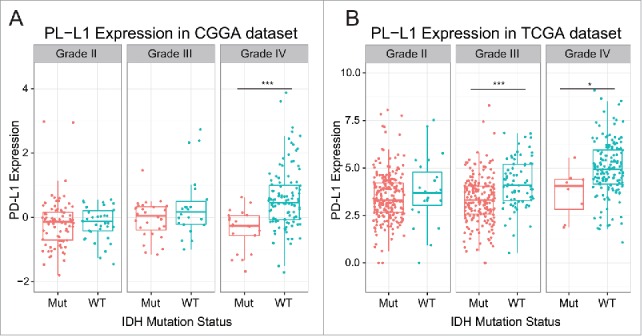
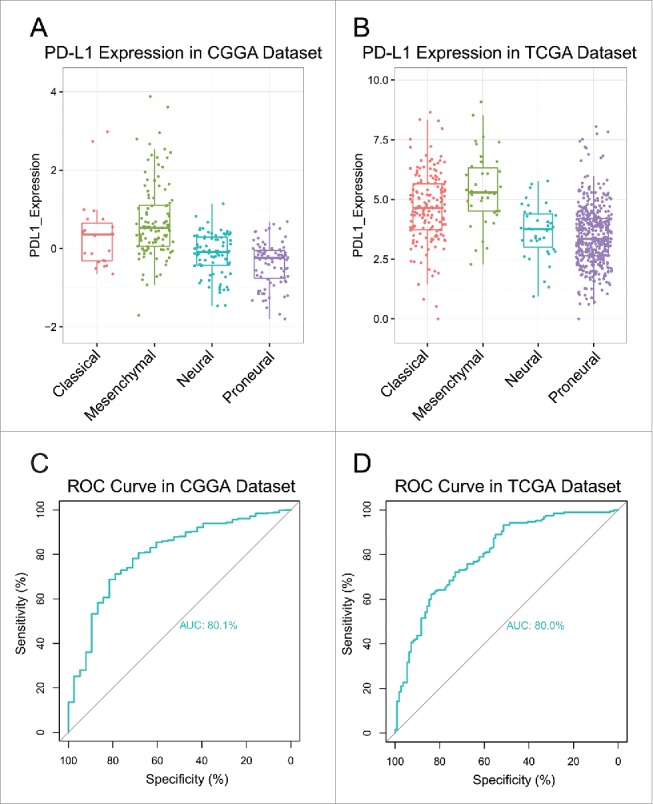
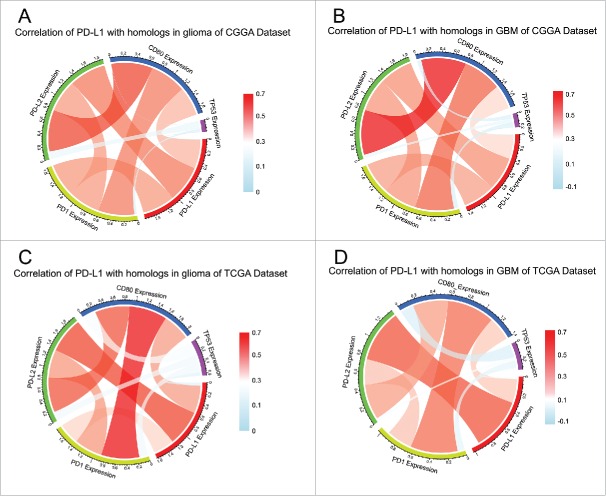
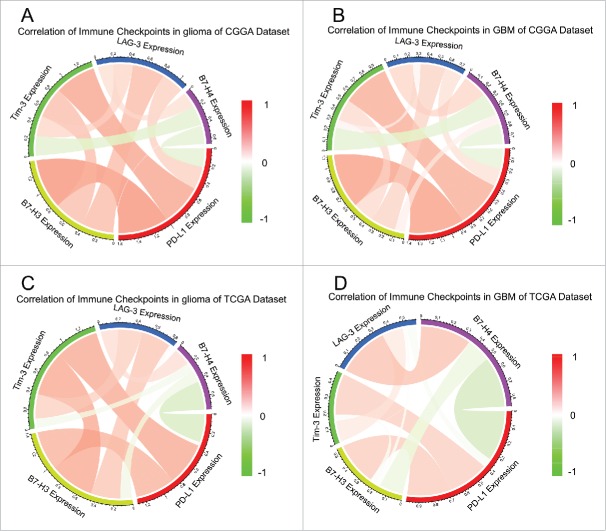
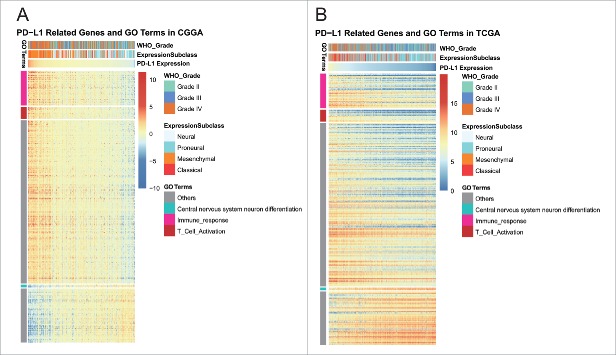
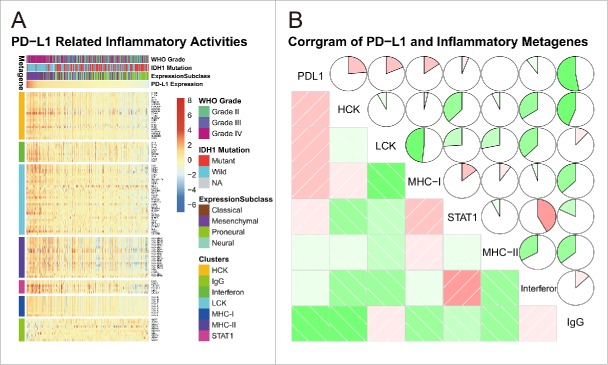
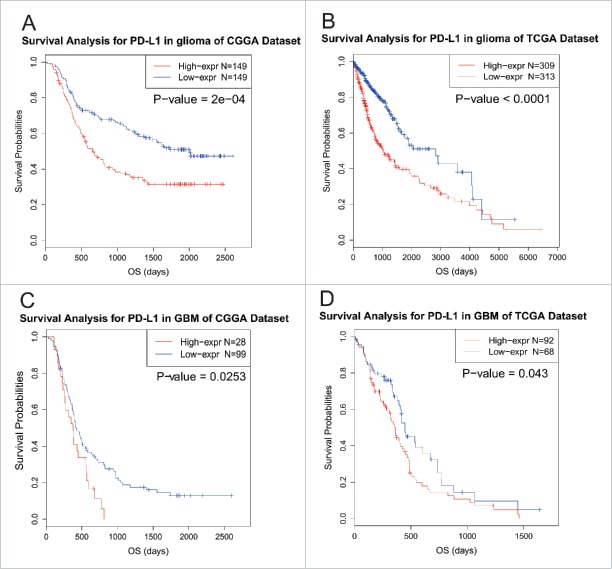
Background: PD-L1 has been widely reported as immune check points in a range of malignancies as well as some immune-originated diseases. In glioma, the role of PD-L1 remains unclear. We aimed at investigating its role at transcriptome level and relationship with clinical practice. Method and patients: In total, 976 glioma samples with transcriptome data, including 301 microarray data from Chinese Glioma Genome Atlas (CGGA project) and 675 RNAseq data from TCGA project, were enrolled into our study. Clinical and IDH mutation data were also available. R language was used as the main tool for statistical analysis and graphical work. Results: PD-L1 expression was found to be positively correlated with WHO grade of glioma. PD-L1 seemed to express more in mesenchymal subtype according to TCGA transcriptional classification scheme and may contribute as a potential marker for mesenchymal subtype in glioblastoma. Pearson correlation test indicated that PD-L1 showed robust correlation with PD1, PD-L2, and CD80 in CGGA dataset. Subsequent gene ontology analysis based on significantly correlated genes of PD-L1 revealed that PD-L1 seemed to be profoundly associated with T cell activation. To further investigate the relationship between PD-L1 expression and immune response, we selected a series of immune signatures, which were then transformed into metagenes, and found that PD-L1 expression was particularly paralleled with T-cells and macrophages-related immune response instead of B cell linage-related immune response. In line with the corresponding biological process, PD-L1 exhibited predictive value for glioma patients: Higher PD-L1 indicated significantly shorter survival, especially in glioblastoma. Conclusion: PD-L1 is upregulated in glioblastoma, and is synergistic with other check point members. Moreover, PD-L1 is significantly associated with T-cell activation and macrophage-related immune response and predicts much worse survival for patients, warranting clinical trials of PD1/PD-L1 checkpoint inhibitors for potential glioma treatment.
Keywords: Checkpoint inhibitors; PD-L1; glioma; immune response.
Figures
References
-
- Van Meir EG, Hadjipanayis CG, Norden AD, Shu HK, Wen PY, Olson JJ. Exciting new advances in neuro-oncology: the avenue to a cure for malignant glioma. CA 2010; 60:166-93; PMID:20445000; http://dx.doi.org/ 10.3322/caac.20069 - DOI - PMC - PubMed
-
- Yang P, Zhang W, Wang Y, Peng X, Chen B, Qiu X, Li G, Li S, Wu C, Yao K et al.. IDH mutation and MGMT promoter methylation in glioblastoma: Results of a prospective registry. Oncotarget 2015; 6:40896-906; PMID:26503470; http://dx.doi.org/ 10.18632/oncotarget.5683 - DOI - PMC - PubMed
-
- Hussain SF, Yang D, Suki D, Aldape K, Grimm E, Heimberger AB. The role of human glioma-infiltrating microglia/macrophages in mediating antitumor immune responses. Neuro Oncol 2006; 8:261-79; PMID:16775224; http://dx.doi.org/ 10.1215/15228517-2006-008 - DOI - PMC - PubMed
-
- Garofalo S, D'Alessandro G, Chece G, Brau F, Maggi L, Rosa A, Porzia A, Mainiero F, Esposito V, Lauro C et al.. Enriched environment reduces glioma growth through immune and non-immune mechanisms in mice. Nat Commun 2015; 6:6623; PMID:25818172; http://dx.doi.org/ 10.1038/ncomms7623 - DOI - PMC - PubMed
-
- Rolle CE, Sengupta S, Lesniak MS. Mechanisms of immune evasion by gliomas. Adv Exp Med Biol 2012; 746:53-76; PMID:22639159; http://dx.doi.org/ 10.1007/978-1-4614-3146-6_5 - DOI - PubMed
Publication types
LinkOut - more resources
Full Text Sources
Other Literature Sources
Research Materials
