. 2017 Feb 14;8(7):11400-11413.
doi: 10.18632/oncotarget.13940.

MicroRNA-17 is downregulated in esophageal adenocarcinoma cancer stem-like cells and promotes a radioresistant phenotype

Affiliations

MicroRNA-17 is downregulated in esophageal adenocarcinoma cancer stem-like cells and promotes a radioresistant phenotype

Niamh Lynam-Lennon et al. Oncotarget. .

Abstract

Resistance to neoadjuvant chemoradiation therapy (CRT) remains a critical barrier to the effective treatment of esophageal adenocarcinoma (EAC). Cancer stem-like cells (CSCs) are a distinct subpopulation of cells implicated in the resistance of tumors to anti-cancer therapy. However, their role in the resistance of EAC to CRT is largely unknown. In this study, using a novel in vitro isogenic model of radioresistant EAC, we demonstrate that radioresistant EAC cells have enhanced tumorigenicity in vivo, increased expression of CSC-associated markers and enhanced holoclone forming ability. Further investigation identified a subpopulation of cells that are characterised by high aldehyde dehydrogenase (ALDH) activity, enhanced radioresistance and decreased expression of miR-17-5p. In vitro, miR-17-5p was demonstrated to significantly sensitise radioresistant cells to X-ray radiation and promoted the repression of genes with miR-17-5p binding sites, such as C6orf120. In vivo, miR-17-5p was significantly decreased, whilst C6orf120 was significantly increased, in pre-treatment EAC tumour samples from patients who demonstrated a poor response to neoadjuvant CRT. This study sheds novel insights into the role of CSCs in the resistance of EAC to CRT and highlights miR-17-5p as a potential biomarker of CRT sensitivity and novel therapeutic target in treatment resistant EAC.

Keywords: cancer stem-like cells; esophageal adenocarcinoma; microRNA; predictive biomarker; radioresistance.


Conflict of interest statement

CONFLICTS OF INTEREST

The authors declare no conflicts of interest.

Figures
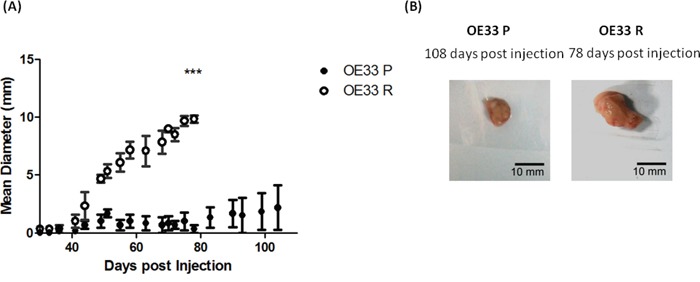
Figure 1
Figure 1. OE33 R cells demonstrate enhanced tumorigenicity in vivo
A. OE33 P and OE33 R cells were implanted subcutaneously into NOD SCID mice (n=3). OE33 R cells demonstrated significantly enhanced tumorigenesis when compared to OE33 P cells. Data are presented as the mean ± SEM. Statistical analysis was performed using a two-tailed unpaired Student's t-test,***p < 0.0001 B. Representative images of tumors extracted from OE33 P and OE33 R cells injected into NOD SCID mice.
Figure 2
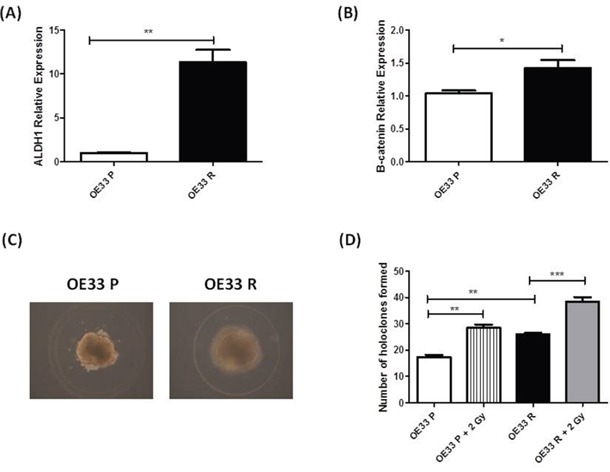
Figure 2. OE33 R cells demonstrate enhanced ‘stemness’ properties
Expression of ALDH1 and β-catenin was assessed in OE33 P and OE33 R cells by qPCR. Expression levels of A. ALDH1 and B. β-catenin were significantly increased in OE33 R cells, when compared to OE33 P cells C. OE33 P and OE33 R cells were plated under high salt agar conditions. Representative images of resulting holoclones (Magnification 10 ×) D. OE33 R cells have significantly enhanced holoclone forming capacity both basally and following irradiation with 2 Gy, when compared to OE33 P cells. Data are presented as the mean ± SEM from 3 independent experiments. Statistical analysis was performed using an ANOVA with Tukey post hoc test, **p< 0.05, ***p< 0.005.
Figure 3
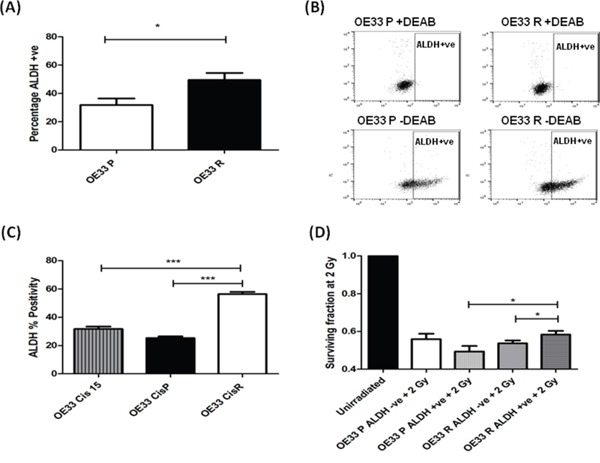
Figure 3. Radioresistant and cisplatin-resistant EAC cells have increased ALDH enzymatic activity, and is associated with a radioresistant phenotype
A. OE33 P and OE33 R cells were stained for ALDH and fluorescence was assessed using a MoFlow cell sorter. As a negative control, cells were treated with the specific ALDH inhibitor DEAB. OE33 R cells demonstrate significantly higher levels of ALDH+ve cells, when compared to OE33 P cells. Data are presented as the mean ± SEM from 7 independent experiments. Statistical analysis was performed using an unpaired two-tailed Student's t-test, *p < 0.05 B. Representative flow images of ALDH staining in OE33 P and OE33 R cells. DEAB served as a negative control. C. ALDH activity was assessed in an isogenic model of EAC cisplatin-resistance. Cisplatin-resistant cells OE33 CisR demonstrated significantly higher levels of ALDH+ve cells, when compared to cisplatin-sensitive OE33 CisP and OE33 Cis15 cells. Data are presented as the mean ± SEM from 3 independent experiments. Statistical analysis was performed using an unpaired two-tailed Student's t-test, ***p < 0.001 D. ALDH-ve and ALDH +ve populations from OE33 P and OE33 R cells were sorted using a MoFlow cell sorter and radiosensitivity to 2 Gy X-ray radiation was assessed using clonogenic assay. OE33 R ALDH+ve populations demonstrate significantly enhanced survival to radiation at 2 Gy, when compared to OE33 R ALDH-ve cells and OE33 P ALDH+ve cells. Data are presented as the mean ± SEM from 7 independent experiments. Statistical analysis was performed using a paired and unpaired two-tailed Student's t-test, respectively, *p < 0.05.
Figure 4
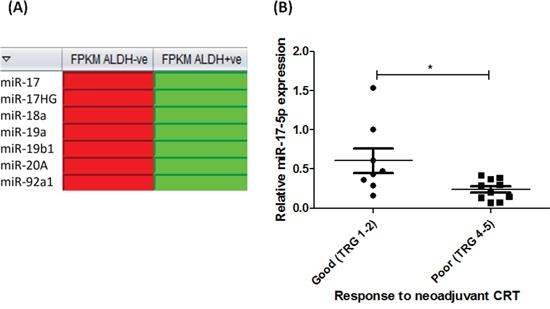
Figure 4. miR-17-5p is decreased in radioresistant EAC cells in vitro and in vivo
A. Digital gene expression analysis, demonstrated as heat maps, of miR-17~92 family members significantly altered in OE33 R ALDH+ve populations, when compared to OE33 R ALDH-ve populations (red and green boxes indicate upregulation and downregulation, respectively) B. miR-17-5p expression is significantly decreased in pre-treatment diagnostic tumor biopsies from EAC patients with a poor response to neoadjuvant CRT (TRG 4 and 5), when compared to good responders (TRG 1 and 2) (n=18) [23]. Statistical analysis was performed using an unpaired, 2-tailed Student's t-test, *p < 0.05.
Figure 5
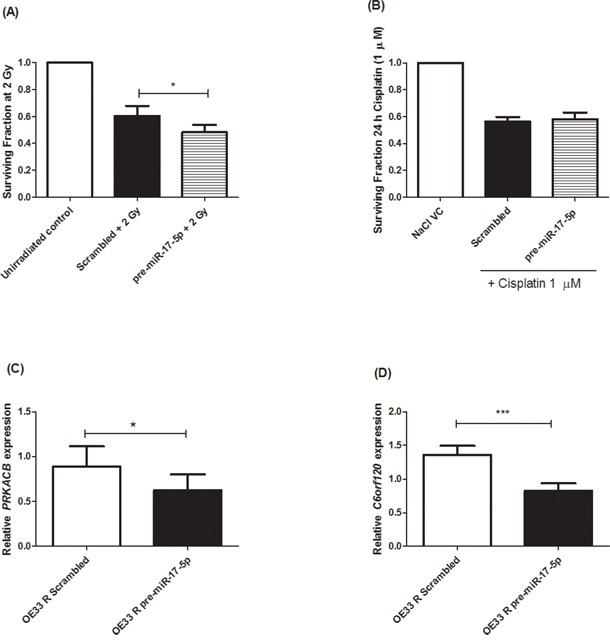
Figure 5. miR-17-5p sensitises radioresistant OE33 R cells to radiation and downregulates PRKACB and C6orf120 expression
A. miR-17-5p was transiently overexpressed in OE33 R cells. miR-17-5p significantly sensitised OE33 R cells to 2 Gy radiation, when compared to a scrambled control. B. miR-17-5p does not alter sensitivity to cisplatin (1 μM) relative to a scrambled control. Overexpression of miR-17-5p resulted in significant downregulation of C. PRKACB and D. C6orf120, when compared to a scrambled control. Data are presented as the mean ± SEM from 3 independent experiments. Statistical analysis was performed using a paired Student's t-test, *p < 0.05; ***p < 0.001.
Figure 6
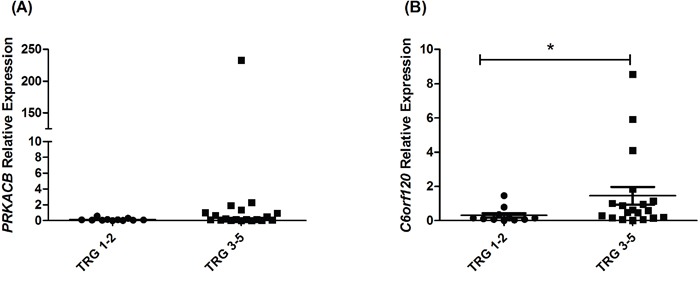
Figure 6. C6orf120 is significantly increased in patients having a poor response to neoadjuvant CRT
Expression of A. PRKACB and B. C6orf120 was assessed by qPCR in pre-treatment EAC tumor biopsies from patients (n = 30) who subsequently received neoadjuvant CRT. Statistical analysis was performed using a Mann Whitney U test, *p < 0.02.

References

    1. Arnold M, Soerjomataram I, Ferlay J, Forman D. Global incidence of oesophageal cancer by histological subtype in 2012. Gut. 2015;64:381–7. - PubMed
    1. Thrift AP, Whiteman DC. The incidence of esophageal adenocarcinoma continues to rise: analysis of period and birth cohort effects on recent trends. Ann Oncol. 2012;23:3155–62. - PubMed
    1. Murphy TJ, Ravi N, Reynolds JV. Treatment options for esophageal cancer. Expert Opin Pharmacother. 2008;9:3197–210. - PubMed
    1. Reynolds JV, Muldoon C, Hollywood D, Ravi N, Rowley S, O'Byrne K, Kennedy J, Murphy TJ. Long-term outcomes following neoadjuvant chemoradiotherapy for esophageal cancer. Ann Surg. 2007;245:707–16. - PMC - PubMed
    1. Ilson DH, Bains M, Ginsberg RJ, Kelsen DP. Neoadjuvant therapy of esophageal cancer. Surg Oncol Clin N Am. 1997;6:723–40. - PubMed

MeSH terms

Supplementary concepts