The interplay between plasticity and evolution in response to human-induced environmental change
- PMID: 28003883
- PMCID: PMC5147521
- DOI: 10.12688/f1000research.9731.1
The interplay between plasticity and evolution in response to human-induced environmental change
Abstract
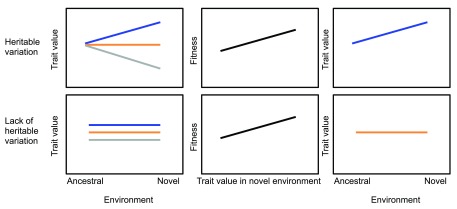
Some populations will cope with human-induced environmental change, and others will undergo extirpation; understanding the mechanisms that underlie these responses is key to forecasting responses to environmental change. In cases where organisms cannot disperse to track suitable habitats, plastic and evolved responses to environmental change will determine whether populations persist or perish. However, the majority of studies consider plasticity and evolution in isolation when in fact plasticity can shape evolution and plasticity itself can evolve. In particular, whether cryptic genetic variation exposed by environmental novelty can facilitate adaptive evolution has been a source of controversy and debate in the literature and has received even less attention in the context of human-induced environmental change. However, given that many studies indicate organisms will be unable to keep pace with environmental change, we need to understand how often and the degree to which plasticity can facilitate adaptive evolutionary change under novel environmental conditions.
Keywords: environmental change; evolution; human-induced; plasticity.
Conflict of interest statement
The authors declare that they have no competing interests. No competing interests were disclosed. No competing interests were disclosed.
Figures
References
Publication types
LinkOut - more resources
Full Text Sources
Other Literature Sources