


Is the Positive Illusory Bias Common in Young Adolescents with ADHD? A Fresh Look at Prevalence and Stability Using Latent Profile and Transition Analyses
- PMID: 28004285
- PMCID: PMC5479738
- DOI: 10.1007/s10802-016-0248-3
Is the Positive Illusory Bias Common in Young Adolescents with ADHD? A Fresh Look at Prevalence and Stability Using Latent Profile and Transition Analyses
Abstract
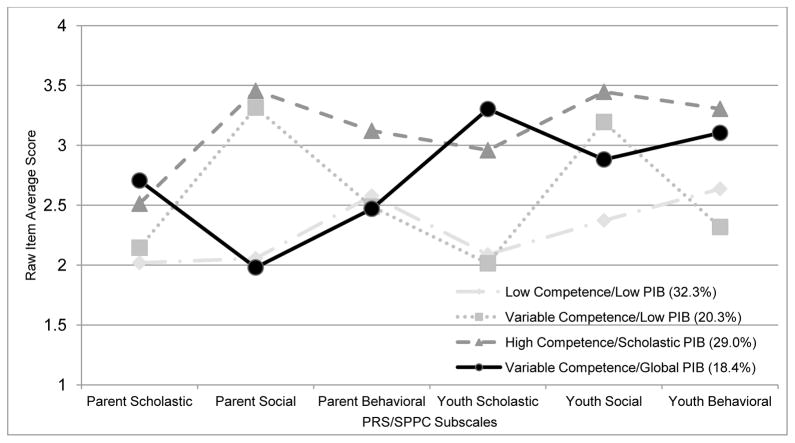
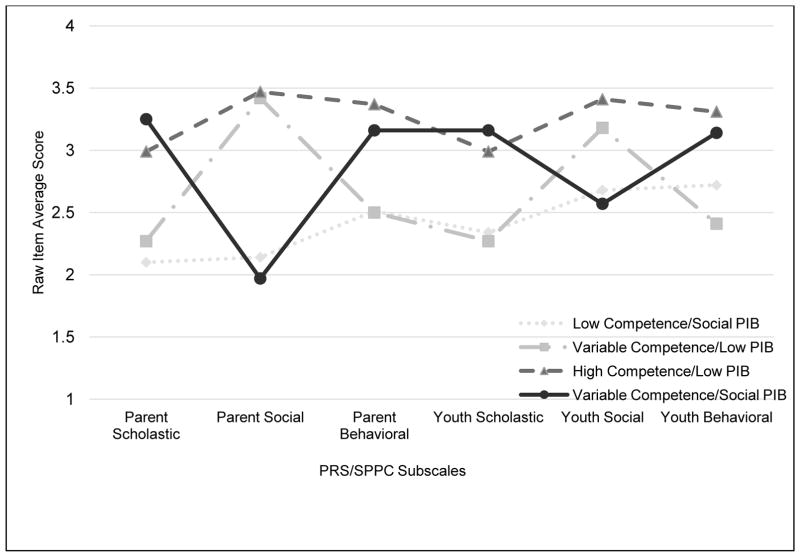
The goal of this study was to use novel approaches that do not require the use of arbitrary cut-points (i.e., latent profile/transition analysis) to evaluate the prevalence and stability of the positive illusory bias (PIB) in young adolescents with attention-deficit/hyperactivity disorder (ADHD). Participants were 326 middle-school students diagnosed with ADHD (Mage = 12.26 years, 71% male, 77% Caucasian). The Self-Perception Profile for Children (SPPC) was completed by participants and their parents at baseline and again 12 and 18 months later. Cross-sectional results revealed four subgroups based on SPPC responses. Only a small subset (18.4%) of youth with ADHD exhibited a global PIB, across the behavioral, scholastic, and social domains, with an additional 29% displaying a PIB in the scholastic domain only. Additionally, average parent/adolescent-rated competence within each subgroup was in line with an objective measure of scholastic competence (i.e., grades). When examined longitudinally, only a PIB in the social domain was stable across the 18-month study period and only for half of the sample. These findings suggest that the PIB is not ubiquitous in youth with ADHD, with many young adolescents rating themselves accurately relative to their parents and their grades. Further, when stability across time is considered, the PIB may be specific to social functioning, as opposed to a global, cross-domain phenomenon. Implications for the future measurement of the PIB are discussed.
Keywords: ADHD; Adolescents; Latent profile analysis; Positive illusory bias.
Conflict of interest statement
Conflict of Interest: The authors declare that they have no conflict of interest.
Figures
References
-
- American Psychiatric Association. Diagnostic and statistical manual of mental disorders: DSM-IV. 4. Washington, DC: American Psychiatric Association; 1994.
-
- American Psychiatric Association. Diagnostic and statistical manual of mental disorders. 5. Washington, DC: Author; 2013.
-
- Angold A, Costello EJ, Erkanli A. Comorbidity. Journal of Child Psychology and Psychiatry. 1999;40:57–87. - PubMed
-
- Barkley RA, Fischer M, Smallish L, Fletcher K. The persistence of attention-deficit/hyperactivity disorder into young adulthood as a function of reporting source and definition of disorder. Journal of Abnormal Psychology. 2002;111:279–289. - PubMed
MeSH terms
Grants and funding
LinkOut - more resources
Full Text Sources
Other Literature Sources
Medical
