


Peripheral Organs of Dengue Fatal Cases Present Strong Pro-Inflammatory Response with Participation of IFN-Gamma-, TNF-Alpha- and RANTES-Producing Cells
- PMID: 28006034
- PMCID: PMC5179082
- DOI: 10.1371/journal.pone.0168973
Peripheral Organs of Dengue Fatal Cases Present Strong Pro-Inflammatory Response with Participation of IFN-Gamma-, TNF-Alpha- and RANTES-Producing Cells
Erratum in
-
Correction: Peripheral Organs of Dengue Fatal Cases Present Strong Pro-Inflammatory Response with Participation of IFN-Gamma-, TNF-Alpha- and RANTES-Producing Cells.PLoS One. 2018 Mar 26;13(3):e0195140. doi: 10.1371/journal.pone.0195140. eCollection 2018. PLoS One. 2018. PMID: 29579124 Free PMC article.
Abstract
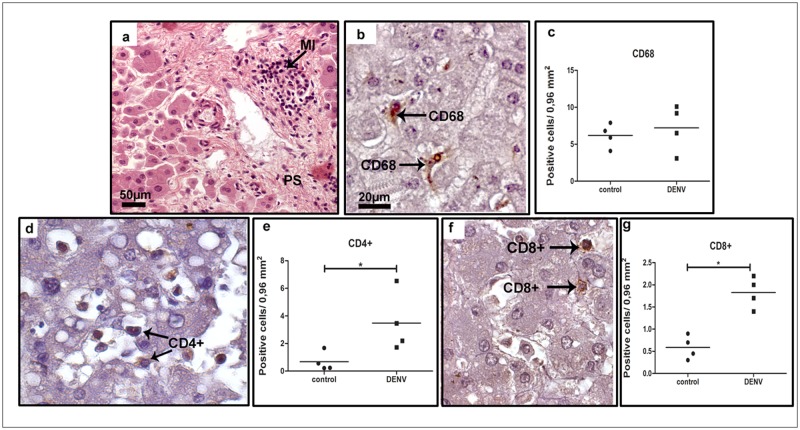
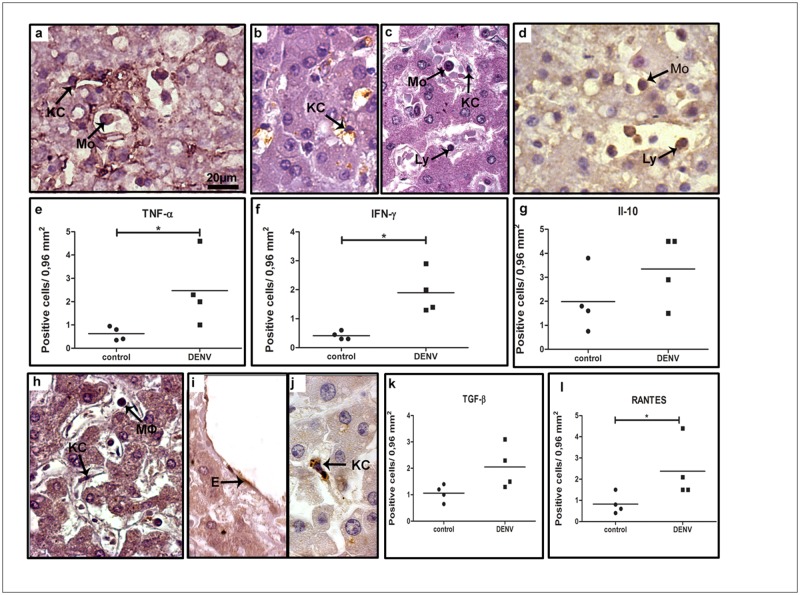
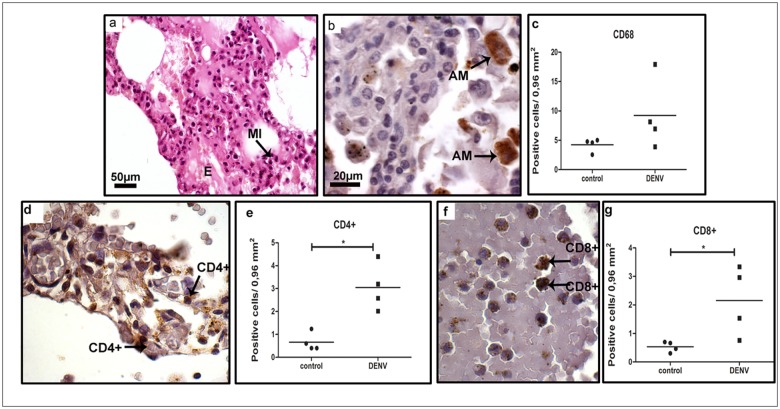
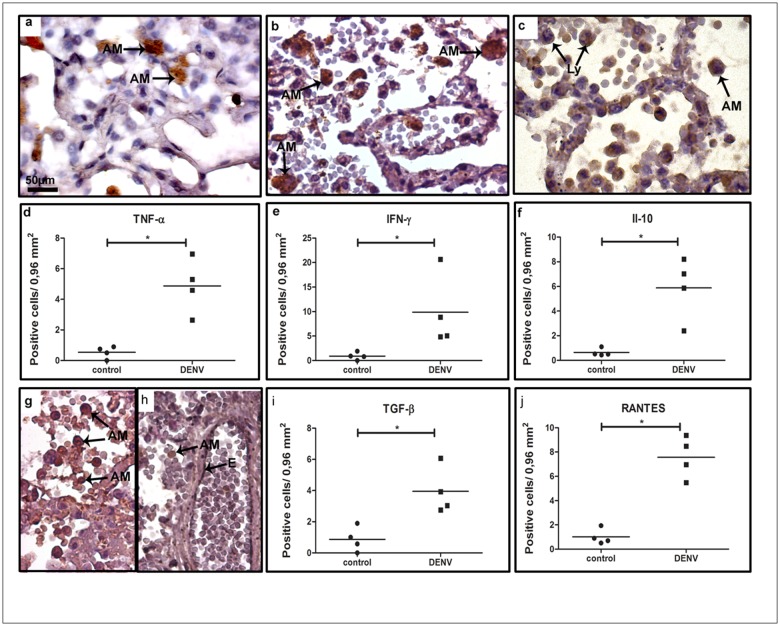
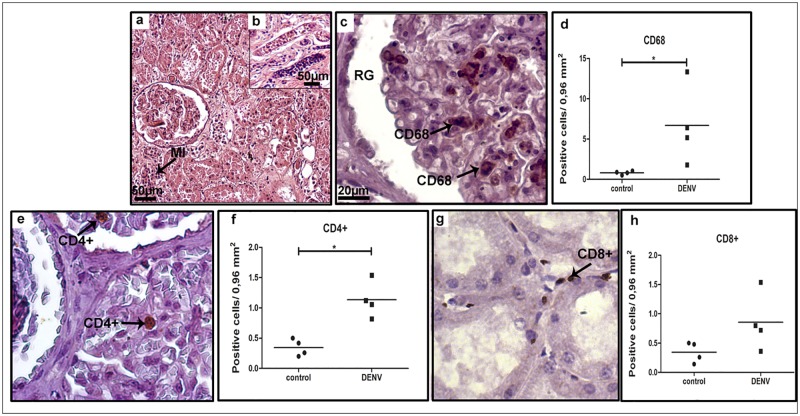
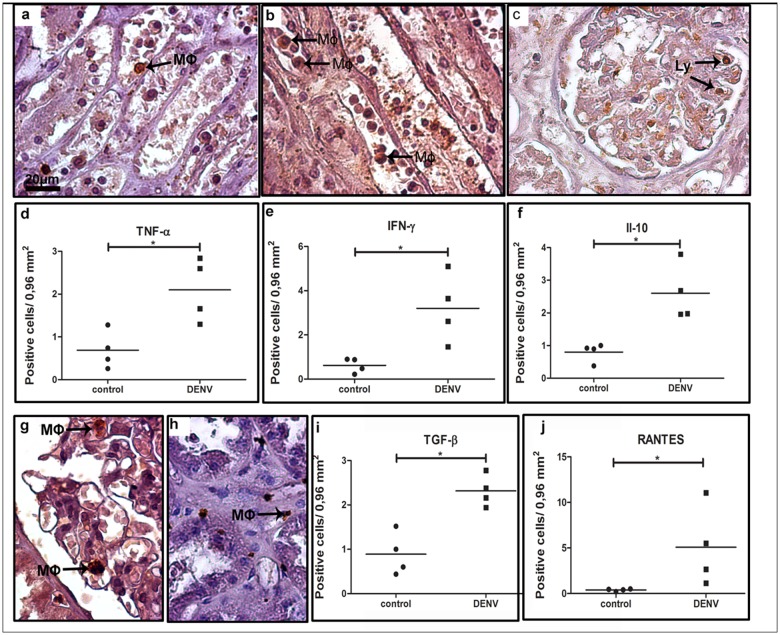
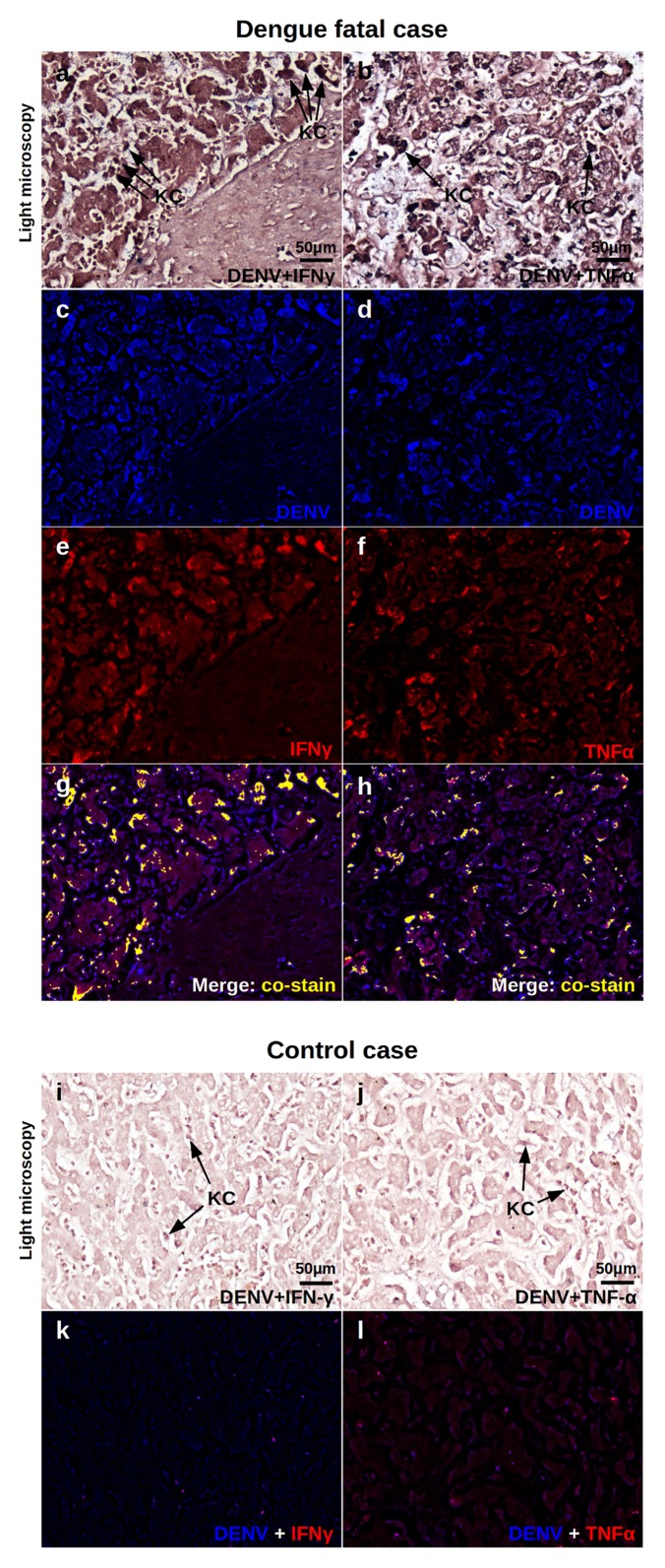
Dengue disease is an acute viral illness caused by dengue virus (DENV) that can progress to hemorrhagic stages leading to about 20000 deaths every year worldwide. Despite many clinical investigations regarding dengue, the immunopathogenic process by which infected patients evolve to the severe forms is not fully understood. Apart from differences in virulence and the antibody cross reactivity that can potentially augment virus replication, imbalanced cellular immunity is also seen as a major concern in the establishment of severe dengue. In this context, the investigation of cellular immunity and its products in dengue fatal cases may provide valuable data to help revealing dengue immunopathogenesis. Here, based in four dengue fatal cases infected by the serotype 3 in Brazil, different peripheral organs (livers, lungs and kidneys) were studied to evaluate the presence of cell infiltrates and the patterns of local cytokine response. The overall scenario of the studied cases revealed a considerable systemic involvement of infection with mononuclear cells targeted to all of the evaluated organs, as measured by immunohistochemistry (IHC). Quantification of cytokine-expressing cells in peripheral tissues was also performed to characterize the ongoing inflammatory process by the severe stage of the disease. Increased levels of IFN-γ- and TNF-α-expressing cells in liver, lung and kidney samples of post-mortem subjects evidenced a strong pro-inflammatory induction in these tissues. The presence of increased RANTES-producing cell numbers in all analyzed organs suggested a possible link between the clinical status and altered vascular permeability. Co-staining of DENV RNA and IFN-γ or TNF-α using in situ hibridization and IHC confirmed the virus-specific trigger of the pro-inflammatory response. Taken together, this work provided additional evidences that corroborated with the traditional theories regarding the "cytokine storm" and the occurrence of uneven cellular immunity in response to DENV as major reasons for progress to severe disease.
Conflict of interest statement
The authors have declared that no competing interests exist.
Figures
References
-
- WHO: Global strategy for dengue prevention and control 2012-2020. World Health Organization; 2012. Available from: www.who.int
-
- WHO: Dengue: Guidelines for diagnosis, treatment, prevention and control. World Health Organization; 2009. Available from: www.who.int - PubMed
Publication types
MeSH terms
Substances
LinkOut - more resources
Full Text Sources
Other Literature Sources
Medical
