


New insights into the effects of onion consumption on lipid mediators using a diet-induced model of hypercholesterolemia
- PMID: 28006722
- PMCID: PMC5192248
- DOI: 10.1016/j.redox.2016.12.002
New insights into the effects of onion consumption on lipid mediators using a diet-induced model of hypercholesterolemia
Abstract
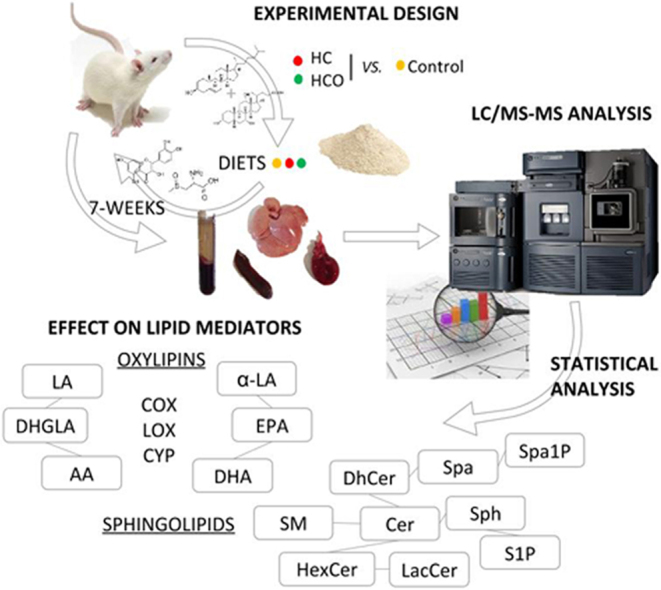
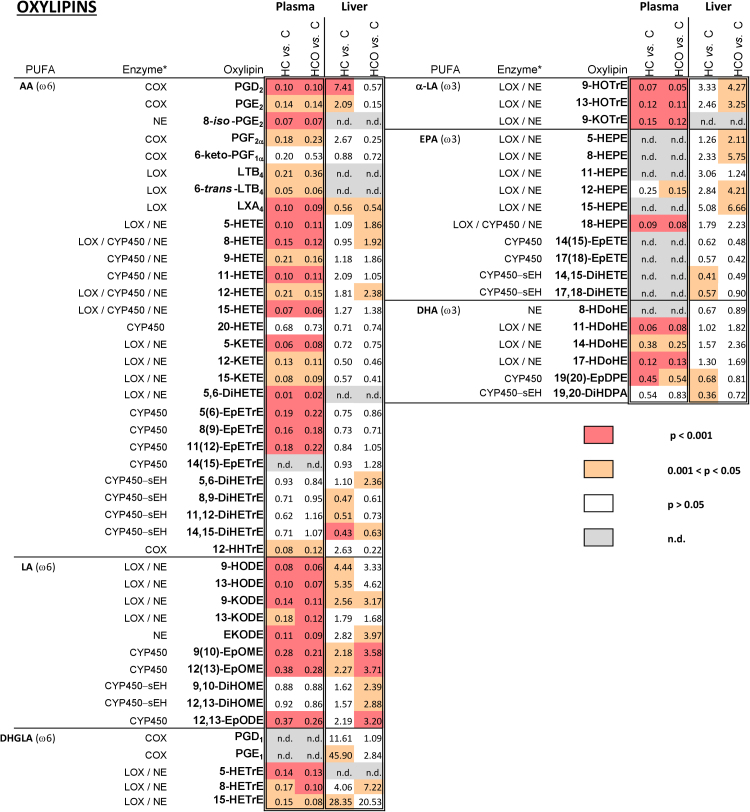
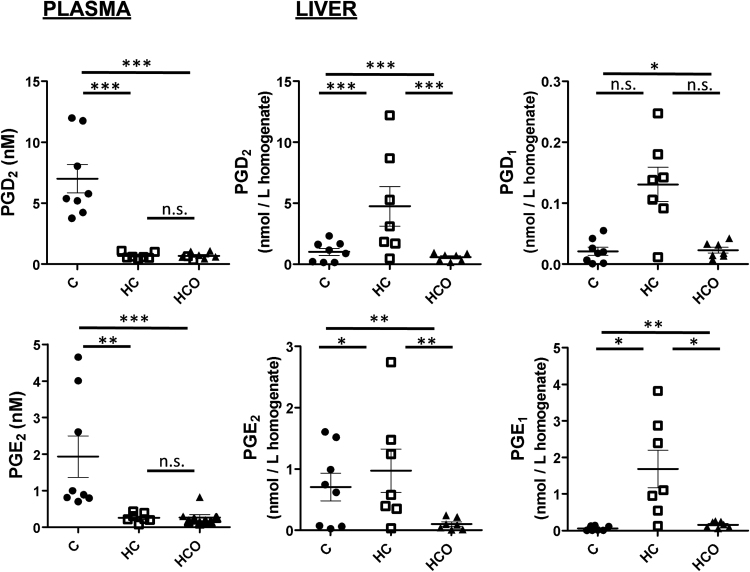
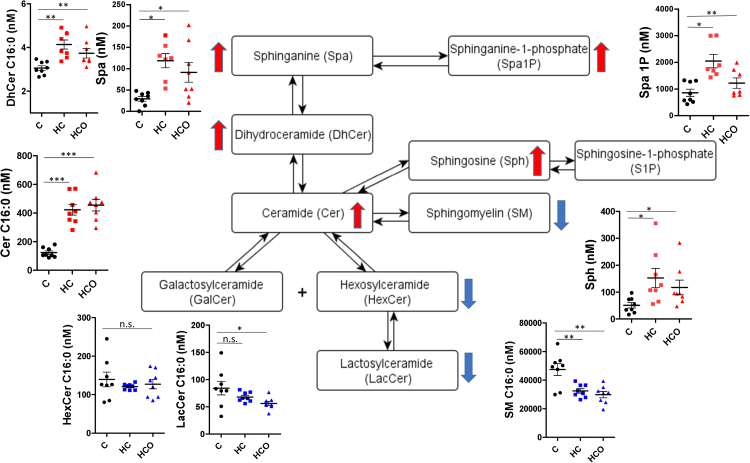
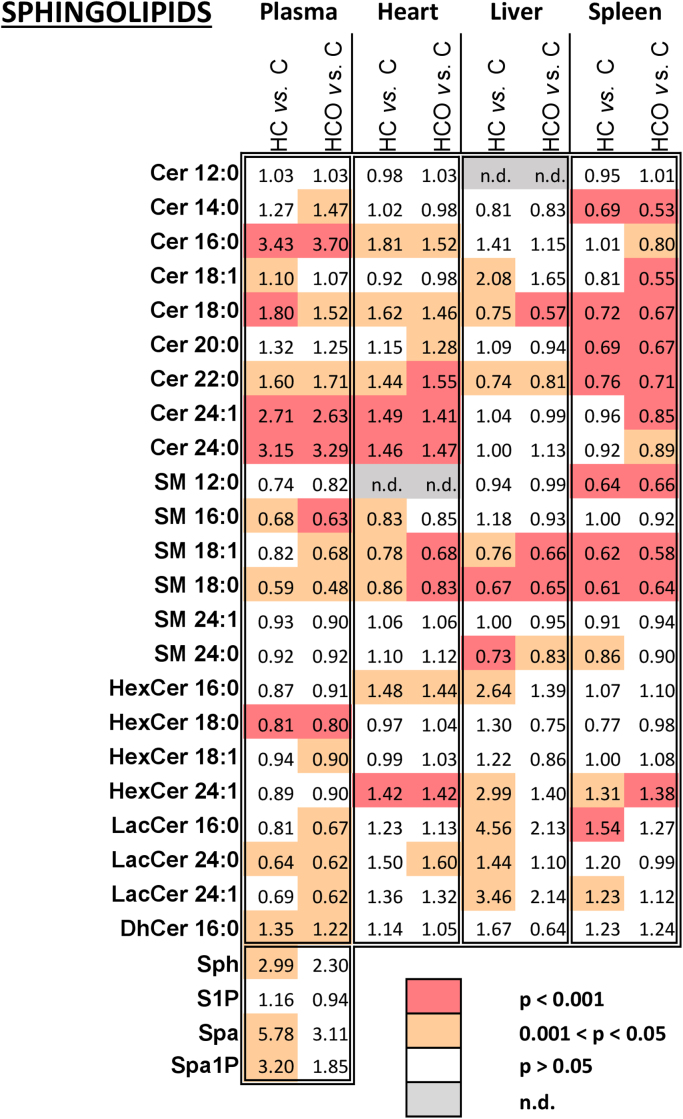
The levels and roles of lipid mediators can be modified in response to nutritional stimuli. The aim of this study was to investigate shifts in oxylipin and sphingolipid profiles stimulated by a hypercholesterolemic (HC) diet along with the modulating effects of onion introduced as an antioxidant functional ingredient characterized in the diet (HCO). Oxylipin and sphingolipid profiles were determined in plasma and tissues from Wistar rats using LC-MS/MS. Plasma ω-3 and ω-6 PUFA-derived oxylipins decreased in rats after 7 weeks of HC feeding, but did not evidence a further shift with HCO diet. Onion ingredient supplementation modulated the hepatic concentrations of prostaglandins and enhanced ω-3 oxylipins in the liver of HCO-fed rats relative to the HC group. The HC diet induced shifts in plasma sphingolipids, increasing sphingoid bases, dihydroceramides and ceramides, whilst the sphingomyelin, hexosylceramide and lactosylceramide families decreased. The HCO diet modified some HC diet-induced changes in sphingolipids in liver and spleen tissue. Onion supplementation effected changes in lipid mediator levels in diet-induced hypercholesterolemic Wistar rats. The potential of onion as regulator of pro-inflammatory mediators, and possible enhancer of pro-resolution pathways, warrants further study of the interaction of functional ingredients with bioactive lipid mediators and their potential impact on inflammation, oxidative stress and organ dysfunction.
Keywords: Eicosanoids; Inflammation; Lipid profiling; Mass spectrometry; Oxylipins; Sphingolipids.
Copyright © 2016 The Authors. Published by Elsevier B.V. All rights reserved.
Figures
References
-
- McGillicuddy F.C., Roche H.M. Nutritional status, genetic susceptibility, and insulin resistance−important precedents to atherosclerosis. Mol. Nutr. Food Res. 2012;56:1173–1184. - PubMed
-
- Olefsky J.M., Glass C.K. Macrophages, inflammation and insulin resistance. Annu. Rev. Physiol. 2010;72:219–246. - PubMed
-
- Hansson G.K., Robertson A.K., Söderberg-Nauclér C. Inflammation and atherosclerosis. Annu. Rev. Pathol. 2006;1:297–329. - PubMed
-
- Schmid-Schönbein G.W. Analysis of inflammation. Annu. Rev. Biomed. Eng. 2006;8:93–131. - PubMed
Publication types
MeSH terms
Substances
LinkOut - more resources
Full Text Sources
Other Literature Sources
Medical
