


Structure, biochemistry, and biology of PAK kinases
- PMID: 28007610
- PMCID: PMC5250584
- DOI: 10.1016/j.gene.2016.12.014
Structure, biochemistry, and biology of PAK kinases
Abstract
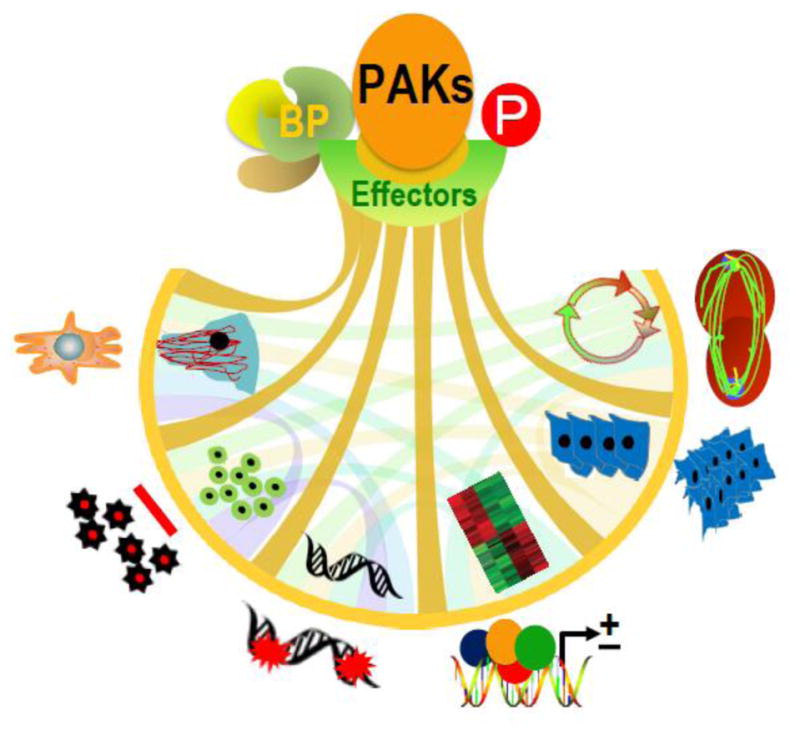
PAKs, p21-activated kinases, play central roles and act as converging junctions for discrete signals elicited on the cell surface and for a number of intracellular signaling cascades. PAKs phosphorylate a vast number of substrates and act by remodeling cytoskeleton, employing scaffolding, and relocating to distinct subcellular compartments. PAKs affect wide range of processes that are crucial to the cell from regulation of cell motility, survival, redox, metabolism, cell cycle, proliferation, transformation, stress, inflammation, to gene expression. Understandably, their dysregulation disrupts cellular homeostasis and severely impacts key cell functions, and many of those are implicated in a number of human diseases including cancers, neurological disorders, and cardiac disorders. Here we provide an overview of the members of the PAK family and their current status. We give special emphasis to PAK1 and PAK4, the prototypes of groups I and II, for their profound roles in cancer, the nervous system, and the heart. We also highlight other family members. We provide our perspective on the current advancements, their growing importance as strategic therapeutic targets, and our vision on the future of PAKs.
Keywords: Cancer; Cytoskeleton remodeling; Heart; Nervous system; PAK; p21-Activated kinase.
Copyright © 2016 Elsevier B.V. All rights reserved.
Conflict of interest statement
The authors have no conflicts of interest to declare.
Figures
References
-
- Adam L, et al. Heregulin regulates cytoskeletal reorganization and cell migration through the p21-activated kinase-1 via phosphatidylinositol-3 kinase. J Biol Chem. 1998;273:28238–28246. - PubMed
-
- Ahmed T, et al. A PAK4-LIMK1 pathway drives prostate cancer cell migration downstream of HGF. Cell Signal. 2008;20:1320–1328. - PubMed
Publication types
MeSH terms
Substances
Grants and funding
LinkOut - more resources
Full Text Sources
Other Literature Sources
Research Materials
