


2GETHER - The Dual Protection Project: Design and rationale of a randomized controlled trial to increase dual protection strategy selection and adherence among African American adolescent females
- PMID: 28007634
- PMCID: PMC5890330
- DOI: 10.1016/j.cct.2016.12.014
2GETHER - The Dual Protection Project: Design and rationale of a randomized controlled trial to increase dual protection strategy selection and adherence among African American adolescent females
Abstract
Background: African American adolescent females are at elevated risk for unintended pregnancy and sexually transmitted infections (STIs). Dual protection (DP) is defined as concurrent prevention of pregnancy and STIs. This can be achieved by abstinence, consistent condom use, or the dual methods of condoms plus an effective non-barrier contraceptive. Previous clinic-based interventions showed short-term effects on increasing dual method use, but evidence of sustained effects on dual method use and decreased incident pregnancies and STIs are lacking.
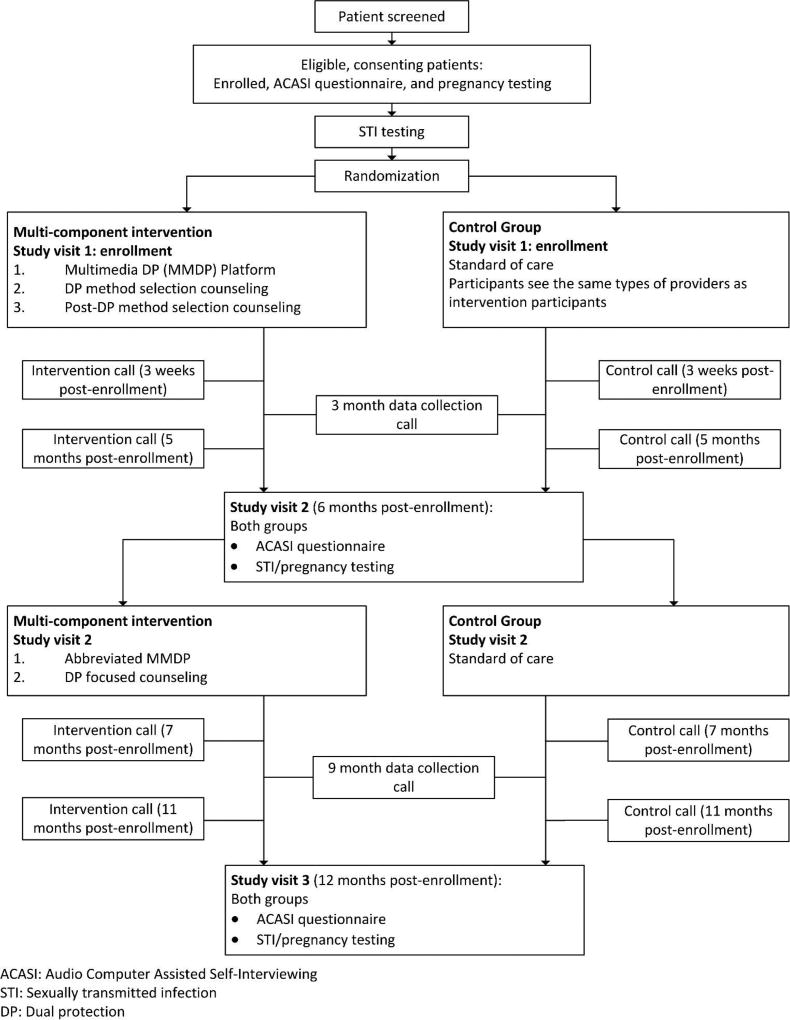
Methods/design: This manuscript describes the 2GETHER Project. 2GETHER is a randomized controlled trial of a multi-component intervention to increase dual protection use among sexually active African American females aged 14-19years not desiring pregnancy at a Title X clinic in Atlanta, GA. The intervention is clinic-based and includes a culturally tailored interactive multimedia component and counseling sessions, both to assist in selection of a DP method and to reinforce use of the DP method. The participants are randomized to the study intervention or the standard of care, and followed for 12months to evaluate how the intervention influences DP method selection and adherence, pregnancy and STI incidence, and participants' DP knowledge, intentions, and self-efficacy.
Discussion: The 2GETHER Project is a novel trial to reduce unintended pregnancies and STIs among African American adolescents. The intervention is unique in the comprehensive and complementary nature of its components and its individual tailoring of provider-patient interaction. If the trial interventions are shown to be effective, then it will be reasonable to assess their scalability and applicability in other populations.
Keywords: Adolescents; Contraception; Dual protection; Reproductive health; Sexually transmitted infections; Unintended pregnancy.
Published by Elsevier Inc.
Figures
References
-
- D'Angelo DV, Gilbert BC, Rochat RW, Santelli JS, Herold JM. Differences between mistimed and unwanted pregnancies among women who have live births. Perspectives on sexual and reproductive health. 2004;36:192–7. - PubMed
-
- Brown SS, Eisenberg L. The best intentions: Unintended pregnancy and the well-being of children and families. National Academies Press; 1995. - PubMed
-
- Baydar N. Consequences for children of their birth planning status. Fam Plann Perspect. 1995:228–45. - PubMed
-
- Joyce TJ, Kaestner R, Korenman S. The effect of pregnancy intention on child development. Demography. 2000;37:83–94. - PubMed
Publication types
MeSH terms
Grants and funding
LinkOut - more resources
Full Text Sources
Other Literature Sources
Medical
